
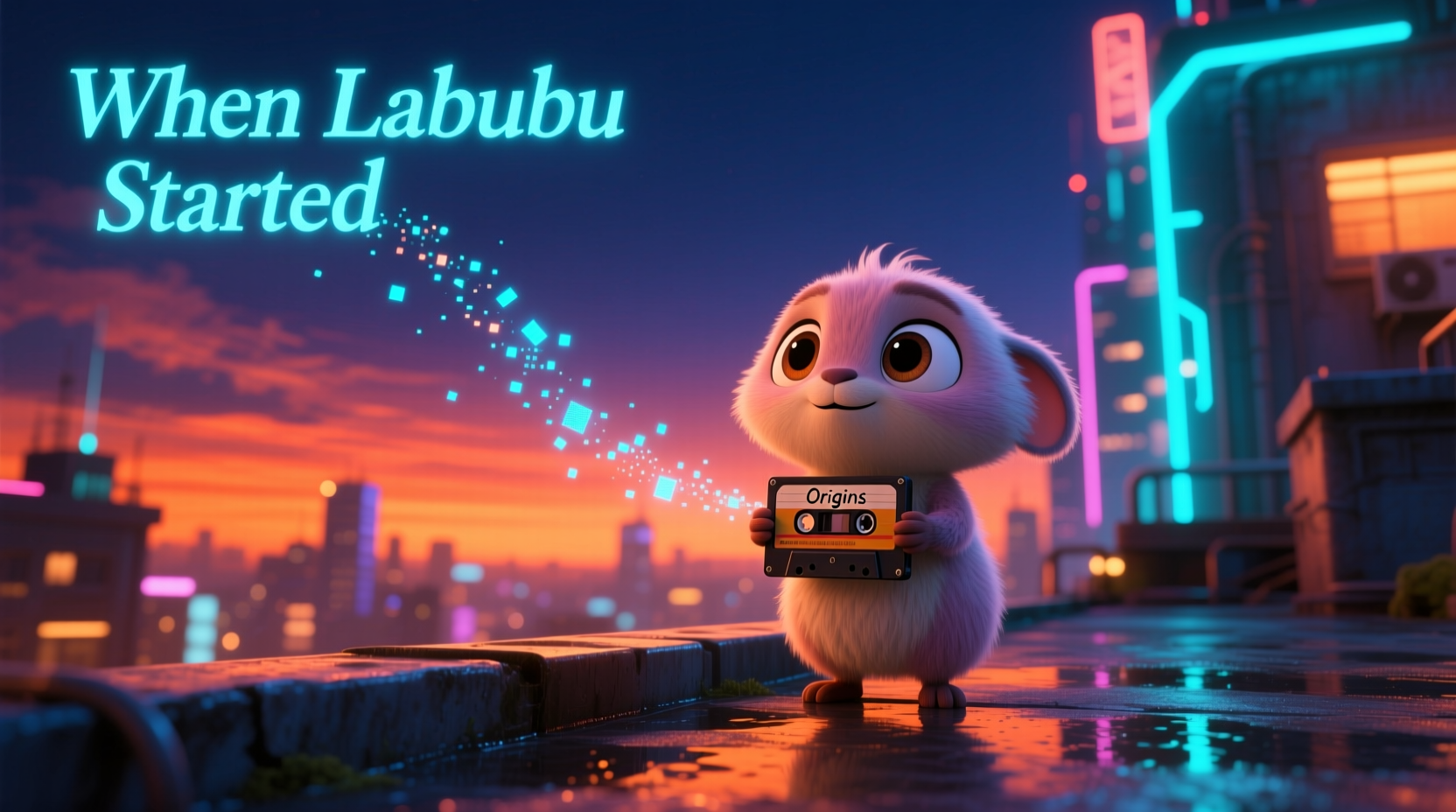
Labubu, one of the most recognizable characters in the modern designer toy movement, first appeared in 2015 as part of Pop Mart’s Dimoo series. Created by Chinese artist Kasing Lung, Labubu quickly evolved from a supporting character into a standalone icon within the global blind box and collectible art scene 1. This article explores the origins of Labubu, its artistic and commercial evolution, cultural significance, and why it has become a cornerstone of contemporary潮流玩具 (cháoliú wánjù) — or 'trendy toys' — worldwide.
The Artistic Origins: Who Created Labubu and When?
Labubu was conceptualized and designed by Hong Kong-based illustrator and character designer Kasing Lung. Known for his surreal, dreamlike aesthetic that blends childhood nostalgia with whimsical grotesquery, Lung introduced Labubu in 2015 as a secondary character within the inaugural release of Pop Mart’s flagship Dimoo Mystery Box line 2. While Dimoo took center stage as the melancholic boy with a fishbowl helmet, Labubu stood out immediately due to its sharp teeth, oversized ears, and mischievous expression — an embodiment of playful chaos amidst the more introspective tone of the rest of the series.
Despite not being the protagonist, Labubu captured fan attention almost instantly. Its design defied conventional cuteness (kawaii), instead embracing what fans describe as “cute-ugly” — a trend increasingly popular among adult collectors seeking emotionally complex or ironic aesthetics in their toys 3. This unique visual language allowed Labubu to stand apart in a crowded market dominated by saccharine mascots.
From Supporting Role to Global Star: The Evolution of Labubu
Although Labubu debuted in 2015, its transformation into a leading IP didn’t happen overnight. It wasn’t until 2019–2020 that Pop Mart began releasing dedicated Labubu-themed blind box collections, signaling a strategic shift based on consumer demand 4. These new series featured variations such as Pirate Labubu, Garden Labubu, and Labubu x Jean-Michel Basquiat collaborations, showcasing the character’s versatility across themes and artistic interpretations.
The 2020 launch of *The Monsters* series marked a turning point. In this collection, Labubu was reimagined as a central figure exploring emotional duality — fear, loneliness, joy — through exaggerated expressions and symbolic accessories. Each variant told a micro-narrative, appealing to collectors who valued storytelling depth alongside visual appeal 5.
This narrative expansion elevated Labubu beyond mere merchandise; it became a canvas for psychological exploration, resonating particularly with millennial and Gen Z audiences navigating identity and emotional complexity in modern life.
Design Characteristics That Define Labubu
Several distinctive design elements contribute to Labubu’s enduring popularity:
- Asymmetrical Ears: One ear is significantly larger than the other, symbolizing imbalance and curiosity.
- Sharp Teeth: Unlike typical rounded smiles in plush toys, Labubu’s jagged grin suggests mischief or unpredictability.
- Minimalist Eyes: Small dots or slits for eyes create ambiguity, allowing viewers to project emotions onto the character.
- Flexible Proportions: The body structure varies widely across editions — sometimes squat and stubby, other times elongated — enabling creative reinterpretation.
These traits align closely with the principles of *superflat* art pioneered by Takashi Murakami, which merges high and low culture while rejecting Western perspective norms 6. However, Labubu adds a distinctly Eastern mysticism, drawing subtle inspiration from traditional Chinese folklore creatures like *yaoguai* (妖怪), supernatural beings often depicted with animal features and ambiguous morality.
| Feature | Description | Symbolic Meaning |
|---|---|---|
| Ears | One large, one small | Curiosity, imbalance, listening vs. ignoring |
| Mouth | Sharp, toothy grin | Mischief, unpredictability, rebellion against cuteness |
| Eyes | Dots or narrow slits | Emotional neutrality, projection surface |
| Body Shape | Varies per series | Adaptability, transformation, infinite potential |
| Color Palette | Bright pastels to dark metallics | Range of moods — innocence to menace |
Commercial Success and Market Impact
By 2021, Labubu had generated over RMB 1 billion (approximately USD 140 million) in sales globally, making it one of Pop Mart’s top-performing IPs after Molly and Dimoo 4. Its success can be attributed to several factors:
- Limited Edition Collaborations: Partnerships with international artists like Francisco Ibáñez (creator of *Mortadelo y Filemón*) and luxury brands have boosted exclusivity and desirability.
- Global Expansion: Pop Mart opened flagship stores in major cities including New York, London, and Singapore, placing Labubu at the heart of urban youth culture 7.
- Digital Integration: NFT versions and augmented reality (AR) unboxing experiences increased engagement, especially during pandemic lockdowns.
In secondary markets, rare Labubu variants such as the clear resin *Pirate Labubu* or glow-in-the-dark *Night Garden Labubu* have sold for hundreds of dollars above retail price, indicating strong collector demand 8.
Cultural Significance: Why Labubu Resonates Today
Labubu’s popularity extends beyond aesthetics or scarcity. Psychologically, the character embodies contradictions — cute yet eerie, innocent yet cunning — mirroring the emotional ambivalence many young adults feel in uncertain economic and social climates 9. Collecting Labubu offers a form of emotional catharsis and personal identification.
In China, where mental health discussions are still stigmatized, characters like Labubu provide a non-verbal outlet for expressing anxiety, loneliness, or defiance. The 2022 *Emotion Series*, which included Labubu variants labeled “Anger,” “Loneliness,” and “Hope,” was praised for normalizing emotional diversity in mainstream consumer products 10.
Globally, Labubu taps into the growing appetite for *art toys* — objects that blur the line between mass-produced goods and fine art. Galleries in Tokyo, Los Angeles, and Berlin have exhibited Labubu sculptures, further legitimizing its status beyond plaything to cultural artifact.
Purchasing Guide: How to Buy and Collect Labubu Figures
For newcomers interested in collecting Labubu, here are key considerations:
- Know the Series: Familiarize yourself with major releases — *The Monsters*, *Garden*, *Pirate*, *Xmas*, and collaborative editions. Older series tend to appreciate in value.
- Rarity Levels: Most blind boxes use a tiered system: Common, Rare, Very Rare, and Chase (ultra-rare). Chase figures may appear once in every 144 units.
- Buy From Authorized Retailers: To avoid counterfeits, purchase from official Pop Mart stores or verified platforms like StockX or Whatnot 11.
- Preserve Condition: Keep boxes sealed if reselling; clean display cases protect against dust and UV damage.
- Join Communities: Online forums like Reddit’s r/BlindBags and Facebook groups offer trade opportunities and authentication help.
Secondary market prices vary dramatically. For example, the *Labubu × Jean-Michel Basquiat* collaboration figure retailed for $99 but has resold for over $600 due to limited production and artistic prestige 12.
Challenges and Criticisms Facing Labubu and Blind Box Culture
Despite its success, Labubu exists within a controversial industry. Critics argue that blind box mechanics resemble gambling, especially when targeting minors. In 2022, Chinese regulators issued guidelines restricting blind box sales to children under 8 and requiring transparency about drop rates 13.
Additionally, environmental concerns arise from excessive packaging and plastic waste. A single blind box contains multiple layers of cardboard, plastic blister packs, and paper inserts. While Pop Mart claims to be exploring biodegradable materials, no large-scale changes have been implemented as of early 2026 14.
There’s also debate over whether commodifying avant-garde art through mass production dilutes its meaning. Some critics view collaborations like the Basquiat tie-in as exploitative, though others see them as democratizing access to art 15.
Future Outlook: Where Is Labubu Headed?
As of 2026, Labubu remains a core pillar of Pop Mart’s innovation strategy. The company has hinted at expanding Labubu into multimedia formats, including animated shorts and interactive exhibitions using AI-driven avatars 16.
Internationally, Pop Mart aims to deepen localization by partnering with regional artists. Recent announcements include a Labubu x Mexican Día de Muertos edition and a Nordic folklore-inspired winter series, suggesting a move toward culturally nuanced storytelling rather than purely aesthetic adaptations.
Fans can expect continued experimentation with materials — ceramic, wood, and even kinetic designs — pushing the boundaries of what a “blind box toy” can be. With rising interest in digital twins and blockchain verification, future Labubu releases may include verifiable NFT certificates to combat counterfeiting and enhance provenance tracking.
Conclusion: Labubu’s Legacy in the Designer Toy Movement
Since its debut in 2015 as part of Pop Mart’s Dimoo series, Labubu has grown into a global pop culture phenomenon. Designed by Kasing Lung, the character’s unique blend of whimsy and unease has struck a chord with collectors seeking deeper meaning in contemporary art toys. From its symbolic design elements to its commercial dominance and cultural resonance, Labubu exemplifies how a single character can transcend its origins to influence fashion, psychology, and digital art.
While challenges around ethics, sustainability, and artistic integrity remain, Labubu continues to evolve — not just as a product, but as a mirror reflecting the complexities of modern identity. Whether you're a seasoned collector or new to the world of trendy toys, understanding when Labubu started and how it rose to prominence offers valuable insight into one of the most fascinating intersections of art, commerce, and emotion in the 21st century.
Frequently Asked Questions (FAQ)
- When did Labubu first appear?
- Labubu made its debut in 2015 as part of Pop Mart’s original Dimoo Mystery Box series, created by artist Kasing Lung 1.
- Who is the artist behind Labubu?
- Labubu was designed by Hong Kong-based illustrator Kasing Lung, known for his surreal and emotionally evocative character art 2.
- Is Labubu still being produced in 2026?
- Yes, as of January 2026, Pop Mart continues to release new Labubu-themed collections, including seasonal editions and international collaborations 16.
- Why are Labubu toys so expensive on the secondary market?
- Rarity, artistic collaborations (e.g., with Basquiat), and high demand drive up resale prices. Chase variants and limited runs often sell for multiples of their original retail price 8.
- Are there any ethical concerns related to Labubu and blind box toys?
- Yes. Concerns include gambling-like mechanics, environmental waste from packaging, and debates over the commercialization of art. Regulatory bodies in China have introduced rules to address some of these issues 13.




 浙公网安备
33010002000092号
 浙B2-20120091-4