
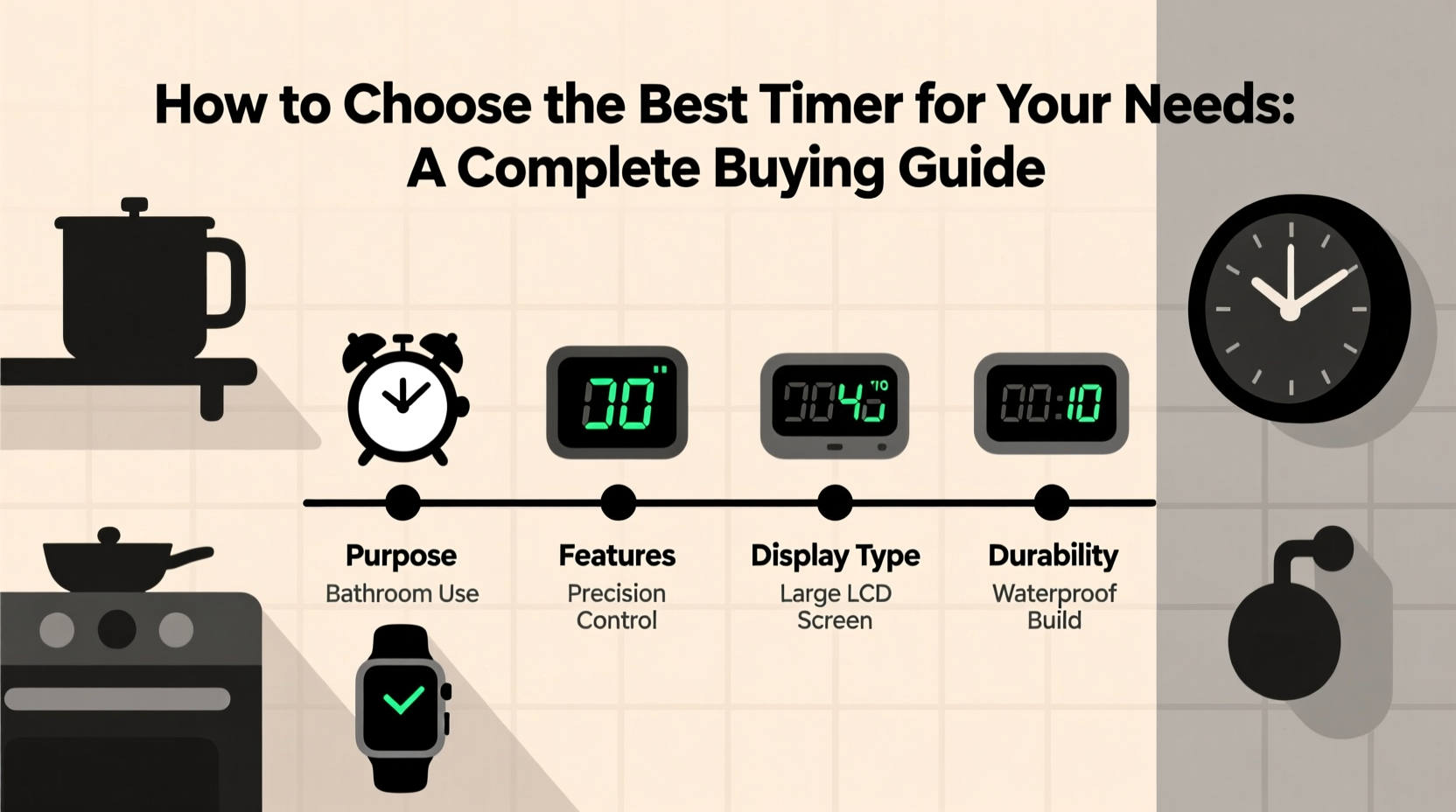
When selecting the best timer for your specific needs—whether it's for cooking, workouts, or task management—a digital countdown timer with adjustable settings, clear display, and audible alerts often provides the most versatility and reliability 1. For those asking how to choose timer options that balance precision, ease of use, and durability, focus on key factors like countdown accuracy, battery life, sound customization, and physical design. If you're looking for what to look for in timer devices, prioritize models with large displays, tactile buttons, and strong build quality to ensure long-term usability across home, kitchen, or classroom environments.
About Timer
A timer is a device designed to measure a specific duration of time and signal its end, typically through sound, light, or vibration. Timers are widely used across various daily activities including cooking, fitness training, study sessions, industrial processes, and medical procedures. They come in both mechanical and electronic forms, offering users a reliable way to track intervals without relying on clocks or smartphones 2.
In professional settings such as laboratories or manufacturing units, high-precision timers help maintain process consistency. In homes, they assist in preventing food from overcooking or remind individuals when medication should be taken. The core function remains consistent: start a count (either up or down) and receive a notification upon completion. This simplicity makes timers indispensable tools despite the prevalence of smart devices.
Why Timer Is Gaining Popularity
Timers have seen renewed interest due to the growing emphasis on productivity, health routines, and structured learning methods. Techniques like the Pomodoro method—which involves working in focused 25-minute blocks followed by short breaks—rely heavily on accurate timing tools 3. As more people adopt these systems, standalone timers offer advantages over phone-based apps, which can lead to distractions from notifications.
Fitness enthusiasts also contribute to rising demand, using interval timers for HIIT (High-Intensity Interval Training), yoga sessions, or circuit workouts. Additionally, aging populations benefit from visual and auditory cues provided by kitchen and medical timers, promoting independence and safety. Schools increasingly incorporate timers into classrooms to manage student tasks and improve time awareness among children.
Types and Variants
Understanding the different types of timers helps buyers make informed decisions based on their intended use case.
Mechanical Wind-Up Timers
These traditional timers operate via a spring mechanism activated by twisting a dial. Commonly found in kitchens, they produce a loud ringing sound when time expires.
- Pros: No batteries required, durable construction, simple interface.
- Cons: Limited maximum duration (usually up to 60 minutes), less precise than digital models, no backlight or volume control.
Digital Electronic Timers
Digital timers feature LCD or LED displays and programmable countdown functions. Many include multiple presets, snooze options, and adjustable alarm sounds.
- Pros: High accuracy (often within ±1 second per month), customizable settings, backlit screens for low-light visibility.
- Cons: Require regular battery replacement, may have complex menus for older users.
Smartphone Apps & Smart Device Integrations
While not physical products, app-based timers are worth mentioning due to their widespread use.
- Pros: Free or low-cost, highly customizable (e.g., voice commands, integration with calendars).
- Cons: Susceptible to interruptions from calls or messages, screen lock issues, reduced battery life.
Multifunctional & Specialty Timers
This category includes egg timers, meditation timers with nature sounds, and industrial-grade programmable units.
- Pros: Tailored features (e.g., temperature resistance, waterproofing).
- Cons: Higher cost, limited flexibility outside niche uses.
Key Features and Specifications to Evaluate
To determine what to look for in a timer, consider the following technical and functional attributes:
- Countdown Accuracy: Look for quartz-controlled mechanisms in digital models, known for maintaining precision over extended periods 5.
- Display Type: LED offers brightness; LCD consumes less power. Backlighting improves readability in dim conditions.
- Battery Life: Most digital timers run on AAA or button-cell batteries lasting 1–2 years under normal use. Check if replacements are easily accessible.
- Sound Options: Adjustable volume, mute modes, or alternative alert types (vibration, flashing lights) enhance accessibility.
- Build Quality: Rubberized casing or splash resistance adds durability, especially in kitchens or outdoor settings.
- Mounting Options: Magnetic backs, stands, or clips increase placement flexibility.
- User Interface: Large buttons and intuitive layouts reduce errors during operation.
Pros and Cons
Advantages of Using a Dedicated Timer:
- Minimizes distraction compared to smartphone usage.
- More durable and purpose-built than general devices.
- Offers better ergonomics and environmental resilience (heat, moisture).
- Accessible to all age groups, including seniors and young learners.
Limitations:
- Limited functionality beyond timekeeping (unless part of a smart ecosystem).
- Digital versions depend on batteries; mechanical ones lack fine control.
- May become obsolete if integrated into broader automation systems.
How to Choose Timer: Step-by-Step Buying Guide
Follow this checklist to identify the right model for your situation:
- Define Your Use Case: Cooking? Studying? Fitness? Each scenario favors different features (e.g., heat resistance vs. portability).
- Select the Type: Prefer simplicity and sustainability? Go mechanical. Need precision and customization? Choose digital.
- Evaluate Display Clarity: Test visibility in relevant lighting conditions. Older users may require larger digits.
- Check Alert Mechanisms: Ensure alarms are loud enough or offer alternatives like vibration.
- Assess Physical Design: Consider size, weight, and whether it has a stand, clip, or magnet.
- Review Power Source: Battery type and expected lifespan affect maintenance frequency.
- Look for Extra Features: Presets, memory recall, or dual-time zones add convenience for advanced users.
- Avoid Red Flags: Poor customer reviews about alarm failure, flimsy dials, or confusing interfaces.
If shopping online, verify return policies and warranty terms before purchase.
Price & Market Insights
Timer prices vary significantly based on type and functionality:
- $5–$10: Basic mechanical or entry-level digital models. Suitable for occasional use.
- $10–$20: Mid-range digital timers with improved displays, longer battery life, and added features like backlighting.
- $20–$40: Premium models with advanced programming, durability enhancements, or specialty designs (e.g., waterproof).
| Model | Type | Key Feature | Price Range | User Rating (Amazon) |
|---|---|---|---|---|
| Nordic Ware Kitchen Timer | Mechanical | Loud bell, classic design | $9.99 | 4.7 stars |
| Weston Digital Timer | Digital | Extra-loud alarm, magnetic back | $14.95 | 4.6 stars |
| HOMEST II Egg Cooker Timer | Digital | Preset programs for eggs | $19.99 | 4.5 stars |
Customer Feedback Synthesis
Analyzing hundreds of verified buyer reviews reveals recurring themes:
Common Praises:
- "Loud and clear alarm" – frequently mentioned for digital models used in noisy kitchens.
- "Easy to set" – intuitive dials or buttons praised in both mechanical and digital variants.
- "Long battery life" – users appreciate infrequent replacements.
- "Sturdy build" – especially noted in rubber-coated or metal-cased units.
Frequent Complaints:
- "Alarm too quiet" – a common issue with budget digital timers.
- "Buttons stick or break" – lower-quality plastics degrade over time.
- "Poor display visibility" – some LCDs are hard to read at angles or in sunlight.
- "No mute option" – problematic in shared spaces or nighttime use.
Sourcing & Supplier Tips
For individual purchases, reputable retailers like Amazon, Target, or Walmart offer wide selections with user reviews and return options. Specialty stores (e.g., restaurant supply outlets) carry commercial-grade timers built for heavy-duty use.
Businesses or educators buying in bulk should contact manufacturers directly or work with distributors to negotiate pricing and warranties. When sourcing internationally (e.g., via Alibaba), request samples first to assess material quality and packaging. Always confirm compliance with local electrical and safety standards (such as FCC or CE markings) before resale.
Maintenance, Safety & Legal Considerations
Digital timers require minimal upkeep—replace batteries promptly to avoid leakage damage. Clean surfaces with a damp cloth; avoid submerging unless rated waterproof.
Safety-wise, keep mechanical timers away from extreme heat sources that could warp internal components. In industrial applications, ensure timers meet OSHA or equivalent workplace safety regulations if used in timed shutdown systems.
No major legal restrictions apply to consumer timer sales in most countries, but imported electronics must comply with electromagnetic compatibility (EMC) directives in regions like the EU 7. Verify certification labels when purchasing non-local brands.
Conclusion
Selecting the right timer depends on matching device capabilities to your personal or professional requirements. While answering how to choose timer solutions effectively, prioritize clarity, reliability, and ease of use. Mechanical models excel in simplicity and longevity; digital versions deliver precision and enhanced features. By evaluating display quality, alert types, build materials, and price-to-performance ratio, consumers can find a dependable tool that supports routine efficiency. Whether you need a basic kitchen companion or a robust interval tracker, investing in a well-reviewed model from a trusted brand ensures lasting performance.
FAQs
- What is the most reliable type of timer?
Quartz-powered digital timers are generally the most accurate, while high-quality mechanical timers offer excellent durability without batteries. - Can I use a timer for the Pomodoro technique?
Yes, many digital timers allow custom countdowns (e.g., 25-minute work, 5-minute break), making them perfect for Pomodoro sessions. - Are there timers for people with hearing impairments?
Yes, several models include visual alerts (flashing lights) or vibration modes for accessibility. - Do timers need calibration?
Most modern digital timers do not require manual calibration due to stable quartz oscillators. Mechanical ones may drift slightly over years. - How long do timer batteries last?
Typically 1–2 years under average use. Lithium button cells tend to outlast alkaline batteries.





 浙公网安备
33010002000092号
浙公网安备
33010002000092号 浙B2-20120091-4