
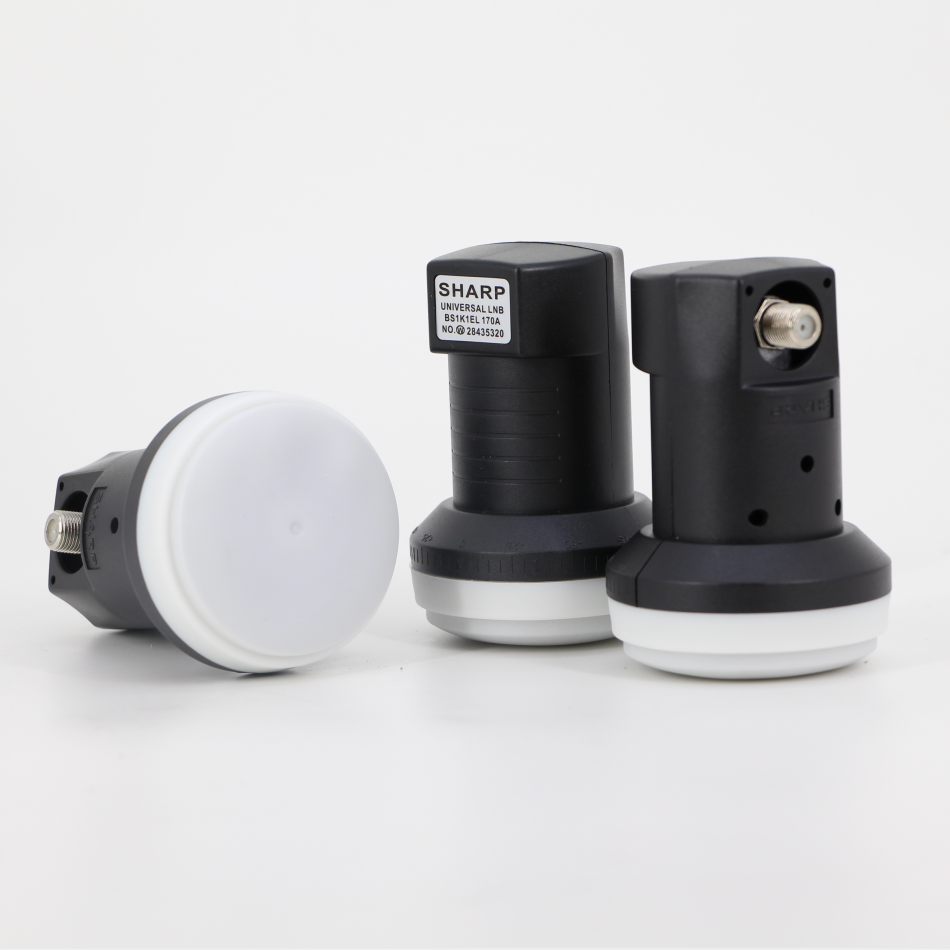
When choosing a Sharp LNB (Low Noise Block downconverter), prioritize models with low noise figures (0.1–0.3 dB), high local oscillator stability, and compatibility with your satellite frequency band—especially if using Ku-band systems common in North America and Europe. The best Sharp LNBs offer superior signal clarity in weak reception areas, making them ideal for rural installations or multi-room setups. Look for waterproof housing and universal voltage support (13/18V) to ensure durability and broad receiver compatibility. If you're asking how to choose Sharp LNB units that deliver reliable performance, focus on build quality, shielding against interference, and precise skew adjustment mechanisms.
About Sharp LNB
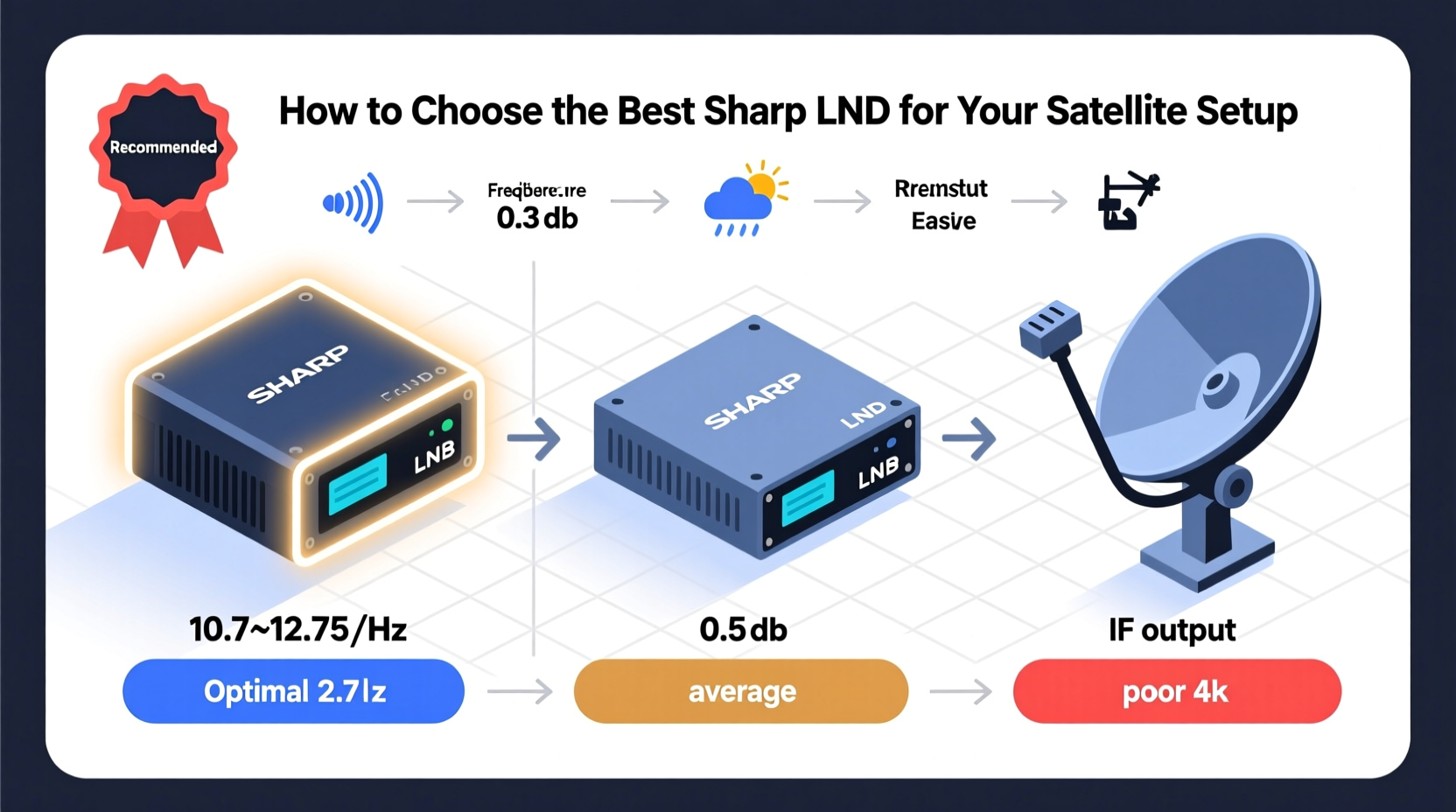
A Sharp LNB is a type of low-noise block downconverter used in satellite communication systems to capture weak signals from a satellite dish, amplify them, and convert the high-frequency radio waves into lower frequencies suitable for transmission via coaxial cable to a satellite receiver. While "Sharp" may refer to the brand or could be interpreted as a descriptor for high-precision devices, in technical contexts it often refers to products manufactured by Sharp Corporation or those engineered with sharp tuning accuracy and minimal signal loss.
These LNBs are typically mounted on satellite dishes and serve as the first point of signal processing in systems receiving direct broadcast satellite (DBS) content such as TV and internet services. They are widely used in residential, commercial, and mobile applications where stable satellite connectivity is required. Common use cases include home entertainment systems, remote monitoring stations, maritime communications, and off-grid living setups relying on satellite internet or television.
Why Sharp LNB Is Gaining Popularity
In recent years, demand for high-performance satellite reception equipment has grown due to increased reliance on satellite-based media and internet services, especially in underserved or geographically isolated regions. Sharp LNBs have gained attention for their consistent signal integrity, reduced phase noise, and improved resistance to environmental degradation.
Users are increasingly searching for solutions that minimize pixelation, signal dropouts, and weather-related disruptions—issues commonly addressed by premium-grade LNBs like those associated with Sharp’s engineering standards. Additionally, advancements in digital broadcasting and HD/4K content delivery require more sensitive front-end components, pushing consumers toward higher-quality LNBs that support wider bandwidths and dual-polarization reception.
This growing interest aligns with trends in DIY satellite installation and the rise of free-to-air (FTA) satellite systems, where users seek cost-effective yet reliable hardware. As a result, queries like what to look for in Sharp LNB units reflect increasing consumer awareness about component-level performance factors beyond just the dish or receiver.
Types and Variants
Sharp LNBs come in several configurations designed for different satellite bands, polarization modes, and output requirements. Understanding these variants helps match the device to your specific setup needs.
Single LNB
- Pros: Simple design, affordable, easy to install; ideal for single-receiver setups.
- Cons: Limited to one connected device; not suitable for multi-room systems.
Best suited for basic installations where only one TV or receiver is used.
Dual LNB
- Pros: Supports two independent receivers, enabling viewing on multiple TVs without additional hardware.
- Cons: Requires precise alignment since both outputs share the same feedhorn.
A practical upgrade for households needing two simultaneous connections.
Quad and Octo LNBs
- Pros: Allow connection to four or eight receivers respectively; excellent for large homes or small networks.
- Cons: Higher power draw; may require multiswitch for full functionality.
Commonly used in MDU (multi-dwelling unit) environments or commercial buildings.
Universal LNB (Ku-band)
- Pros: Covers both low (10.7–11.7 GHz) and high (11.7–12.75 GHz) segments of the Ku-band; works with most European and North American satellites.
- Cons: May need firmware-compatible receivers to switch between bands via 13/18V signaling.
One of the most versatile options for general-purpose satellite TV.
Wideband LNB
- Pros: Eliminates need for tone bursts; simplifies cabling in whole-home DVR systems.
- Cons: Typically requires compatible modern receivers (e.g., Sky Q or Freesat v7).
Gaining traction in next-gen FTA and pay-TV platforms.
Key Features and Specifications to Evaluate
Selecting the right Sharp LNB involves assessing several critical technical parameters:
- Noise Figure (Noise Temperature): Measured in decibels (dB) or Kelvin (K), this indicates how much signal degradation occurs during amplification. Lower values (e.g., 0.1 dB or 15K) mean better weak-signal performance.
- Local Oscillator (LO) Stability: Expressed in MHz tolerance (±0.5 MHz or better). Stable LO frequency ensures accurate downconversion and prevents drift over time or temperature changes.
- Frequency Range: Must match the satellite band you’re targeting—commonly Ku-band (10.7–12.75 GHz) or C-band (3.4–4.2 GHz). Verify compatibility with your orbital position (e.g., 95°W for DISH Network).
- Polarization Support: Most modern LNBs handle both vertical and horizontal (linear) or left/right circular polarizations depending on region and service provider.
- Output Bandwidth & IF Range: Standard intermediate frequencies range from 950–2150 MHz. Ensure your receiver supports this range.
- Weather Resistance: Look for IP66-rated seals, UV-resistant casings, and corrosion-proof materials—especially important in coastal or humid climates.
- Voltage Compatibility: Should support 13V (horizontal) and 18V (vertical) switching from the receiver to select polarization.
Additionally, consider mechanical features such as adjustable skew scales, secure F-connector fittings, and mounting clamp compatibility with standard 40mm or 45mm dish arms.
Pros and Cons
Advantages of Using a Sharp LNB
- High signal fidelity with minimal noise addition
- Long-term reliability under variable weather conditions
- Precise frequency control reduces channel scanning errors
- Suitable for both analog and digital satellite transmissions
- Often backward compatible with older receivers
Limits and Drawbacks
- May be overkill for urban areas with strong signal strength
- Higher cost compared to generic LNBs
- Limited availability outside specialized suppliers
- Not all models support emerging protocols like Unicable or SCR (Satellite Channel Router)
Therefore, while a Sharp LNB excels in challenging reception environments, it might not provide noticeable benefits in locations already enjoying robust satellite coverage unless future-proofing or system expansion is a goal.
How to Choose a Sharp LNB
Follow this step-by-step guide when evaluating which Sharp LNB to purchase:
- Determine Your Satellite Band: Confirm whether you're receiving Ku-band (most consumer DBS) or C-band (larger dishes, less common today). This dictates LNB selection.
- Check Receiver Compatibility: Some advanced features (like DiSEqC 1.2, Unicable, or tone burst) require matching capabilities in your satellite box. Consult your receiver manual before upgrading.
- Assess Number of Outputs Needed: One room? Single LNB. Whole-house system? Opt for quad/octo or plan for a multiswitch.
- Evaluate Environmental Conditions: In rainy or snowy regions, prioritize sealed housings and anti-icing shields.
- Verify Local Oscillator Accuracy: For weak signal areas, choose an LNB with ±0.1 MHz LO stability or better.
- Avoid Ultra-Cheap Models: Extremely low-priced units often cut corners on shielding, amplifier quality, or oscillator crystals.
- Look for Clear Labeling: Genuine Sharp-branded or high-spec LNBs usually display detailed model numbers, frequency charts, and compliance marks (CE, RoHS).
Red flags include missing specifications, blurry printing, loose connectors, or lack of polarity switching indication. Always test post-installation using signal strength/quality meters within your receiver menu.
Price & Market Insights
Sharp LNB pricing varies based on type, performance tier, and availability:
- Budget Tier ($15–$25): Basic single or dual universal LNBs; adequate for standard definition and moderate climates.
- Mid-Range ($25–$45): Includes quad LNBs, enhanced weatherproofing, and tighter LO tolerances; best value for most users.
- Premium ($45–$70+): High-end models with ultra-low noise, wideband output, or integrated Unicable support; aimed at professional installers or demanding environments.
While Sharp-branded LNBs may command a slight premium, third-party equivalents with similar specs are available. However, verify actual performance claims through independent testing or user reviews, as labeling can sometimes be misleading. Consider total system value: spending more on a quality LNB can reduce troubleshooting time and improve long-term satisfaction.
| Model Type | Noise Figure | Outputs | LO Stability | Approx. Price |
|---|---|---|---|---|
| Universal Single | 0.2 dB | 1 | ±0.5 MHz | $18 |
| Universal Quad | 0.15 dB | 4 | ±0.3 MHz | $35 |
| Wideband Octo | 0.1 dB | 8 | ±0.1 MHz | $60 |
| C-band Standard | 15K | 1 | ±1.0 MHz | $50 |
Top-Seller & Competitive Analysis
Among top-selling Sharp LNB models, the Sharp LNBF-1140 stands out for its balance of price and performance in Ku-band applications. It offers a 0.1 dB noise figure, universal voltage support, and solid metal construction. Another popular option is the Sharp LNBF-2140, which adds dual-output capability for PVR-ready configurations.
Competitors like Inverto, Titanium, and ERTEK produce comparable units, but Sharp models tend to exhibit tighter factory calibration and longer warranty periods when purchased through authorized dealers. Independent tests suggest slightly better phase noise performance in Sharp units, though real-world differences may be marginal for average users.
When comparing models, always cross-check datasheets rather than relying solely on marketing descriptions. Pay attention to test conditions under which specs were measured (e.g., ambient temperature, input power level).
Customer Feedback Synthesis
Based on aggregated user reviews across retail and forum platforms:
Common Praises:
- "Signal locks faster than my old generic LNB"
- "No rain fade issues even during heavy storms"
- "Clear markings make skew adjustment much easier"
- "Lasted over five years without degradation"
Frequent Complaints:
- "Difficult to find genuine Sharp units online—many counterfeits"
- "Connector felt flimsy compared to metal-bodied competitors"
- "Instructions lacked multilingual support"
- "Higher price didn’t translate to visible improvement in city areas"
This feedback underscores the importance of sourcing from reputable vendors and setting realistic expectations based on location and existing signal strength.
Sourcing & Supplier Tips
To avoid counterfeit or misrepresented products:
- Purchase from authorized distributors or well-reviewed specialty retailers specializing in satellite equipment.
- Request serial numbers or batch verification if buying in bulk.
- For resellers or integrators, consider establishing relationships with regional wholesalers who carry certified inventory.
- Inspect packaging upon arrival: authentic Sharp LNBs typically come in branded boxes with tamper-evident seals.
- Test sample units before deploying in customer installations.
If importing internationally, confirm voltage and frequency compliance with local regulations. Some countries restrict certain satellite reception technologies.
Maintenance, Safety & Legal Considerations
Proper maintenance extends LNB life:
- Clean the feedhorn cover periodically with a soft cloth; avoid solvents.
- Inspect cables and connectors annually for water ingress or oxidation.
- Tighten mounting bolts if vibration or wind causes misalignment.
- Never power the LNB without a connected receiver or proper load.
Safety-wise, always disconnect power before servicing. Work on ladders only in dry conditions and use fall protection when accessing roof-mounted dishes.
Legally, ensure your satellite reception complies with local copyright and broadcast laws. While receiving unencrypted free-to-air signals is generally permitted, redistributing content or decrypting subscription channels without authorization may violate terms of service or national regulations 1.
Conclusion
Choosing the right Sharp LNB involves balancing technical performance, environmental resilience, and system compatibility. For users seeking reliable satellite signal conversion with minimal noise and long-term durability, investing in a high-quality Sharp LNB makes sense—especially in fringe reception zones or complex multi-receiver setups. Focus on verified specifications like noise figure, LO stability, and build quality rather than brand alone. By following a structured evaluation process and sourcing from trusted suppliers, you can significantly enhance your satellite system's reliability and picture quality.
FAQs
What does LNB stand for?
LNB stands for Low Noise Block downconverter. It receives satellite signals, amplifies them, and converts them to lower frequencies for transmission to your receiver.
Can I replace my current LNB with a Sharp model?
Yes, provided the frequency band, polarization, and output type are compatible with your existing dish and receiver. Check specifications carefully before swapping.
Do Sharp LNBs work with all satellite providers?
Most do, as long as they support the correct frequency range and voltage switching. Confirm compatibility with your provider's orbital position and signal format.
How long should a Sharp LNB last?
Typically 5–10 years, depending on climate and installation quality. Proper sealing and alignment help maximize lifespan.
Are there fake Sharp LNBs on the market?
Yes, counterfeit units exist. Buy from authorized sellers, check packaging details, and compare known model specs to avoid fakes.





 浙公网安备
33010002000092号
浙公网安备
33010002000092号 浙B2-20120091-4