
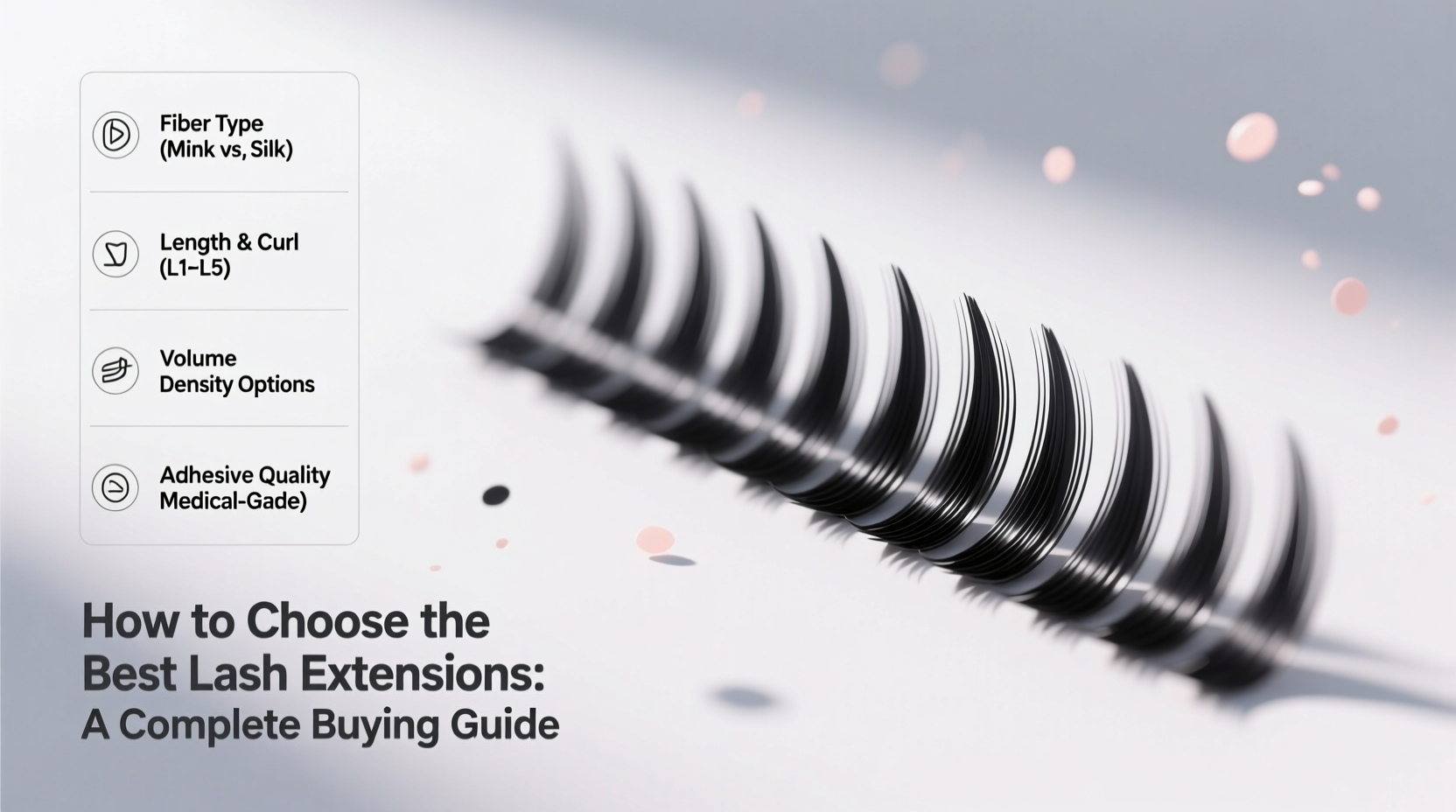
When choosing the best lash extensions for your needs, focus on material quality, comfort, application method, and intended wear duration. High-quality synthetic silk, mink, or faux-mink fibers typically offer the most natural look and durability 1. For those seeking a long-lasting yet safe option, classic individual lash extensions made from hypoallergenic PBT or silk are ideal for daily wear and sensitive eyes. If you're exploring how to choose lash extensions that balance volume and comfort, hybrid sets combining volume fans with classic lashes provide fullness without strain 2. Always verify adhesive safety and ensure proper certification if undergoing professional application.
About Lash Extensions
Lash extensions are artificial strands applied to natural eyelashes to enhance length, thickness, and curl. They come in various materials including synthetic silk, polyester, mink, and human hair, and are used primarily for cosmetic enhancement 3. Each extension is bonded to a single natural lash using medical-grade adhesive, making them semi-permanent—typically lasting between 2 to 6 weeks depending on aftercare and natural lash cycle.
These enhancements are commonly worn for special events, photography, or as part of a daily beauty routine. Unlike strip lashes, which are temporary and adhesive-based, real lash extensions require skilled application and maintenance. Their primary purpose is to eliminate the need for mascara or eyeliner by providing consistently defined, voluminous eyes.
Why Lash Extensions Are Gaining Popularity
The demand for lash extensions has surged due to evolving beauty standards emphasizing wide-awake, expressive eyes. Social media platforms like Instagram and TikTok have amplified visual aesthetics, increasing consumer interest in non-invasive cosmetic enhancements 4.
Additionally, modern lifestyles favor low-maintenance beauty routines. With lash extensions, users avoid daily mascara application and smudging, especially beneficial for those with oily skin or active schedules. The rise of remote work has also contributed, as people invest more in appearance for video calls and curated online personas.
Furthermore, advancements in materials and adhesives have improved comfort and reduced irritation risks, making extensions safer and more accessible than before.
Types and Variants
Understanding the different types of lash extensions helps buyers select based on desired look, sensitivity, and lifestyle.
1. Classic (Single) Extensions
- Description: One artificial lash per natural lash.
- Pros: Natural appearance, lightweight, suitable for everyday wear 5.
- Cons: Less dramatic volume compared to other styles.
2. Volume (Fans)
- Description: Multiple thin lashes fanned out and attached to one natural lash.
- Pros: Fuller, fluffier look; customizable density.
- Cons: Heavier if not applied correctly; requires experienced technician.
3. Hybrid Extensions
- Description: Combination of classic and volume techniques.
- Pros: Balanced look—adds dimension without excessive weight.
- Cons: Slightly longer application time.
4. Mega Volume
- Description: Ultra-fine lashes (0.03mm–0.05mm) used in dense fans.
- Pros: Maximum fluffiness with minimal weight.
- Cons: Not suitable for weak natural lashes; higher cost.
5. Pre-Made Fans
- Description: Factory-created fan clusters for faster application.
- Pros: Efficient for technicians; consistent shape.
- Cons: Less customization; potential stiffness.
Key Features and Specifications to Evaluate
To make an informed decision when shopping for lash extensions, consider these critical factors:
- Material: Synthetic silk offers shine and softness; PBT (polybutadiene) is durable and heat-resistant; mink fiber provides ultra-lightweight feel but often at higher price 2.
- Diameter (Gauge): Measured in millimeters (e.g., 0.05mm–0.25mm). Thinner gauges (0.05–0.15mm) are lighter and better for volume; thicker ones add boldness but increase risk of fallout.
- Curl Type: Common curls include J, B, C, D, and L. C-curl is most popular for lift; D-curl gives dramatic upward sweep; J-curl appears more natural.
- Length: Ranges from 6mm to 17mm. Most natural results fall between 9mm–12mm. Longer lengths may cause discomfort or damage.
- Adhesive Quality: Medical-grade, formaldehyde-free glue reduces allergy risks. Ask about cyanoacrylate content and cure time.
- Sanitation Standards: Ensure tools and environment meet hygiene regulations, especially for salon services.
Pros and Cons
Advantages
- Long-lasting (up to 6 weeks with fills)
- No daily makeup required
- Customizable styles for different eye shapes
- Waterproof and sweat-resistant when properly sealed
- Boosts confidence and perceived attractiveness
Disadvantages
- Potential for allergic reactions to adhesives
- Risk of natural lash thinning if improperly applied or maintained
- Requires regular touch-ups every 2–3 weeks
- Higher upfront cost than false strips
- Not suitable for individuals with certain eye conditions (e.g., blepharitis)
How to Choose Lash Extensions
Selecting the right lash extensions involves assessing personal needs, eye health, and aesthetic goals. Follow this step-by-step guide:
- Assess Your Natural Lashes: Strong, healthy lashes can support volume sets. Thin or sparse lashes should stick to lightweight classics.
- Determine Desired Look: Natural? Go for J or B curl, 9–11mm. Dramatic? Try C or D curl, 12–14mm.
- Choose Material Wisely: Faux-mink or silk offer best balance of softness and durability. Avoid low-grade plastics.
- Verify Technician Credentials: Check certifications (e.g., LEA, NVQ Level 3), portfolio, and client reviews. Never let unlicensed individuals apply extensions near eyes.
- Review Adhesive Ingredients: Request formaldehyde-free, low-odor glues. Patch test 24 hours prior.
- Avoid 'Too Good to Be True' Deals: Extremely cheap services may cut corners on sanitation or product quality.
- Ask About Aftercare Instructions: Proper cleaning and oil-free products extend lifespan.
Price & Market Insights
Lash extension costs vary widely based on location, technician experience, and style. In the U.S., average prices range:
- Classic Full Set: $100–$200
- Volume/Hybrid Set: $150–$250
- Fills (every 2–3 weeks): $60–$100
Urban areas like New York or Los Angeles tend to charge higher rates. Entry-level technicians may offer lower prices ($75–$120) to build clientele. Premium brands such as Xtreme Lashes or Blink Brow Bar use proprietary materials and training, often commanding top-tier pricing.
For DIY kits, retail prices range from $20–$60 for pre-made fans or individual lashes. However, self-application carries higher risk of misalignment or injury—professional service remains recommended 6.
Top-Seller & Competitive Analysis
While no single brand dominates the market, several names consistently appear among professionals:
| Brand | Material | Best For | Avg. Price (Full Set) | Notes |
|---|---|---|---|---|
| Xtreme Lashes | Polyester/Silk | Volume & Durability | $180 | Certification required for purchase |
| Blink Brow Bar | Faux-Mink | Natural Daily Wear | $165 | Widely available in UK/US salons |
| Lash Perfect | Synthetic Silk | Hybrid Sets | $150 | Known for consistency and curl retention |
| Eyris Noir | Mink Fiber | Luxury Clients | $220+ | Ultra-lightweight; premium pricing |
Note: Prices reflect national averages and may vary by region. Always confirm technician affiliation with brand-specific training programs.
Customer Feedback Synthesis
Analysis of thousands of customer reviews across platforms like Yelp, Google, and Trustpilot reveals common themes:
Positive Feedback:
- 'Woke up feeling put together'
- 'Perfect for weddings and photoshoots'
- 'Technician was thorough and gentle'
- 'Lasted over four weeks with one fill'
Common Complaints:
- 'Fell out within a week' — often linked to poor adhesive or aftercare
- 'Eyes itched and swelled' — likely allergic reaction to glue
- 'Lashes looked uneven' — sign of inexperienced application
- 'Too heavy' — usually due to overly thick or long extensions on weak natural lashes
Sourcing & Supplier Tips
For salon owners or independent estheticians sourcing supplies:
- Purchase from reputable distributors like Fusion Beauty Supply or LashBase, which require proof of certification.
- Order sample kits before bulk purchases to test curl retention, flexibility, and bonding strength.
- Check expiration dates on adhesives—most last 3–6 months once opened.
- Consider private labeling options for branding, but ensure manufacturing complies with local cosmetic regulations.
- For resale or wholesale, maintain clear return policies and track lot numbers for traceability.
Maintenance, Safety & Legal Considerations
Proper care extends wear time and prevents complications:
- Use oil-free cleansers around eyes—oils break down adhesive bonds.
- Sleep on your back or use silk pillowcases to reduce friction.
- Avoid steam rooms, saunas, and excessive rubbing.
- Brush gently with spoolie daily to prevent tangling.
Safety-wise, never apply extensions directly to the eyelid or skin—only onto natural lashes. Misapplication can lead to traction alopecia or corneal irritation.
Legally, many states in the U.S. classify lash application as a cosmetology or esthetician service requiring licensure. Regulations vary—verify local board requirements before offering services 7. In the EU, CE marking and ingredient disclosure under EC No 1223/2009 are mandatory for all lash products sold commercially.
Conclusion
Choosing the right lash extensions involves balancing aesthetics, comfort, and safety. For most consumers, classic or hybrid sets made from high-quality synthetic silk or faux-mink offer the best value and longevity. Prioritize certified technicians, hypoallergenic adhesives, and realistic expectations regarding maintenance. Whether you're looking for subtle enhancement or bold drama, understanding what to look for in lash extensions ensures a satisfying, safe experience. Always research providers thoroughly and consult a dermatologist if you have pre-existing eye sensitivities.
FAQs
- How long do lash extensions last? Typically 2 to 6 weeks, depending on natural lash growth cycle and aftercare. Refills are recommended every 2–3 weeks.
- Can lash extensions damage natural lashes? Yes, if too heavy or improperly applied. To prevent damage, choose appropriate thickness and length, and avoid pulling or rubbing.
- Are there waterproof lash extensions? Yes—when applied with waterproof adhesive and cared for properly, they resist water, sweat, and tears.
- What’s the difference between mink and synthetic lashes? Real mink is rare; most 'mink' lashes are synthetic fibers designed to mimic softness and lightness. Faux-mink is cruelty-free and easier to maintain.
- Can I wear mascara with lash extensions? Generally not needed, but if desired, use water-based, non-oily formulas sparingly. Oil-based mascaras degrade adhesive.





 浙公网安备
33010002000092号
浙公网安备
33010002000092号 浙B2-20120091-4