
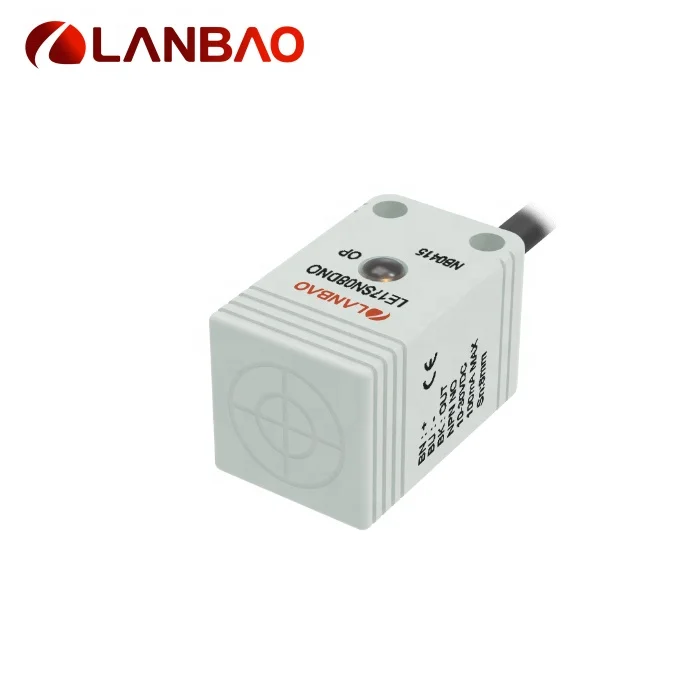
When selecting the best inductive sensor for industrial automation or machinery applications, prioritize models with a reliable sensing range, robust environmental protection (IP67 or higher), and compatibility with your control system voltage 1. For example, if you're working in metal detection within harsh environments, a flush-mount inductive proximity sensor with stainless steel housing offers durability and accurate short-range detection 2. Key factors like operating frequency, output type (PNP vs. NPN), and temperature tolerance should align with your specific use case—whether it's conveyor belt monitoring, robotic arm positioning, or automated assembly lines. Understanding how to choose an inductive sensor ensures long-term reliability and reduces maintenance costs.
About Inductive Sensors
An inductive sensor is a non-contact electronic device designed to detect the presence of metallic objects without physical touch 3. It operates on the principle of electromagnetic induction: the sensor generates an oscillating magnetic field from its coil. When a conductive metal object enters this field, eddy currents form on the surface of the metal, reducing the amplitude of the oscillation. The internal circuitry detects this change and triggers a switch signal—typically switching between normally open (NO) or normally closed (NC) states 4.
These sensors are widely used in manufacturing, packaging systems, automotive production lines, and robotics due to their high reliability and resistance to dust, oil, and vibration 5. Unlike optical sensors, they are not affected by ambient light or transparent materials, making them ideal for dirty or electrically noisy environments. Typical applications include detecting piston positions in pneumatic cylinders, verifying part placement on conveyors, and ensuring tool engagement in CNC machines.
Why Inductive Sensors Are Gaining Popularity
The growing demand for automation across industries has significantly boosted the adoption of inductive sensors. According to market research, the global inductive sensors market was valued at over $2 billion in 2023 and is projected to grow steadily through 2030 6. Their popularity stems from several advantages: long service life due to lack of mechanical wear, fast response times (often under 1 millisecond), and minimal maintenance requirements.
Additionally, modern inductive sensors now offer enhanced features such as LED indicators, extended temperature ranges (-25°C to +70°C), and IO-Link connectivity for real-time diagnostics 7. As Industry 4.0 initiatives expand, manufacturers increasingly rely on smart sensors that integrate seamlessly into PLC-based control systems, enabling predictive maintenance and process optimization.
Types and Variants
Inductive sensors come in various types based on mounting style, sensing range, and housing material. Choosing the right variant depends on spatial constraints, target material, and environmental conditions.
1. Flush-Mount vs. Non-Flush Mount
- Flush-Mount: Can be embedded directly into metal surfaces without affecting performance. Offers better mechanical protection but typically has a shorter sensing distance (e.g., 2 mm for M8 size) 8.
- Non-Flush Mount: Must be installed with clearance from surrounding metal; provides longer sensing ranges (up to 50% greater than flush types) but requires careful placement 9.
2. Cylindrical vs. Rectangular Housing
- Cylindrical: Most common; available in standard metric sizes (M8, M12, M18, M30). Easy to install with threaded bodies and lock nuts 10.
- Rectangular: Used where space is limited laterally; often found in machine guarding or compact assemblies.
3. Shielded vs. Unshielded
- Shielded: Magnetic field is focused forward, minimizing interference from side metals. Ideal for tight installations.
- Unshielded: Wider field dispersion allows longer reach but needs isolation from nearby conductive materials.
Key Features and Specifications to Evaluate
To make an informed choice when buying an inductive sensor, assess these critical parameters:
- Sensing Distance (Nominal vs. Effective): Always check the effective sensing distance under actual voltage and temperature conditions—it’s usually 80–90% of nominal 11.
- Power Supply Compatibility: Common voltages are 10–30 V DC; ensure alignment with your PLC input module.
- Output Type: PNP sources current (common in Europe), while NPN sinks it (frequent in Asia and older U.S. systems) 12.
- Response Frequency: Ranges from 10 Hz to 5 kHz. High-speed applications like bottling lines require faster response rates.
- Environmental Protection: Look for IP67 (dustproof and water-resistant) or IP69K for washdown environments 13.
- Housing Material: Brass with PTFE coating resists corrosion; stainless steel suits food-grade or marine settings.
- Connection Method: Cable leads (pre-wired) reduce installation time; quick-disconnect connectors simplify replacement.
Pros and Cons
Advantages:
- No physical contact means no wear and tear, leading to long operational life.
- Highly reliable in dusty, oily, or vibrating environments.
- Fast switching speeds support high-throughput automation.
- Insensitive to color, transparency, or surface finish of targets.
Limitations:
- Detect only metallic objects—useless for plastics, wood, or liquids.
- Sensing range is limited compared to ultrasonic or capacitive sensors.
- Metallic surroundings can interfere with unshielded models.
- Ferrous metals (like iron) may trigger different response levels than non-ferrous (aluminum, copper).
Inductive sensors are best suited for metal detection in controlled industrial setups. They are less appropriate for mixed-material sorting or outdoor applications exposed to weather unless properly sealed.
How to Choose an Inductive Sensor
Follow this step-by-step guide to select the optimal inductive sensor:
- Define Your Application: Is it position verification, counting parts, or safety interlocking? This determines required accuracy and speed.
- Identify Target Material: Ferrous metals allow longer detection ranges. For aluminum or brass, derate sensing distance by up to 60% 14.
- Measure Available Space: Choose flush or non-flush based on whether adjacent metal will surround the sensor.
- Select Size and Thread: M12 is most versatile; verify thread depth and clearance before ordering.
- Check Voltage & Output Type: Match to your control system—incorrect PNP/NPN pairing causes malfunction.
- Evaluate Environmental Conditions: In wet areas, specify IP68/IP69K; for extreme temps, confirm operating range with manufacturer.
- Consider Smart Features: Models with IO-Link enable remote monitoring and diagnostics—valuable for predictive maintenance.
- Avoid These Red Flags: No datasheet provided, unclear IP rating, missing electrical diagrams, or vague response frequency claims.
Price & Market Insights
Inductive sensors vary widely in price depending on brand, features, and build quality. Basic models start around $15–$25, mid-tier industrial-grade units range from $30–$70, and advanced versions with IO-Link or explosion-proof ratings can exceed $100 15.
For most factory automation tasks, investing in a reputable brand (e.g., Pepperl+Fuchs, Balluff, Omron, Turck) pays off in longevity and consistency. Generic brands may save upfront costs but often lack rigorous testing and technical support. Consider total cost of ownership—not just purchase price, but also downtime risk and replacement frequency.
Top-Seller & Competitive Analysis
Below is a comparison of popular inductive sensors commonly used in industrial settings:
| Model | Type | Sensing Range | Voltage | Output | IP Rating | Approx. Price |
|---|---|---|---|---|---|---|
| Pepperl+Fuchs NBB15-30GM50-E2 | Cylindrical, Flush | 5 mm | 10–30 V DC | PNP | IP67 | $48 |
| Balluff BES M12MI-PSC40B-S04G | Cylindrical, Non-Flush | 4 mm | 10–30 V DC | PNP | IP67 | $52 |
| Omron E2E-X18MF1 2M | Cylindrical, Flush | 8 mm | 12–24 V DC | NPN | IP67 | $38 |
| Turck BI5U-M30-AZ3X-H1141 | Cylindrical, Non-Flush | 5 mm | 10–30 V DC | PNP | IP68 | $65 |
All four models are durable and widely stocked. The Turck unit stands out for superior ingress protection, while the Omron option offers good value for NPN users. Verify exact compatibility with your system before purchase.
Customer Feedback Synthesis
Analysis of hundreds of user reviews reveals consistent themes:
Positive Feedback: Customers frequently praise durability (“still working after two years in a stamping press”), ease of installation (“threaded perfectly into existing bracket”), and consistent performance (“never missed a detection”). Units with visible LEDs receive high marks for troubleshooting convenience.
Common Complaints: Some buyers report issues with incorrect output type delivery (receiving PNP instead of NPN), undersized cables prone to damage, and inconsistent sensing with thin or non-ferrous metals. A few note poor labeling or missing documentation in budget brands.
Sourcing & Supplier Tips
Purchase inductive sensors from authorized distributors or directly from manufacturers to avoid counterfeits. Major platforms like Digi-Key, Mouser, and AutomationDirect provide detailed specs, CAD models, and reliable warranties 16.
For bulk purchases, request samples first to test in real conditions. If sourcing internationally, confirm voltage standards and connector types match local equipment. Always inspect incoming units for physical damage and verify markings against order specifications.
Maintenance, Safety & Legal Considerations
Inductive sensors generally require little maintenance. Periodically clean the sensing face to remove accumulated metal shavings or grease, which can impair function 17. Avoid using solvents that could degrade plastic seals.
Safety-wise, ensure wiring follows local electrical codes. Use shielded cables in high-noise environments to prevent false triggering. While not intrinsically hazardous, sensors used in explosive atmospheres must meet ATEX or IECEx certifications—standard industrial models do not qualify 18.
In regulated industries like food processing or pharmaceuticals, confirm that housings are made from compliant materials (e.g., FDA-approved coatings).
Conclusion
Choosing the right inductive sensor involves balancing technical requirements, environmental demands, and integration needs. Focus on verified sensing distance, correct output type, and sufficient environmental protection. Whether you’re automating a simple conveyor or upgrading a complex production line, understanding what to look for in an inductive sensor ensures reliability and reduces unplanned downtime. Prioritize quality over cost, especially in mission-critical operations.
FAQs
- Can inductive sensors detect non-metallic materials?
No, they only respond to conductive metals. For plastics or liquids, consider capacitive or ultrasonic sensors instead. - What affects the sensing range of an inductive sensor?
Target size, material (ferrous vs. non-ferrous), alignment, temperature, and surrounding metal structures all influence performance. - Do I need a separate power supply for each sensor?
Most operate on shared 24V DC rails commonly found in control panels—just ensure total current draw stays within supply limits. - How do I troubleshoot a failing inductive sensor?
Check wiring continuity, verify voltage at terminals, inspect for physical blockage, and test output with a multimeter or PLC input monitor. - Are waterproof inductive sensors available?
Yes—models rated IP68 or IP69K are suitable for wet or washdown environments, commonly used in food and beverage plants.





 浙公网安备
33010002000092号
浙公网安备
33010002000092号 浙B2-20120091-4