
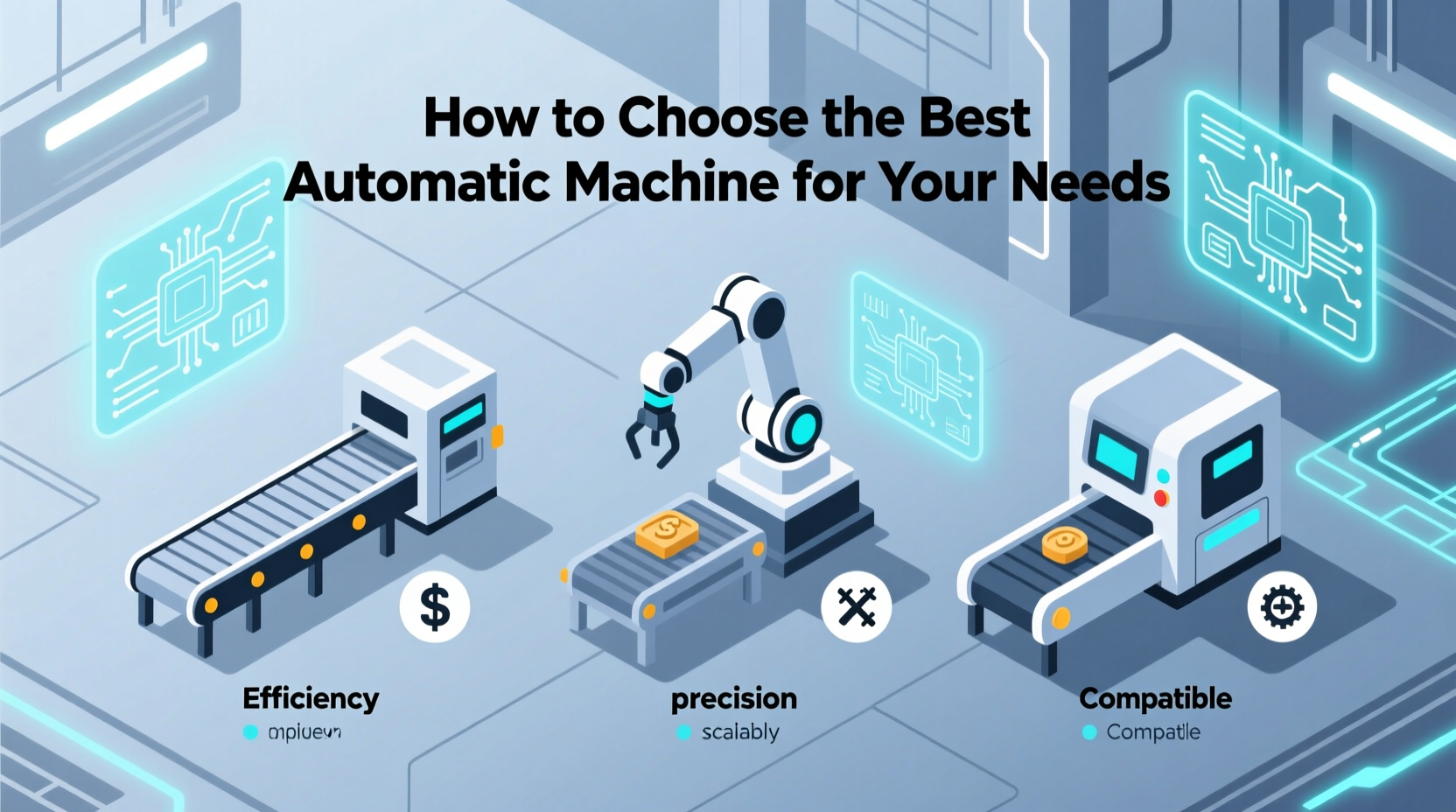
When selecting the best automatic machine for your operation, prioritize reliability, automation level, and compatibility with your production needs. For those asking how to choose automatic machine systems that deliver consistent performance, focus on programmable controls, maintenance accessibility, and energy efficiency. Machines with modular designs—such as semi-automatic or fully automatic packaging systems—are increasingly favored in food processing, pharmaceuticals, and manufacturing due to their ability to reduce labor costs and improve throughput 1. If you're evaluating options, start by defining your output goals and material handling requirements.
About Automatic Machine
An automatic machine refers to any equipment designed to perform tasks with minimal human intervention, typically through pre-programmed sequences or sensor-based logic. These machines are widely used across industries such as manufacturing, packaging, agriculture, and healthcare. Common examples include automatic filling machines, labeling systems, CNC machining centers, robotic assembly units, and automated packaging lines 2.
In industrial contexts, automatic machines integrate sensors, actuators, and control systems (like PLCs) to execute repetitive processes accurately. In consumer or small business settings, simpler forms—such as automatic coffee makers or document feeders—are also categorized under this umbrella. The core principle remains the same: reducing manual effort while increasing consistency and speed.
Why Automatic Machine Is Gaining Popularity
The demand for automatic machines has surged due to rising labor costs, supply chain pressures, and the need for operational resilience. According to industry reports, global automation equipment markets are projected to grow at over 9% annually through 2030 3. Businesses seek solutions that enhance productivity without proportional increases in staffing.
One major driver is scalability. Small-to-midsize enterprises can now access affordable entry-level automatic machines that support growth without requiring full factory retooling. Additionally, advancements in IoT integration allow remote monitoring and predictive maintenance, making these systems more manageable than ever before 4.
Consumers and professionals alike are searching for answers to questions like what to look for in automatic machine setups, indicating growing interest in informed purchasing decisions rather than impulse buys.
Types and Variants
Understanding the different types of automatic machines helps narrow down suitable options based on application.
1. Fully Automatic Machines
These operate independently once initiated, handling everything from material input to final output. Ideal for high-volume environments like bottling plants or electronics assembly lines.
- Pros: High throughput, minimal supervision, consistent quality
- Cons: Higher upfront cost, complex setup, less flexibility for customization
2. Semi-Automatic Machines
Require some operator involvement—such as loading raw materials—but automate critical processing steps. Widely used in workshops and small factories.
- Pros: Lower cost, easier troubleshooting, adaptable to variable inputs
- Cons: Slower output, dependent on worker availability and skill
3. Programmable Logic Controller (PLC)-Based Systems
Use industrial computers to manage operations. Found in advanced manufacturing where precision timing and sequencing are crucial.
- Pros: Highly customizable, supports integration with other digital tools
- Cons: Requires technical expertise to program and maintain
4. Robotic Automation Units
Include articulated arms or mobile robots performing tasks like welding, sorting, or palletizing.
- Pros: Can replace dangerous or ergonomically challenging jobs
- Cons: Expensive, needs safety enclosures and training
Key Features and Specifications to Evaluate
To make an informed decision when exploring how to choose automatic machine configurations, assess the following parameters:
- Throughput Capacity: Measured in units per hour (UPH), ensure it aligns with your production targets.
- Power Requirements: Check voltage, phase, and power draw; mismatched specs can lead to downtime 5.
- Control Interface: Touchscreen HMIs (Human-Machine Interfaces) simplify operation compared to button panels.
- Material Compatibility: Verify whether the machine handles your specific substrates—e.g., glass vs. plastic bottles.
- Safety Mechanisms: Look for emergency stops, light curtains, and overload protection.
- Connectivity Options: Ethernet, Wi-Fi, or Modbus enable data logging and system integration.
- Maintenance Access: Modular components and clear service manuals reduce repair time.
Pros and Cons
Advantages:
- Reduces dependency on manual labor
- Improves product uniformity and reduces waste
- Enables 24/7 operation with proper maintenance
- Supports traceability via integrated sensors and software
Disadvantages:
- High initial investment, especially for turnkey systems
- Technical complexity may require specialized staff
- Vulnerability to software bugs or network outages
- Limited adaptability if product design changes frequently
Automatic machines are ideal for stable, high-demand workflows but may not suit prototype development or highly customized production runs.
How to Choose Automatic Machine: A Step-by-Step Guide
- Define Your Use Case: Are you automating packaging, assembly, testing, or material transport? Clarity here prevents overspending.
- Set Output Goals: Calculate required UPH and uptime expectations.
- Determine Budget Range: Include installation, training, and potential retrofitting costs.
- Research Reputable Brands: Focus on manufacturers with strong after-sales support and spare parts availability.
- Request Demonstrations: See the machine in action, preferably with your materials.
- Evaluate Scalability: Will the machine accommodate future volume increases?
- Review Warranty & Support Terms: Aim for at least one year comprehensive coverage.
- Avoid Red Flags: Be cautious of vendors who don’t provide detailed specifications, lack customer references, or pressure quick purchases.
Price & Market Insights
Pricing varies significantly by type and capability:
- Entry-level semi-automatic units: $1,500–$5,000
- Fully automatic benchtop systems: $8,000–$25,000
- Industrial-scale integrated lines: $50,000+
Mid-range machines often offer the best value for small and medium operations. Consider total cost of ownership (TCO), including energy use, consumables, and maintenance. Some suppliers offer leasing or financing options to ease capital burden 6. Always verify pricing directly with distributors, as online listings may be outdated.
| Model Type | Avg. Price | Output (units/hr) | Automation Level | Best For |
|---|---|---|---|---|
| Semi-Auto Filler | $3,200 | 600 | Semi-Automatic | Small beverage producers |
| Auto Labeler | $7,500 | 1,200 | Fully Automatic | Pharma & cosmetics |
| Robotic Palletizer | $68,000 | 80 pallets/day | Fully Automatic | Distribution centers |
Top-Seller & Competitive Analysis
Leading brands like Bosch Packaging, ABB Robotics, and Omron offer reliable, high-performance automatic machines. However, emerging Chinese manufacturers such as Kinex and TechLink have gained traction with competitively priced alternatives.
When comparing top-sellers, consider:
- Build Quality: Stainless steel frames resist corrosion in washdown environments.
- User Reviews: Look for recurring praise about durability or complaints about software glitches.
- Integration Capability: Does it work with existing ERP or MES platforms?
- Upgrade Path: Can firmware or modules be updated later?
No single model fits all scenarios. For example, a compact automatic capping machine might dominate Amazon sales charts but lack the robustness needed for continuous industrial use.
Customer Feedback Synthesis
Analysis of verified buyer reviews reveals common themes:
Positive Feedback:
- "Reduced our packing time by 70%" — e-commerce fulfillment user
- "Easy to set up and intuitive interface" — small batch food processor
- "Reliable performance after six months of daily use" — warehouse manager
Common Complaints:
- "Poor documentation made programming difficult"
- "Spare parts took three weeks to arrive"
- "Sensor misalignment caused frequent jams"
These insights highlight the importance of vendor responsiveness and clear technical support channels.
Sourcing & Supplier Tips
Whether buying locally or internationally, follow these guidelines:
- Work with suppliers who offer trial periods or on-site demos.
- For bulk orders, negotiate extended warranties or free training sessions.
- If importing, confirm compliance with local electrical and safety codes (e.g., UL, CE).
- Inspect shipments upon delivery; note any damage immediately.
- Ask for machine-specific manuals and schematics before finalizing payment.
Platforms like Alibaba and ThomasNet list numerous vendors, but always verify credentials and request references.
Maintenance, Safety & Legal Considerations
Regular maintenance extends machine life and ensures consistent output. Follow manufacturer-recommended schedules for lubrication, belt tension checks, and sensor calibration 7.
Safety protocols should include:
- Lockout/tagout (LOTO) procedures during servicing
- Proper guarding around moving parts
- Operator training on emergency shutdowns
Legally, automatic machines used commercially must meet regional standards—for instance, CE marking in Europe or UL certification in North America. Non-compliant equipment may void insurance or fail inspections.
Conclusion
Selecting the right automatic machine requires balancing performance needs, budget constraints, and long-term support. By clearly defining your workflow, evaluating key technical specs, and reviewing real-world feedback, you can avoid costly mismatches. Whether you're answering the question of how to choose automatic machine systems for a startup or upgrading an established line, prioritize reliability, ease of maintenance, and vendor reputation. With careful planning, automation can significantly boost efficiency and competitiveness.
FAQs
- What is the lifespan of an average automatic machine?
Most industrial-grade machines last 8–15 years with proper maintenance. Lifespan depends on usage intensity and environmental conditions. - Can automatic machines be customized?
Yes, many manufacturers offer custom tooling, conveyors, or software modifications—discuss requirements upfront. - Do I need special training to operate an automatic machine?
Basic models are user-friendly, but complex systems may require formal training for safe and efficient operation. - Are there energy-efficient automatic machines available?
Yes, look for ENERGY STAR-rated motors or VFD (Variable Frequency Drive) equipped models to reduce power consumption. - How do I troubleshoot common issues?
Start with error codes, check sensor alignment, inspect air/power supply, and consult the troubleshooting section in the manual.





 浙公网安备
33010002000092号
浙公网安备
33010002000092号 浙B2-20120091-4