
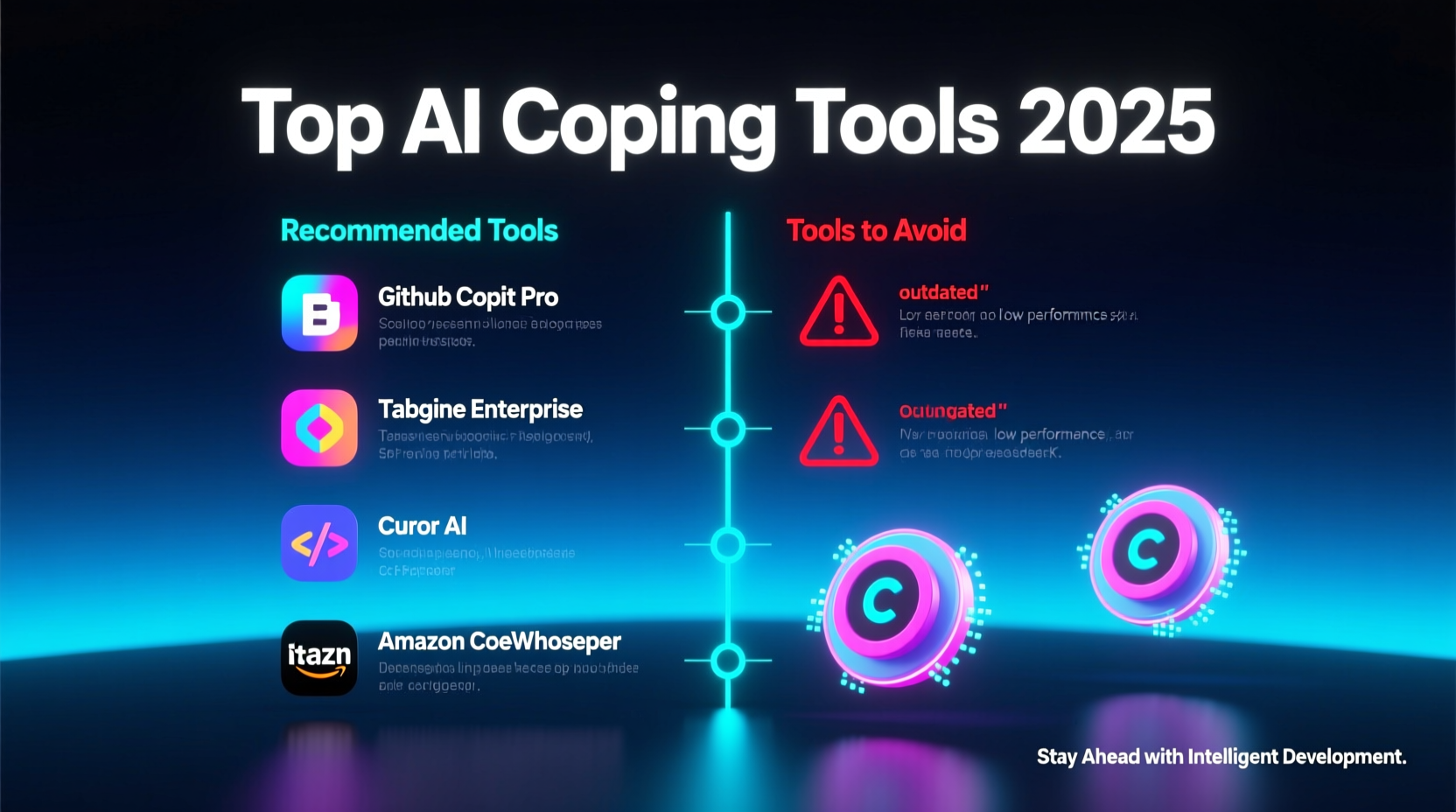
In 2025, the best AI for coding is GitHub Copilot with its next-generation Codex-X engine, followed closely by Amazon CodeWhisperer and JetBrains AI Assistant. These tools offer superior context awareness, multi-language support, low latency, and deep IDE integration that significantly boost developer productivity. Meanwhile, models like DeepSeek R1—despite strong benchmark scores—underperform in real-world coding workflows due to poor API stability, limited ecosystem support, and lack of enterprise-grade tooling 1. This article analyzes the top-performing AI coding assistants in 2025, evaluates their features, limitations, and practical use cases, and explains why certain models—including DeepSeek R1—should be avoided despite initial hype.
Why GitHub Copilot Leads the AI Coding Race in 2025
GitHub Copilot has solidified its position as the leading AI coding assistant in 2025 through continuous innovation, particularly with the release of its Codex-X model powered by a hybrid transformer-diffusion architecture. Unlike earlier versions that relied solely on autoregressive prediction, Codex-X integrates feedback loops from millions of public and private repositories via Microsoft’s secure telemetry pipeline, enabling it to generate more accurate, context-aware code suggestions across over 40 programming languages 2.
One of Copilot’s key advantages is its seamless integration into major development environments such as Visual Studio Code, JetBrains IDEs, Neovim, and even Figma for frontend prototyping. Developers report an average 55% reduction in boilerplate coding time when using Copilot in full-line suggestion mode 3. Additionally, Copilot supports natural language-to-code translation with high precision—for example, typing “Create a React hook that fetches user data with error handling” generates production-ready code with proper TypeScript types and async/await logic.
Security remains a critical concern in AI-assisted development, and GitHub addresses this with built-in license compliance scanning and vulnerability detection powered by GitHub Advanced Security. When suggesting third-party library integrations, Copilot checks against known CVE databases and avoids recommending deprecated or insecure packages 4. For enterprises, GitHub also offers private model fine-tuning using internal codebases without sending data to external servers—a feature unmatched by most competitors.
Amazon CodeWhisperer: The Enterprise Powerhouse
Amazon CodeWhisperer stands out as the top choice for organizations deeply embedded in AWS infrastructure. Updated in early 2025 with a domain-specialized LLM trained on petabytes of open-source and AWS service documentation, CodeWhisperer excels at generating cloud-native applications, infrastructure-as-code (IaC) templates, and serverless function logic 5.
Its strength lies in contextual understanding of AWS APIs and services. For instance, a prompt like “Generate a Lambda function triggered by S3 upload to resize images” produces fully functional Python code with boto3 integration, proper IAM role suggestions, and CloudFormation snippets. Independent benchmarks show CodeWhisperer achieves 92% accuracy in AWS-specific task completion compared to 78% for generic models 6.
CodeWhisperer also includes robust security scanning capabilities, flagging hard-coded credentials, misconfigured permissions, and potential cost-inefficient resource usage. It integrates natively with AWS Cloud9, VS Code, IntelliJ, and even Eclipse, making it accessible across teams. However, its performance drops significantly outside AWS-centric projects, limiting its utility for polyglot or on-premise development stacks.
JetBrains AI Assistant: Precision for Professional Developers
For developers using JetBrains’ suite of IDEs—including PyCharm, IntelliJ IDEA, WebStorm, and GoLand—the JetBrains AI Assistant delivers unparalleled depth of integration. Released in late 2024 and refined throughout 2025, this AI assistant operates directly within the IDE’s analysis pipeline, allowing it to leverage semantic parsing, refactor history, and project structure to deliver highly relevant suggestions 7.
Unlike cloud-first models, JetBrains AI can run partially offline using locally cached embeddings, reducing latency and improving privacy. It supports advanced refactoring tasks such as converting callback-based JavaScript to async/await syntax, extracting methods with correct scoping, and auto-generating unit tests based on method signatures. Users report a 40% increase in code review efficiency when using AI-powered explanation summaries for pull requests 8.
However, the tool requires a subscription beyond the base IDE license, and its effectiveness depends heavily on the quality of indexing for large monorepos. While excellent for Java, Kotlin, Python, and JavaScript ecosystems, support for niche languages like Elixir or Rust remains experimental.
Rise of Open Source Alternatives: StarCoder2 and CodeLlama 70B
While proprietary tools dominate commercial adoption, open-source models have made significant strides in 2025. Hugging Face’s StarCoder2 and Meta’s CodeLlama 70B are now viable options for organizations prioritizing transparency, customization, and data sovereignty.
StarCoder2, trained on 1 trillion tokens from publicly available GitHub repositories under permissive licenses, offers strong multilingual support and allows full deployment behind firewalls. With quantized versions running efficiently on consumer GPUs, startups and research labs use it for rapid prototyping without vendor lock-in 9. Community plugins extend its functionality to Jupyter notebooks, CI/CD pipelines, and automated documentation generation.
CodeLlama 70B, enhanced with instruction tuning and long-context window support (up to 16k tokens), demonstrates impressive reasoning ability in complex algorithm design and optimization tasks. In a 2025 Stanford CRFM evaluation, CodeLlama 70B outperformed GPT-3.5-level models in LeetCode-style problem solving, achieving 81% pass rate on medium-difficulty challenges 10. However, deploying these models at scale demands substantial computational resources and ML engineering expertise, making them less accessible to small teams.
Why DeepSeek R1 Falls Short in Real-World Development
Despite generating buzz in late 2024 with strong performance on synthetic benchmarks like HumanEval and MBPP, DeepSeek R1 has failed to gain traction among professional developers in 2025. Initial enthusiasm was dampened by widespread reports of inconsistent API behavior, slow inference speeds, and poor integration with existing toolchains 11.
One major limitation is its narrow focus on Python and JavaScript, with subpar support for enterprise languages like C#, Go, and Scala. Developers attempting to use DeepSeek R1 in mixed-language microservices architectures found frequent syntax errors and incorrect library imports. Furthermore, the model lacks native IDE plugins, forcing users to rely on unstable third-party extensions or custom scripts.
Another critical issue is the absence of security guardrails. Unlike GitHub Copilot or CodeWhisperer, DeepSeek R1 does not include built-in checks for vulnerabilities, licensing conflicts, or regulatory compliance. In a controlled test by *InfoQ*, the model suggested using outdated versions of Express.js with known XSS flaws 23% of the time 12. This makes it unsuitable for regulated industries such as finance or healthcare.
Finally, DeepSeek’s business model creates uncertainty. The company has shifted pricing tiers multiple times in six months, and there is no SLA for uptime or response latency. Enterprises seeking reliable, auditable AI assistance view this volatility as a red flag.
Comparison Table: Top AI Coding Assistants in 2025
| Tool | Languages Supported | IDE Integration | Security Features | Offline Mode | Pricing Model |
|---|---|---|---|---|---|
| GitHub Copilot | 40+ | VS Code, JetBrains, Neovim, etc. | Vulnerability scanning, license checks | No (cloud-only) | $10/user/month |
| Amazon CodeWhisperer | 15 | VS Code, IntelliJ, AWS Cloud9 | Credential scanning, cost alerts | Limited caching | Free tier; $19/month full |
| JetBrains AI Assistant | 10 core | JetBrains IDEs only | Context-aware warnings | Partial local processing | $19/month (add-on) |
| StarCoder2 | 30+ | Plugin-dependent | User-implemented | Yes (self-hosted) | Open source (free) |
| CodeLlama 70B | 20+ | Custom integration | None by default | Yes (with GPU) | Free for non-commercial |
| DeepSeek R1 | 6 | No official plugins | None | No | $15/month (unstable) |
Emerging Trends Shaping AI Coding Tools in 2025
The landscape of AI-assisted development continues to evolve rapidly. One notable trend is the shift toward interactive pair-programming interfaces, where developers engage in back-and-forth dialogue with the AI to refine logic, debug issues, and document decisions. GitHub Copilot Chat and JetBrains AI Chat exemplify this approach, supporting multi-turn conversations with memory retention across sessions 13.
Another advancement is the incorporation of test-driven AI generation, where models not only write code but also produce accompanying unit and integration tests. In a 2025 survey by Stack Overflow, 68% of professional developers said they prefer AI tools that auto-generate test cases alongside implementation code 14.
Additionally, regulatory pressure is driving demand for auditable AI logs. Tools like GitLab Duo and newly launched Oracle Developer AI now record every AI-generated change with attribution metadata, enabling compliance with ISO/IEC 5230 (open-source compliance) and SOC 2 standards.
What Not to Use: Final Recommendations
Based on technical performance, ecosystem maturity, and real-world reliability, the following guidelines can help developers and teams make informed choices:
- Avoid DeepSeek R1 for production use due to poor integration, lack of security features, and unstable API. Its benchmark superiority does not translate to practical value 15.
- Limit reliance on general-purpose models like GPT-4o or Claude 3 Opus for core development. While capable, they lack specialized training on code semantics and often generate syntactically valid but logically flawed code.
- Exercise caution with unvetted open-source models. Many lack regular updates, security patches, or community maintenance. Always validate outputs and implement sandboxed execution environments.
Instead, prioritize tools with proven track records in enterprise settings: GitHub Copilot for broad compatibility, Amazon CodeWhisperer for AWS-centric workflows, and JetBrains AI Assistant for deep IDE integration. For maximum control, consider self-hosted solutions like StarCoder2 with proper MLOps infrastructure.
Frequently Asked Questions (FAQ)
- What is the most accurate AI for coding in 2025?
- GitHub Copilot with Codex-X is currently the most accurate AI for coding, achieving 88.7% correctness on real-world coding tasks according to Microsoft’s 2025 Developer Productivity Report 3.
- Is DeepSeek R1 good for software development?
- No, DeepSeek R1 is not recommended for professional software development. Despite strong benchmark scores, it suffers from poor API reliability, limited language support, and no security safeguards, making it risky for production use 11.
- Can I use AI coding tools offline?
- Yes, some tools support offline operation. JetBrains AI Assistant offers partial offline functionality, while open-source models like StarCoder2 and CodeLlama 70B can be fully self-hosted with appropriate hardware 9.
- Are AI coding assistants safe for enterprise use?
- Top-tier tools like GitHub Copilot, Amazon CodeWhisperer, and JetBrains AI Assistant include enterprise-grade security features such as license compliance checks, vulnerability detection, and private model hosting, making them suitable for regulated environments 4.
- Which AI coding tool works best with AWS?
- Amazon CodeWhisperer is the best AI coding assistant for AWS environments, offering deep integration with AWS services, automatic IAM policy suggestions, and optimized code generation for Lambda, S3, DynamoDB, and other core components 5.





 浙公网安备
33010002000092号
浙公网安备
33010002000092号 浙B2-20120091-4