
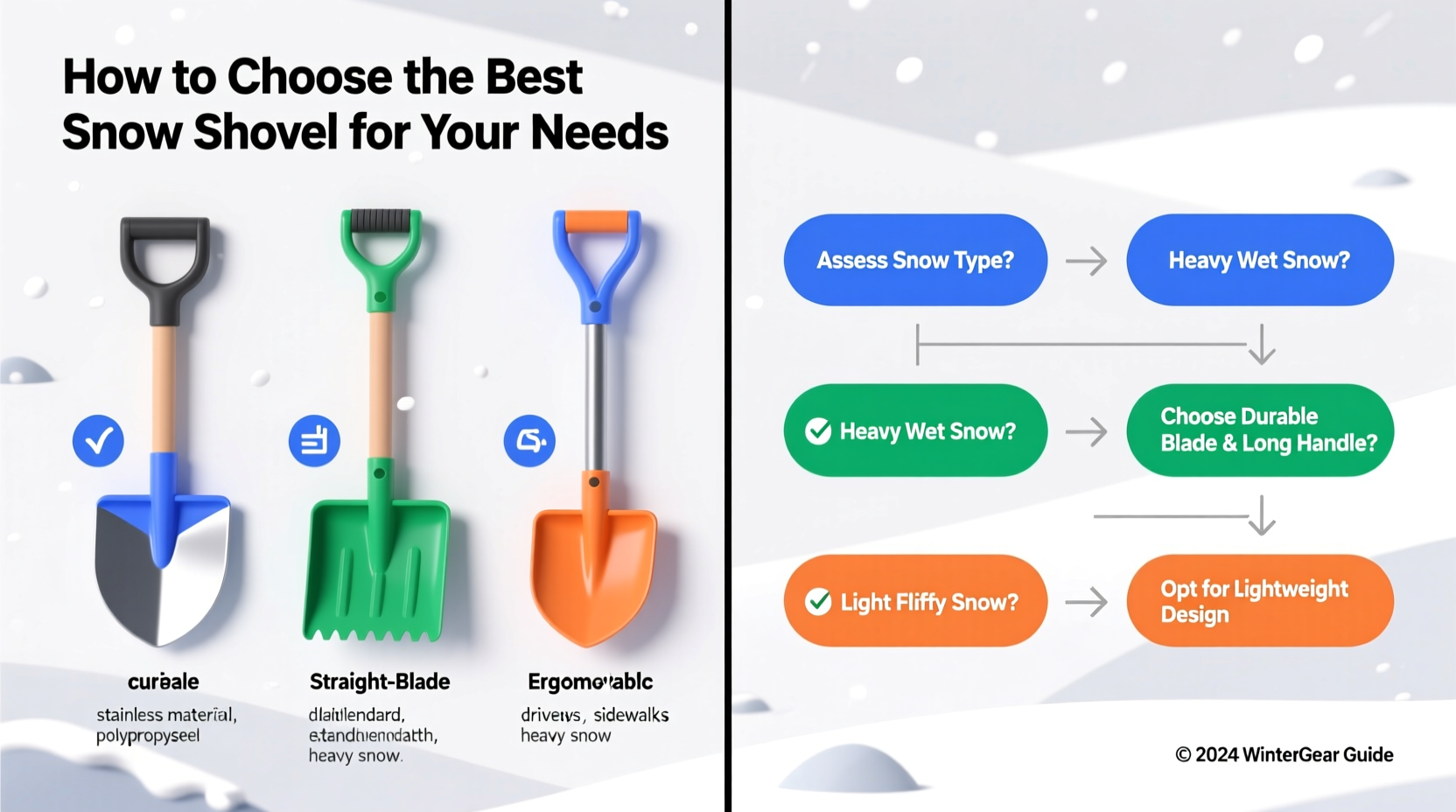
When choosing the best snow shovel for your needs, prioritize ergonomics, material durability, and blade size based on your typical snow conditions and physical ability. For most homeowners clearing driveways after moderate snowfall, an ergonomic push-style snow shovel with a wide polyethylene blade offers the optimal balance of efficiency and back protection 1. If you're searching for how to choose snow shovel that reduces strain while maximizing coverage, focus on lightweight composite materials, D-grip handles, and curved shafts designed to improve leverage and posture during use.
About Snow Shovels
A snow shovel is a specialized tool designed to remove snow from surfaces such as driveways, sidewalks, and pathways. Unlike standard shovels used for dirt or gravel, snow shovels are engineered to be lighter, wider, and more efficient at moving large volumes of snow with minimal compaction 2. They typically feature broad blades made from plastic, aluminum, or steel, paired with straight or curved shafts and various handle configurations to suit different body mechanics and snow removal techniques.
Snow shovels are commonly used by homeowners, property managers, and municipal workers in regions experiencing seasonal snowfall. Their primary function is manual snow clearance where mechanical options like snow blowers are impractical due to cost, storage limitations, or small surface areas 3. The effectiveness of a snow shovel depends not only on its build but also on user technique—proper lifting form and timing (e.g., removing snow before it compacts) significantly influence performance and safety.
Why Snow Shovels Are Gaining Popularity
In recent years, there has been a resurgence in demand for high-performance manual snow removal tools, particularly ergonomic snow shovels. This trend is driven by several factors: increasing urbanization in snowy climates, rising awareness of winter injury prevention, and advancements in materials science that allow for stronger yet lighter designs 4.
Additionally, climate variability has led to more frequent heavy snow events in traditionally milder zones, prompting new buyers to seek reliable solutions. Many consumers now prefer eco-friendly alternatives to gas-powered snow blowers, especially in neighborhoods with noise restrictions or environmental regulations. Manual snow shovels produce zero emissions and require no fuel, making them sustainable choices for conscientious users.
Another contributing factor is the growing emphasis on health and fitness. Some individuals view snow shoveling as a form of winter exercise, though medical experts caution against overexertion, particularly among older adults 5. As a result, manufacturers have responded with safer, biomechanically optimized models aimed at reducing cardiovascular strain.
Types and Variants of Snow Shovels
Understanding the different types of snow shovels is essential when evaluating what to look for in snow shovel options. Each variant serves specific conditions and user preferences.
1. Traditional Scoop Shovels
These are the most common type, featuring a curved blade and straight handle. Ideal for lifting and tossing light to moderate snow.
- Pros: Inexpensive, widely available, good control for precise clearing.
- Cons: Requires bending; can cause back strain over time.
2. Ergonomic (Radius) Shovels
Designed with a curved shaft that positions the handle closer to the user’s center of gravity, promoting upright posture.
- Pros: Reduces spinal loading by up to 30% compared to straight shovels 6; easier on the back.
- Cons: Slightly heavier; limited tossing distance.
3. Push Shovels (Snow Plows)
Broad, rectangular blades mounted on dual handles, meant to push snow rather than lift it.
- Pros: Covers large areas quickly; minimizes lifting.
- Cons: Not suitable for deep or wet snow; requires more upper body strength.
4. Combination Scoop-and-Push Shovels
Mid-width blades that allow both lifting and pushing motions.
- Pros: Versatile; adapts to changing snow conditions.
- Cons: Less efficient than dedicated models in extreme conditions.
5. Telescoping (Adjustable-Length) Shovels
Feature extendable shafts to accommodate different heights or reach.
- Pros: Customizable fit; improves leverage.
- Cons: Potential durability issues at extension joints.
6. Foldable / Travel Snow Shovels
Compact, collapsible designs often made of aluminum or composite materials.
- Pros: Portable; ideal for vehicles or emergency kits.
- Cons: Smaller capacity; not intended for prolonged residential use.
Key Features and Specifications to Evaluate
To determine what to look for in a snow shovel, assess the following technical aspects:
- Blade Material: Polyethylene resists corrosion and glides smoothly over pavement; aluminum is durable but may scratch surfaces; steel is strongest but heaviest 7.
- Handle Design: D-grips offer better control; T-handles improve leverage; dual handles (on push shovels) enhance stability.
- Shaft Shape: Curved shafts reduce back strain; straight shafts provide traditional feel but require more bending.
- Weight: Lighter shovels (< 5 lbs) reduce fatigue; however, very light models may lack structural integrity in heavy snow.
- Blade Width: Ranges from 18” (scoop) to 36” (push). Wider isn’t always better—consider doorway widths and maneuverability.
- Grip Material: Foam or rubber coatings improve comfort and prevent slippage in cold conditions.
- Camber (Blade Curve): A slight upward curve prevents scraping and helps slide snow forward.
Pros and Cons of Using a Snow Shovel
Advantages:
- Low cost compared to powered equipment.
- No maintenance, fuel, or electricity required.
- Environmentally friendly and quiet.
- Effective for small to medium snowfalls and tight spaces.
- Promotes physical activity when used safely.
Disadvantages:
- Labor-intensive, especially with deep or wet snow.
- Risk of musculoskeletal injuries if improper form is used.
- Time-consuming for large areas.
- Limited effectiveness in icy conditions without de-icing aids.
How to Choose a Snow Shovel: Step-by-Step Guide
Follow these steps to ensure you select the right model:
- Assess Your Clearing Area: Measure driveway and walkway dimensions. For areas under 500 sq ft, a scoop or ergonomic shovel suffices. Larger areas benefit from push or combo models.
- Evaluate Snow Type: Dry, powdery snow is easy to move with any shovel. Wet, heavy snow demands a strong blade and robust construction—prefer poly or steel.
- Consider Physical Ability: Older adults or those with back problems should prioritize ergonomic or push models to minimize strain.
- Check Storage Space: Long-handled shovels require vertical storage. Folding models save space.
- Test Handle Comfort: Look for non-slip grips and consider height-adjustable or dual-handle options.
- Avoid Risky Designs: Steer clear of shovels with sharp edges, weak weld points, or flimsy plastic components prone to cracking below freezing.
Price & Market Insights
Snow shovels range from $15 to over $100, depending on design, materials, and brand reputation.
- Budget Tier ($15–$30): Basic plastic or aluminum scoop shovels. Suitable for occasional use but may lack durability.
- Mid-Range ($30–$60): Includes ergonomic models, push shovels, and composites. Offers best value for regular users.
- Premium ($60+): High-end materials (e.g., aerospace-grade aluminum), advanced ergonomics, and reinforced joints. Ideal for frequent or commercial use.
While higher price doesn't guarantee performance, investing in a well-reviewed mid-range model often yields better longevity and comfort 8.
| Model Type | Avg. Price | Best For | Durability Rating |
|---|---|---|---|
| Ergonomic Scoop | $35–$50 | Homeowners with back concerns | ★★★★☆ |
| Push Shovel | $50–$80 | Large driveways, frequent snow | ★★★★★ |
| Folding Aluminum | $40–$70 | Vehicles, emergency kits | ★★★☆☆ |
| Basic Plastic Scoop | $15–$25 | Occasional light snow | ★★☆☆☆ |
Top-Seller & Competitive Analysis
Popular models include the True Temper Radius, the Garant Quad, and the Ames NeverSticks. These consistently rank high in independent reviews due to their balance of weight, durability, and ergonomic design 9.
The True Temper Radius stands out for its patented curved shaft, which aligns with natural spine curvature. The Garant Quad excels in wide-area clearing with its 30-inch poly blade and dual handles. Meanwhile, the Ames NeverSticks series incorporates a non-stick coating that reduces snow adhesion—a useful feature in wet conditions.
When comparing top sellers, consider warranty length, replaceable parts (like blades), and availability of spare components. Brands offering modular designs tend to support longer product lifecycles.
Customer Feedback Synthesis
Analysis of thousands of verified buyer reviews reveals consistent patterns:
Common Praises:
- "The ergonomic design saved my back after clearing 6 inches."
- "Glides easily over concrete without scratching."
- "Wide push shovel cut my clearing time in half."
Recurring Complaints:
- "Plastic handle cracked after first winter."
- "Too heavy to lift repeatedly."
- "Blade sticks badly in wet snow despite 'non-stick' claim."
Reliability issues often stem from poor material quality or mismatched expectations—e.g., using a lightweight scoop for heavy, compacted snow. Always verify manufacturer specifications before purchase.
Sourcing & Supplier Tips
Snow shovels are widely available through home improvement retailers (e.g., Home Depot, Lowe’s), online marketplaces (Amazon, Walmart.com), and specialty outdoor stores. Buying early in the season (late summer to early fall) ensures better selection and avoids last-minute shortages.
For bulk purchases (e.g., property management companies), consider direct supplier deals or B2B platforms like Alibaba or Grainger. When sourcing internationally, confirm material certifications and check for compliance with local safety standards.
Before finalizing any order, inspect sample units for weld strength, handle attachment security, and blade rigidity. Request return policies and warranty terms in writing.
Maintenance, Safety & Legal Considerations
Maintenance: Rinse after use to remove salt and debris. Store indoors to prevent UV degradation and freezing damage. Lubricate moving parts on adjustable models annually.
Safety: Warm up before shoveling. Use legs—not back—to lift. Take breaks every 15 minutes. Avoid shoveling immediately after eating or in extreme cold 10.
Legal Notes: In some municipalities, residents are legally required to clear sidewalks within 24 hours of snowfall cessation. Fines may apply for non-compliance. Check local ordinances before assuming responsibility.
Conclusion
Selecting the right snow shovel involves matching tool design to your environment, physical condition, and snow removal needs. For most users seeking how to choose snow shovel that balances efficiency and safety, an ergonomic model with a durable poly blade and comfortable grip offers the best overall value. Push shovels dominate for large areas, while compact folding versions serve well as emergency backups. Prioritize build quality over price, and always follow safe shoveling practices to prevent injury.
FAQs
- What is the safest way to shovel snow?
Use proper posture: bend knees, keep back straight, and push snow when possible instead of lifting. - Can I use a snow shovel on a heated driveway?
Yes, but avoid metal blades that could damage the surface. Use plastic or coated blades instead. - How do I prevent snow from sticking to the shovel?
Rub the blade with a non-stick cooking spray or use a model with a factory-applied slick coating. - Are electric snow shovels worth it?
They’re effective for small areas but limited by cord length or battery life. Manual models remain more reliable for most households. - When should I replace my snow shovel?
Replace if the blade cracks, the handle loosens, or the shaft bends significantly. Regular inspection extends lifespan.




 浙公网安备
33010002000092号
 浙B2-20120091-4