
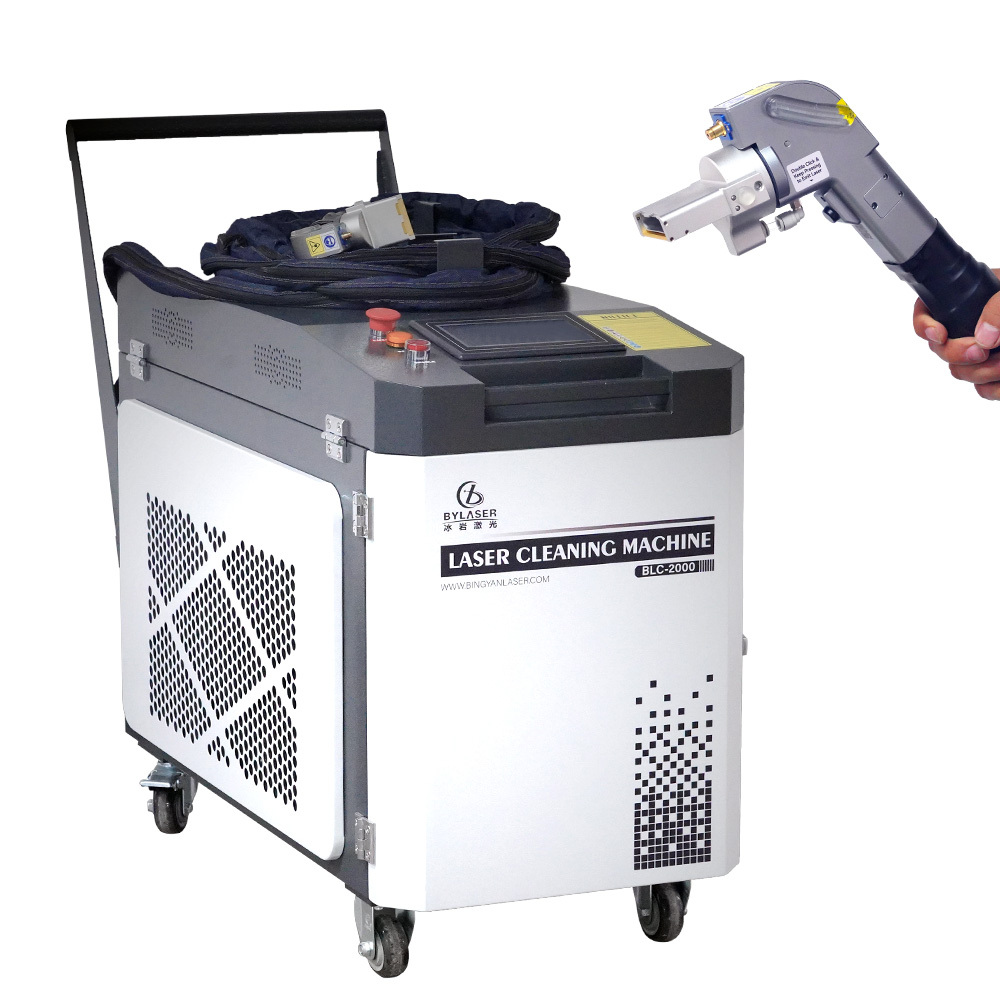
When selecting the best pulsed laser cleaning machine for industrial or precision applications, prioritize models with adjustable pulse frequency, high peak power, and fiber-optic delivery systems for maximum versatility. The ideal choice—such as a portable pulsed fiber laser cleaner—offers non-contact, eco-friendly rust and coating removal without damaging substrates 1. Evaluate beam quality (M²), pulse duration, and duty cycle carefully based on your material type and throughput needs. For most maintenance and restoration tasks, a mid-range system between 500W and 1000W provides optimal balance of performance and cost.
About Pulsed Laser Cleaning Machines
A pulsed laser cleaning machine uses short bursts of high-intensity laser light to remove contaminants like rust, paint, oxides, and grease from metal, stone, or composite surfaces. Unlike continuous-wave lasers, pulsed systems deliver energy in rapid on-off cycles, allowing precise control over heat input and minimizing substrate damage 2. This makes them particularly effective for delicate restoration work, aerospace component servicing, and cultural heritage preservation.
These machines typically consist of a fiber laser source, scanner head with galvanometric mirrors, handheld or robotic arm interface, cooling unit, and control software. They operate by focusing laser pulses onto a surface, where thermal expansion causes contaminants to expand faster than the base material, leading to detachment through spallation or sublimation.
Why Pulsed Laser Cleaning Machines Are Gaining Popularity
Pulsed laser cleaning is rapidly replacing traditional methods such as sandblasting, chemical stripping, and dry ice blasting due to its environmental safety, minimal waste production, and lack of secondary contamination 3. With increasing regulatory pressure on solvent use and abrasive media disposal, industries are turning to laser solutions that comply with EPA and OSHA standards.
The technology also supports automation and integration into Industry 4.0 workflows. Its ability to selectively clean specific areas without masking or shielding nearby components reduces labor time and increases repeatability. In sectors like automotive manufacturing, shipbuilding, and nuclear decommissioning, pulsed laser systems offer measurable improvements in efficiency and worker safety.
Types and Variants of Pulsed Laser Cleaning Systems
- Handheld Portable Units: These are compact, mobile systems designed for fieldwork or small workshops. They often run on standard power supplies and can be operated by a single technician.
- Pros: Lightweight, easy setup, suitable for spot cleaning and vertical surfaces.
- Cons: Lower average power output; may require longer processing times for large areas.
- Stationary Benchtop Models: Used primarily in controlled environments like labs or production lines. These integrate with fume extraction and motion stages.
- Pros: Higher precision, consistent beam delivery, better suited for repetitive tasks.
- Cons: Less flexible; limited to fixed-location operations.
- Robotic-Arm Integrated Systems: High-end configurations that mount the laser head on an automated arm for complex geometries and high-volume applications.
- Pros: Full automation, programmable paths, ideal for OEM assembly lines.
- Cons: Expensive initial investment; requires skilled programming and maintenance.
- Fiber vs. Solid-State Lasers: Most modern systems use fiber lasers due to their reliability and lower maintenance. Older solid-state Nd:YAG lasers still exist but are being phased out.
- Fiber Laser Pros: Higher wall-plug efficiency (~30%), longer lifespan (>100,000 hours), air-cooled operation.
- Fiber Laser Cons: Limited peak power compared to some flashlamp-pumped systems.
Key Features and Specifications to Evaluate
To make an informed decision when choosing a pulsed laser cleaning machine, consider these technical parameters:
- Laser Power (Peak & Average): Measured in watts (W). Peak power affects instantaneous impact force, while average power determines overall cleaning speed. For heavy rust removal, aim for at least 500W average power 4.
- Pulse Frequency (Hz): Ranges from 1 kHz to 2000 kHz. Higher frequencies improve uniformity but increase heat buildup. Adjustable frequency allows optimization across materials.
- Pulse Duration (ns): Shorter pulses (e.g., 10–100 ns) reduce heat transfer to the substrate, making them safer for thin metals or sensitive parts.
- Beam Quality (M² Value): Closer to 1.0 indicates tighter focus and higher intensity. Look for M² < 1.5 for efficient cleaning.
- Duty Cycle: Indicates how long the system can operate continuously before overheating. Industrial units should support ≥80% duty cycle.
- Cooling System: Air-cooled units are simpler; water-cooled systems handle sustained operation better but add complexity.
- Software Interface: Check compatibility with CAD/CAM imports, path planning tools, and real-time monitoring features.
Pros and Cons of Pulsed Laser Cleaning Technology
Advantages
- Non-abrasive and Non-contact: Preserves underlying material integrity.
- No Consumables: Eliminates need for blasting media or solvents, reducing operating costs.
- Eco-Friendly: No hazardous runoff or VOC emissions.
- Selective Cleaning: Can target specific layers (e.g., paint only) without affecting primer or metal.
- Automation Ready: Integrates easily with robotics and IoT-enabled monitoring.
Limitations
- High Initial Cost: Entry-level systems start around $20,000; full robotic setups exceed $100,000.
- Material Limitations: Not effective on highly reflective surfaces (e.g., bare copper, aluminum) without surface treatment.
- Safety Requirements: Requires Class 1 or Class 4 laser safety protocols, including protective enclosures and operator training.
- Slower for Thick Coatings: Multiple passes needed for thick paint or mill scale, affecting throughput.
How to Choose a Pulsed Laser Cleaning Machine
Follow this step-by-step guide to ensure you select the right model:
- Define Your Application Scope: Determine whether you're removing light oxidation, heavy rust, coatings, or weld residues. This defines required power and pulse settings.
- Assess Throughput Needs: Estimate square meters/hour to be cleaned. High-volume users should prioritize systems >700W with robotic integration.
- Check Material Compatibility: Test sample materials if possible. Darker, less reflective surfaces respond best. For aluminum or copper, verify the manufacturer specifies successful use cases.
- Evaluate Portability Needs: Field technicians benefit from battery-powered or lightweight (<20 kg) handheld units.
- Review Safety Certifications: Ensure compliance with IEC 60825-1 (laser safety) and CE or UL marks depending on region.
- Compare Software Capabilities: Look for user-friendly interfaces, preset cleaning modes, and remote diagnostics.
- Ask About After-Sales Support: Training, warranty length (ideally ≥2 years), and spare part availability are critical.
- Beware of Overstated Claims: Avoid vendors claiming "instant cleaning" or "works on all materials" without qualification. Always request third-party test videos or case studies.
Price & Market Insights
Pulsed laser cleaning machines vary widely in price based on power, brand, and automation level:
- Entry-Level (100–300W): $15,000–$25,000 – Suitable for hobbyists, small repair shops, or light-duty maintenance.
- Mid-Range (500–1000W): $30,000–$60,000 – Ideal for industrial maintenance, mold cleaning, and moderate-scale operations.
- High-End (1000W+, Robotic): $70,000–$150,000+ – Designed for automated production lines and large infrastructure projects.
Chinese manufacturers have significantly lowered prices in recent years, offering competitive alternatives to European and U.S. brands. However, assess build quality and service network carefully when considering lower-cost options 5.
Top-Seller & Competitive Analysis
| Model | Power (W) | Type | Key Features | Approx. Price |
|---|---|---|---|---|
| IPG PLC Series | 500–2000 | Stationary/Fixed | High beam quality, integrated fume extraction | $80,000+ |
| Focus FL-C500 | 500 | Portable | Ergonomic design, touchscreen UI | $35,000 |
| Raycus RFL-C600 | 600 | Portable | Cost-effective, strong after-sales in Asia | $28,000 |
| Trumpf TruLaser C series | 1000+ | Robotic | Industry 4.0 ready, modular design | $120,000+ |
Note: Always verify current specs and regional pricing directly with distributors, as configurations change frequently.
Customer Feedback Synthesis
Analysis of user reviews across industrial forums and B2B platforms reveals recurring themes:
Common Praises:- "Dramatically reduced cleanup time compared to sandblasting."
- "No more disposal fees for blasting media."
- "Excellent for detailed work near sensitive electronics."
- "Startup learning curve steeper than expected."
- "Replacement scanner heads are expensive (~$5,000)."
- "Poor customer support from some Chinese suppliers."
Users consistently highlight the importance of hands-on training and reliable technical support, especially during initial deployment.
Sourcing & Supplier Tips
When sourcing a pulsed laser cleaning machine:
- Buy from Authorized Distributors: Ensures genuine parts, valid warranties, and access to firmware updates.
- Negotiate Service Packages: Include installation, operator training, and annual maintenance contracts.
- For Bulk Purchases: Request volume discounts and extended warranties. Some suppliers offer leasing or rental-to-own programs.
- Verify Before Shipping: Ask for a factory acceptance test (FAT) video demonstrating performance on your material type.
- Check Import Regulations: Laser equipment may require special permits in certain countries (e.g., FDA registration in the U.S. for medical applications).
Maintenance, Safety & Legal Considerations
Maintenance: Regularly inspect optical components, clean protective windows, and calibrate scanners. Fiber lasers generally require less upkeep than older technologies.
Safety: Use appropriate personal protective equipment (PPE), including laser-safe goggles rated for the wavelength (typically 1064 nm). Install interlocks and warning signs in operational zones. Follow ANSI Z136.1 guidelines for safe use 6.
Legal Compliance: Confirm adherence to local regulations regarding laser classification, electrical safety, and workplace exposure limits. In the EU, CE marking under the Machinery Directive and EN 60825 is mandatory.
Conclusion
Choosing the right pulsed laser cleaning machine requires balancing power, portability, automation needs, and total cost of ownership. For most industrial users, a 500–1000W fiber-based pulsed laser system offers the best combination of performance, durability, and return on investment. Prioritize models with proven track records, comprehensive support, and scalable software. Whether you're evaluating how to choose a pulsed laser cleaning machine for fleet maintenance or precision engineering, focus on real-world usability rather than peak specifications alone. By understanding what to look for in pulsed laser cleaning machines—including pulse control, beam stability, and safety integration—you can make a confident, future-proof purchase.
FAQs
- Can pulsed laser cleaning damage the base material?
Not when properly configured. Short pulses and correct parameter selection prevent substrate melting or warping, especially on steel and titanium. - Is laser cleaning suitable for aluminum?
Yes, but with caution. Aluminum’s reflectivity increases risk of back-reflection. Use lower power, shorter pulses, and specialized optics to mitigate hazards. - How much maintenance does a pulsed laser cleaner need?
Minimal. Clean lenses monthly and replace consumables (e.g., scanner protection glass) annually. Cooling filters should be checked quarterly. - Do operators need special training?
Yes. Training covers laser safety, parameter tuning, emergency procedures, and basic troubleshooting. Many suppliers offer certified courses. - Are there financing options available?
Yes. Many manufacturers and dealers offer leasing, rent-to-own, or installment plans, especially for commercial buyers.




 浙公网安备
33010002000092号
 浙B2-20120091-4