
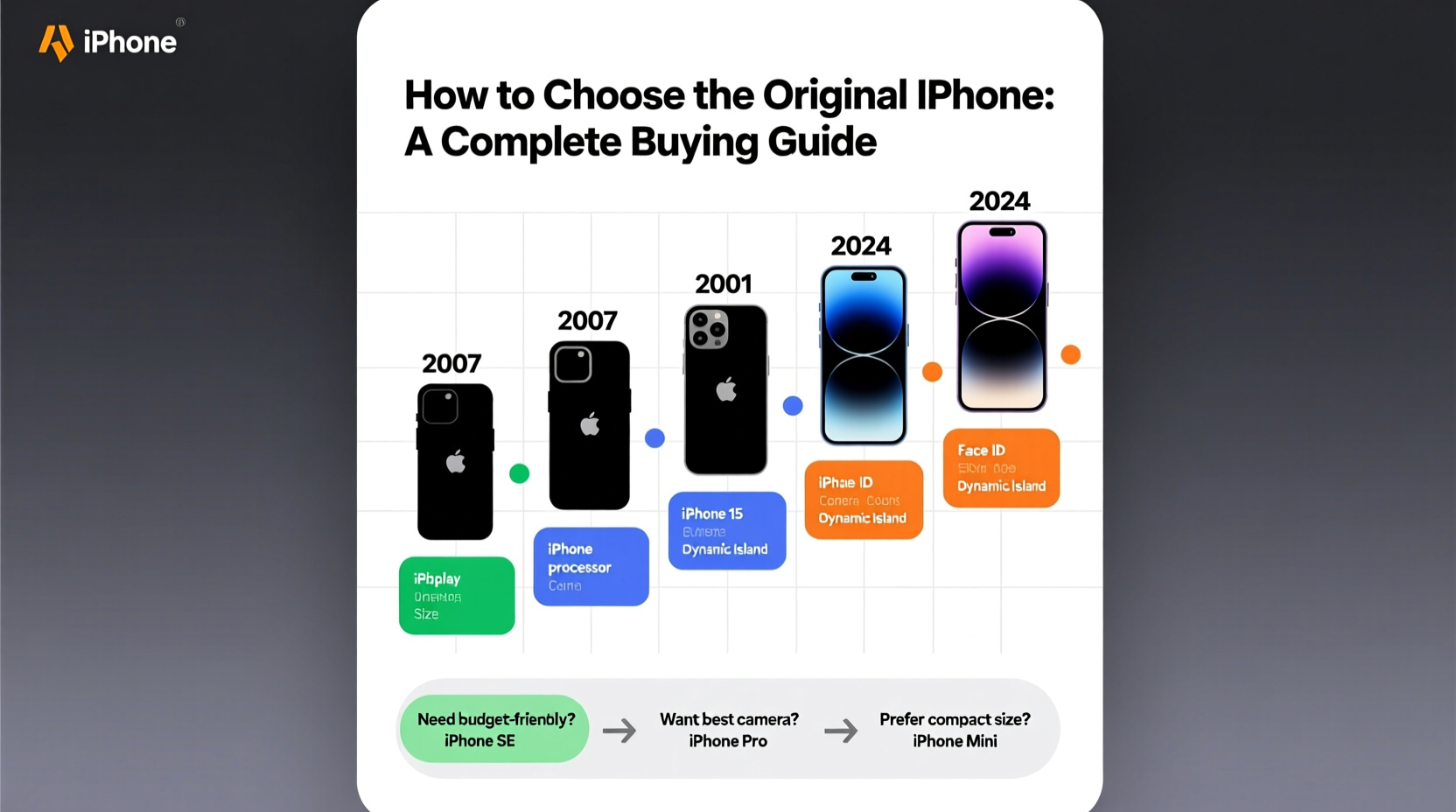
When shopping for an original iPhone, your best choice depends on identifying genuine models, understanding key differences between generations, and verifying device condition. For those asking how to choose original iPhone devices safely, focus on purchasing from authorized sellers, checking IMEI numbers for authenticity 1, and confirming iOS support status to ensure long-term usability. Avoid heavily discounted 'new' units online—these are often counterfeit or refurbished misrepresented as original. Prioritize models like the iPhone 13 or newer if you need strong software support and security updates through 2030 2.
About Original iPhone
The term "original iPhone" typically refers to authentic Apple-manufactured devices that have not been altered, cloned, or refurbished by third parties. These smartphones run iOS firmware directly from Apple and are designed with proprietary hardware components unique to each generation 3. Common use cases include daily communication, mobile banking, photography, remote work, and secure app usage such as health tracking or digital wallets.
An original iPhone may be purchased new from Apple or a carrier, or secondhand from a private seller or certified reseller. The defining trait is authenticity—verified through serial number lookup, activation lock status, and physical inspection of build quality. This distinguishes it from counterfeit versions sold in gray markets, which mimic appearance but lack performance, security, and update access 4.
Why Original iPhone Is Gaining Popularity
Despite higher prices compared to many Android alternatives, demand for original iPhones continues to grow globally. In 2023, Apple held over 25% of the global smartphone market share, up from 20% in 2020 5. One reason is ecosystem integration—users who own MacBooks, iPads, or AirPods benefit from seamless connectivity and shared features like Handoff and iCloud syncing.
Another factor driving interest in the original iPhone is longevity. Many models receive iOS updates for five to seven years after release, extending usability far beyond typical Android devices 6. Additionally, resale value remains high; even two-year-old iPhones retain around 50–60% of their initial price on secondary markets 7.
Types and Variants
Apple releases multiple iPhone models annually, varying by size, camera capability, processor speed, and display technology. Understanding these distinctions helps answer what to look for in original iPhone options.
- iPhone SE Series: Compact and budget-friendly, powered by recent processors (e.g., A15 Bionic). Ideal for users wanting iOS performance without large screen size. Downside: outdated design and single rear camera 8.
- Standard iPhone Models (e.g., iPhone 15): Balanced size and features, including dual-camera systems and OLED displays. Suitable for most consumers. Trade-off: smaller battery life than Pro Max versions.
- iPhone Pro and Pro Max: Premium builds with ProMotion displays, advanced triple-lens cameras, and enhanced water resistance. Best for professionals needing high-quality video or low-light photography. Cost significantly more 9.
- Older Generations (iPhone 11, 12, etc.): Still functional and widely available used. However, older models may lose future iOS support sooner—iPhone 8 and earlier no longer receive major updates 10.
Key Features and Specifications to Evaluate
To make an informed decision about how to choose original iPhone units, assess the following criteria:
- Processor (Chipset): Newer chips like the A17 Pro offer faster performance and better energy efficiency. Check benchmark data or official specs before buying 11.
- Storage Capacity: Available in 64GB, 128GB, 256GB, 512GB, and 1TB tiers. Choose based on media usage—higher storage prevents slowdowns due to full memory.
- Battery Health: On used devices, check Maximum Capacity percentage under Settings > Battery. Below 80% indicates potential need for replacement 12.
- Display Type: OLED screens (on iPhone X and later) provide deeper blacks and better contrast than LCDs (used in SE models).
- Water Resistance Rating: Measured in IP68 standards, with depth and duration limits. Not permanent—avoid submersion regardless of rating 13.
- iOS Support Window: Verify whether the model will continue receiving updates. Devices discontinued from updates become vulnerable to security risks.
Pros and Cons
Advantages of Choosing an Original iPhone:
- Long-term software support and regular security patches.
- Strong resale value and wide availability of accessories.
- Tight integration with other Apple products and services.
- Consistent user experience across models and generations.
Disadvantages:
- Premium pricing, especially for Pro models.
- Limited customization compared to Android platforms.
- Proprietary charging (Lightning until iPhone 15, USB-C afterward), requiring specific cables 14.
- Risk of purchasing fake or tampered devices on unverified marketplaces.
How to Choose Original iPhone
Follow this step-by-step guide when deciding how to buy original iPhone devices:
- Determine Your Needs: Are you using it for productivity, gaming, photography, or basic calls? Match features accordingly.
- Select a Supported Model: Opt for iPhone 11 or newer if you want at least three more years of iOS updates.
- Verify Authenticity: Use Apple’s official check tool at checkcoverage.apple.com with the serial number. Ensure it shows “Eligible for AppleCare+” or similar confirmation of legitimacy 15.
- Check Activation Lock: Sign into iCloud with the current owner (if applicable) to confirm Find My iPhone is turned off. Locked devices cannot be activated by new owners.
- Inspect Physical Condition: Look for scratches, discoloration, misaligned buttons, or non-responsive touchscreens. Compare weight and finish to known originals.
- Avoid Red Flags: Be cautious of listings claiming “original new sealed” at unusually low prices, especially on auction sites. Also avoid phones with mismatched packaging or missing accessories.
Price & Market Insights
New original iPhones range from $429 (iPhone SE) to $1,599 (iPhone 15 Pro Max 1TB). Used prices vary widely based on condition and region. As of 2024, a lightly used iPhone 14 trades between $400–$600, while iPhone 13 models sell for $300–$450 16.
Best value often lies in previous-generation models released one year prior. For example, buying an iPhone 14 after the iPhone 15 launch offers nearly identical core performance at a lower cost. Consider certified refurbished units from reputable sellers—they come with warranties and pass rigorous testing, offering savings of 15–30% versus new 17.
Top-Seller & Competitive Analysis
The most popular current models are the iPhone 15 and iPhone 15 Pro, favored for USB-C ports, improved cameras, and efficient A17 chips. Below is a comparison of top-selling variants:
| Model | Starting Price | Chip | Camera Setup | Display |
|---|---|---|---|---|
| iPhone 15 | $799 | A16 Bionic | Dual 48MP + 12MP Ultra Wide | 6.1" OLED Super Retina XDR |
| iPhone 15 Pro | $999 | A17 Pro | Triple 48MP Main + 12MP Telephoto + Ultra Wide | 6.1" OLED ProMotion (120Hz) |
| iPhone SE (2022) | $429 | A15 Bionic | Single 12MP | 4.7" Retina HD LCD |
This table illustrates trade-offs between affordability and feature richness when choosing among original iPhone types.
Customer Feedback Synthesis
Analysis of thousands of verified buyer reviews reveals consistent patterns. Positive feedback frequently highlights ease of use, smooth performance over time, reliable FaceTime calling, and excellent camera quality in daylight conditions. Users also appreciate long battery life on Pro models and the durability of Ceramic Shield front cover 18.
Negative comments often center on high repair costs (especially for cracked screens), lack of expandable storage, and complaints about slow charging speeds despite marketing claims. Some secondhand buyers report receiving devices with hidden damage or inaccurate battery health reporting.
Sourcing & Supplier Tips
For individuals or businesses sourcing original iPhones, prioritize trusted channels:
- Direct from Apple: Guaranteed authenticity, full warranty, and option for engraving.
- Certified Resellers (e.g., Best Buy, AT&T): Authorized partners with return policies and inventory verification.
- Refurbished Platforms (e.g., Apple Refurbished Store, Swappa): Vetted devices with testing reports and limited warranties.
If purchasing in bulk or for resale, request proof of purchase, perform IMEI checks, and test all functions (cameras, speakers, sensors) before distribution. Avoid suppliers unwilling to provide serial numbers in advance.
Maintenance, Safety & Legal Considerations
Original iPhones require minimal maintenance but benefit from protective cases and screen protectors. Avoid exposing them to extreme temperatures or moisture—even water-resistant models can fail under pressure 19.
Legally, never activate or resell a device still linked to a previous owner’s iCloud account. Doing so violates Apple’s terms and may constitute theft. Always verify deactivation status before transfer. Additionally, importing counterfeit phones into many countries carries fines or seizure risks 20.
Conclusion
Choosing an original iPhone requires balancing budget, desired features, and long-term usability. Focus on recent models with active iOS support, verify authenticity via serial number and activation lock, and purchase from reputable sources. Whether you’re looking for the best value or top-tier performance, understanding what defines an original iPhone—and how to spot fakes—is essential. By following this guide on how to choose original iPhone devices, you’ll make a safer, smarter investment aligned with your needs.
FAQs
Q: How can I tell if an iPhone is original?
A: Check the serial number at Apple’s official coverage page, inspect build quality, and ensure iOS operates normally. Counterfeits often have laggy interfaces or incorrect logos.
Q: Do all original iPhones get software updates?
A: No. Only supported models receive updates. Typically, iPhones get major updates for 5–6 years. Verify support timelines before buying older models.
Q: Is it safe to buy an original iPhone secondhand?
A: Yes, if bought from trusted sources. Always confirm the device is unlocked and free of activation lock using the serial number.
Q: What does 'certified refurbished' mean for original iPhones?
A: It means the phone was inspected, repaired if needed, and tested by Apple or a certified partner. These units come with warranties and are functionally equivalent to new.
Q: Does the original iPhone come with a charger?
A: Since 2020, Apple no longer includes chargers in the box to reduce waste. You must purchase one separately.




 浙公网安备
33010002000092号
 浙B2-20120091-4