
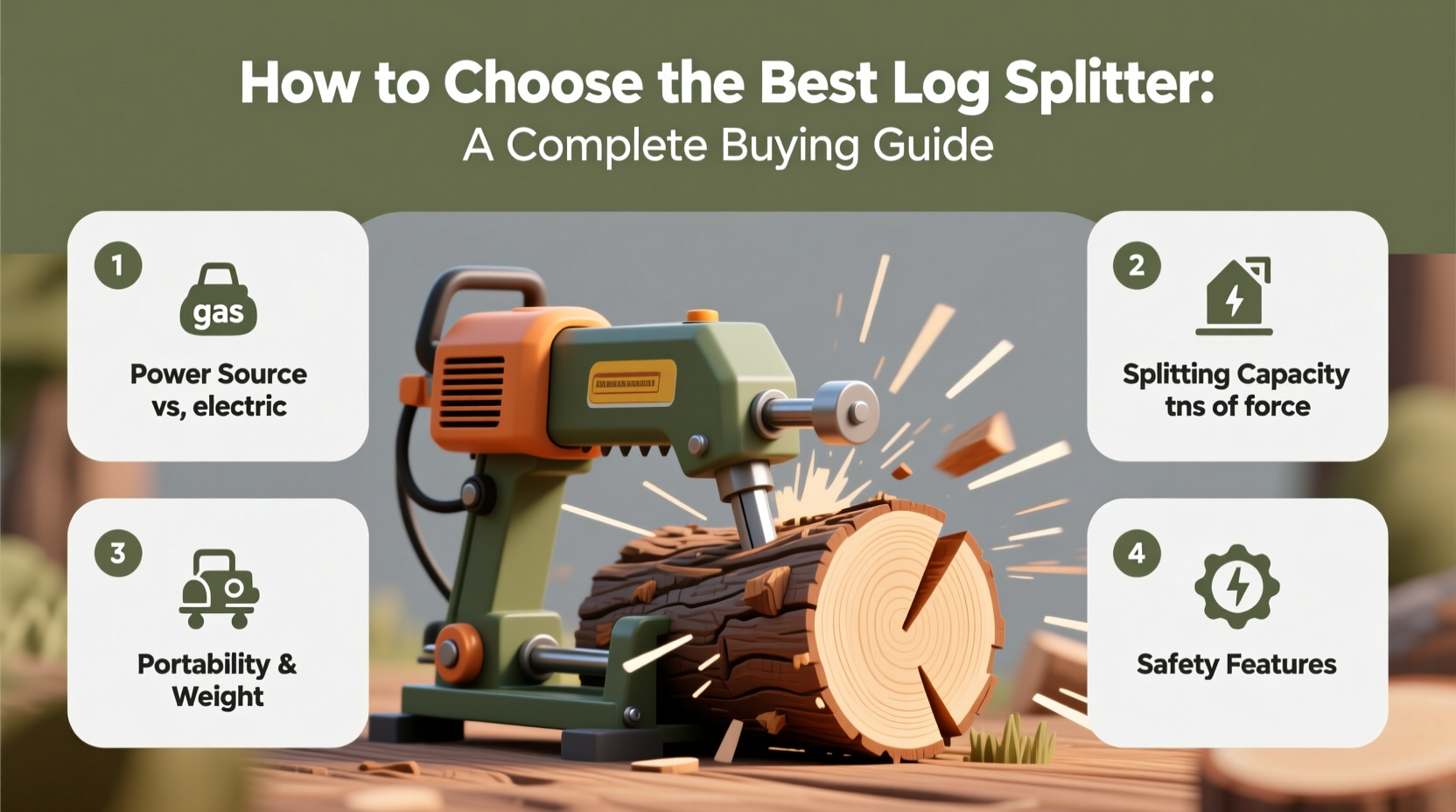
When choosing the best log splitter for your needs, start by identifying your splitting frequency and log size. For homeowners splitting firewood seasonally, a mid-range electric or horizontal gas log splitter with 10–20 tons of splitting force offers the ideal balance of power and ease of use 1. If you're evaluating how to choose log splitters, prioritize models with adjustable height, dual-directional splitting, and low maintenance requirements. These features enhance usability and longevity, especially for frequent use.
About Log Splitters
A log splitter is a mechanical device designed to split large logs into smaller pieces suitable for firewood. It operates using hydraulic or kinetic force to drive a wedge through wood, significantly reducing the physical effort required compared to manual chopping with an axe. Most modern log splitters are either powered by electricity, gasoline engines, or PTO (power take-off) systems connected to tractors 2.
These tools are commonly used by homeowners heating with wood, rural property owners managing fallen timber, landscaping contractors, and small-scale firewood producers. They are especially valuable during colder months when preparing firewood for indoor heating. Log splitters come in various configurations—vertical, horizontal, and radial—and differ in portability, power source, and splitting capacity.
Why Log Splitters Are Gaining Popularity
The growing interest in sustainable heating solutions and off-grid living has contributed to increased demand for log splitters 3. With rising energy costs, many households are turning to wood as a cost-effective and renewable heat source. This shift has made efficient firewood processing essential, driving consumers to seek reliable equipment that reduces labor and time.
Additionally, advancements in design have made modern log splitters safer and easier to operate than older models. Lightweight electric variants appeal to urban or suburban users who only split wood occasionally, while commercial-grade hydraulic models serve forestry professionals needing high-volume output. The versatility and improved safety features make log splitters accessible to a broader audience beyond traditional farmers or loggers.
Types and Variants
Understanding the different types of log splitters is crucial when deciding what to look for in log splitters based on your usage pattern.
1. Electric Log Splitters
Electric models plug into standard outlets and are typically lighter and quieter than gas-powered units. They are ideal for residential users who split wood indoors or near garages where emissions are a concern.
- Pros: Low noise, zero emissions, minimal maintenance, easy startup.
- Cons: Limited power (usually under 15 tons), requires access to electrical outlet, not suitable for heavy-duty tasks.
Best suited for occasional use and softwoods like pine or fir 4.
2. Gas-Powered Log Splitters
Fueled by gasoline engines, these offer greater mobility and higher splitting force (up to 30+ tons). They do not rely on external power sources, making them suitable for remote locations.
- Pros: High power output, portable, works anywhere.
- Cons: Louder operation, regular engine maintenance, higher emissions.
Ideal for heavy hardwoods such as oak or maple and frequent users preparing large volumes of firewood annually.
3. Horizontal vs. Vertical Models
Most log splitters are horizontal, meaning logs are fed lengthwise into the machine. Some models can switch between horizontal and vertical orientations.
- Horizontal Splitters: Easier loading for long logs; common in both electric and gas models.
- Vertical Splitters: Mimic natural stacking direction; save space but may require more user effort to position logs.
Dual-position splitters provide flexibility but often come at a higher price point.
4. Manual (Kinetic) Splitters
Kinetic log splitters use stored mechanical energy (like a flywheel) rather than hydraulics. They deliver fast cycle times and are generally lighter.
- Pros: Rapid splitting action, no hydraulic fluid needed, lower maintenance.
- Cons: Less effective on knotty or irregularly shaped logs.
Suitable for moderate use with consistent log sizes.
Key Features and Specifications to Evaluate
When assessing how to choose log splitters, consider the following technical and ergonomic factors:
Splitting Force (Tons)
This measures the maximum pressure applied to split wood. Residential models range from 4 to 20 tons, while commercial units exceed 30 tons 5. Softwoods generally require 4–10 tons; dense hardwoods need 20+ tons for clean splits.
Stroke Length and Beam Size
Stroke length determines the maximum log length the splitter can handle—typically 16 to 24 inches. Longer beams accommodate standard firewood lengths but increase overall size and weight.
Power Source
Choose based on availability of electricity and intended location of use. Corded electric models limit range; battery-powered options are emerging but still limited in torque.
Weight and Portability
Lightweight models (<100 lbs) are easier to move but less stable. Heavier units (>200 lbs) offer better performance but may require trailers or vehicles for transport.
Safety Features
Look for two-hand operation, emergency shut-offs, protective shields, and non-slip bases. OSHA recommends guarding moving parts to prevent injury 6.
Maintenance Requirements
Hydraulic models need periodic oil changes and seal inspections. Electric motors require minimal upkeep, while gas engines demand air filter cleaning, spark plug replacement, and fuel stabilization.
Pros and Cons: When Is a Log Splitter Right for You?
Advantages:
- Reduces physical strain compared to manual splitting.
- Processes logs faster and more consistently.
- Enables safer wood preparation with controlled force.
- Increases self-reliance for off-grid or rural homes.
Disadvantages:
- Upfront cost ranges from $200 to over $2,000.
- Larger models require storage space and maintenance.
- Noisy operation (especially gas models) may disturb neighbors.
- Potential safety hazards if misused.
A log splitter is worth investing in if you process more than 2 cords of wood per year. For lighter use (under 1 cord), a maul or manual splitter might suffice.
How to Choose Log Splitters: Step-by-Step Buying Guide
Follow this checklist to ensure you select the right model:
- Assess Your Firewood Volume: Estimate how many cords you split annually. Heavy users should opt for gas-powered models with 20+ tons of force.
- Determine Log Type: Hardwoods like hickory or elm require more force than softwoods.
- Evaluate Power Availability: If working far from outlets, avoid corded electric models.
- Check Physical Space: Measure garage or shed dimensions to confirm fit. Consider foldable legs or compact designs.
- Review Safety Mechanisms: Ensure the model includes dual triggers or auto-shutoff features.
- Compare Cycle Time: Faster cycles (under 20 seconds) improve efficiency for bulk work.
- Read Warranty Terms: Look for at least a 1-year manufacturer warranty covering hydraulic components.
- Avoid Red Flags: Poor customer reviews about pump failure, flimsy welds, or difficult assembly indicate reliability issues.
Price & Market Insights
Log splitters vary widely in price depending on power, build quality, and brand reputation.
- Budget Tier ($200–$500): Entry-level electric or small gas models. Suitable for light residential use but may lack durability 7.
- Mid-Range ($500–$1,200): Most popular segment. Includes robust electric and mid-tonnage gas splitters with solid warranties.
- Premium ($1,200–$2,500+): Commercial-grade machines with 30+ ton capacity, trailer mounts, and advanced hydraulics.
Value is maximized in the mid-range category for homeowners. Premium models justify cost only for professional or high-frequency use.
| Model Type | Avg. Price | Splitting Force | Best For |
|---|---|---|---|
| Electric (Corded) | $250–$450 | 6–10 tons | Occasional users, softwoods |
| Gas – Horizontal | $600–$1,000 | 20–25 tons | Regular homeowners, mixed woods |
| Gas – Dual Position | $1,000–$1,600 | 25–30 tons | High-volume processors |
| Kinetic Splitter | $400–$800 | Equivalent to 15–20 tons | Moderate users wanting speed |
Top-Seller & Competitive Analysis
Leading brands include Sun Joe, Champion, Powerhorse, and Boss Industrial. Each targets different segments:
- Sun Joe: Focuses on affordable electric models for casual users. Known for lightweight builds and simple setup.
- Champion: Offers durable dual-fuel and high-tonnage gas splitters. Popular among preppers and rural homeowners.
- Powerhorse: Markets commercial-grade equipment with extended warranties and rugged frames.
- Boss Industrial: Provides premium options with trailer hitch compatibility and all-terrain wheels.
When comparing top sellers, examine real-world performance metrics like mean time between failures (MTBF), availability of replacement parts, and responsiveness of customer service. Independent review sites like ToolAuthority and OutdoorGearLab offer side-by-side testing results 8.
Customer Feedback Synthesis
Analysis of thousands of verified buyer reviews reveals recurring themes:
Common Praises:
- "Saves hours of labor" – Many users appreciate reduced physical effort.
- "Easy to assemble" – Especially noted for electric models with fewer components.
- "Reliable in cold weather" – Gas models praised for starting even in sub-zero temperatures.
Frequent Complaints:
- "Hydraulic leaks after 1–2 seasons" – Indicates potential seal or pump weaknesses in budget units.
- "Difficult to start (gas models)" – Often linked to carburetor issues or poor winterization.
- "Too heavy to move alone" – Larger models exceeding 300 lbs pose handling challenges without assistance.
To mitigate risks, check return policies and post-purchase support before purchasing.
Sourcing & Supplier Tips
Log splitters are available through home improvement retailers (e.g., Home Depot, Lowe’s), farm supply stores (Rural King, Tractor Supply Co.), and online marketplaces (Amazon, Walmart.com).
- Retail Stores: Allow hands-on inspection and immediate pickup.
- Online Vendors: Often offer lower prices and wider selection but verify shipping costs and return terms.
- Bulk Buyers: Contact distributors directly for volume discounts. Minimum orders typically start at 5 units.
- Drop Shipping/Reselling: Some suppliers offer white-label programs; confirm warranty transferability to end customers.
Always inspect units upon delivery for shipping damage and test operation before final installation.
Maintenance, Safety & Legal Considerations
Proper care extends lifespan and ensures safe operation.
Maintenance Tips
- Change hydraulic oil every 1–2 years or after 100 operating hours.
- Clean debris from beam and wedge regularly.
- Store indoors or under cover to prevent rust.
- For gas models, use fuel stabilizer if storing longer than 30 days.
Safety Practices
- Wear safety glasses and steel-toed boots.
- Keep hands and body clear of the splitting chamber.
- Never override safety interlocks.
- Operate on level ground to prevent tipping.
Follow ANSI B175.2 safety standards for portable power equipment 9.
Legal Notes
No federal license is required to own or operate a log splitter in the U.S. However, local ordinances may regulate noise levels or outdoor equipment use hours. Check municipal codes before early morning or weekend operation.
Conclusion
Selecting the right log splitter depends on your specific firewood needs, log type, and usage frequency. For most homeowners, a 20-ton gas-powered horizontal splitter provides optimal performance and durability. Occasional users may prefer a quiet, low-maintenance electric model. Prioritize safety features, ease of maintenance, and realistic capacity over flashy add-ons. By understanding what to look for in log splitters—including tonnage, power source, and build quality—you can make a confident, value-driven purchase that lasts for years.
FAQs
Q: How much splitting force do I need for oak logs?
A: Dense hardwoods like oak typically require 20 to 30 tons of pressure for efficient splitting, especially if logs are over 18 inches in diameter.
Q: Can I use a log splitter indoors?
A: Only electric models should be used indoors due to carbon monoxide risks from gas engines. Ensure adequate ventilation and never run gas-powered units in enclosed spaces.
Q: How often should I change the hydraulic fluid?
A: Replace hydraulic oil every 1–2 years or after approximately 100 hours of use. Check the owner’s manual for model-specific intervals.
Q: Are vertical log splitters better than horizontal ones?
A: Not inherently. Vertical splitters save space and align with gravity, but horizontal models handle longer logs more easily. Dual-position units offer the most flexibility.
Q: Do log splitters require assembly?
A: Yes, most require basic assembly—attaching legs, wheels, or the hydraulic cylinder. Expect to spend 30–60 minutes setting up a new unit using included tools.





 浙公网安备
33010002000092号
浙公网安备
33010002000092号 浙B2-20120091-4