
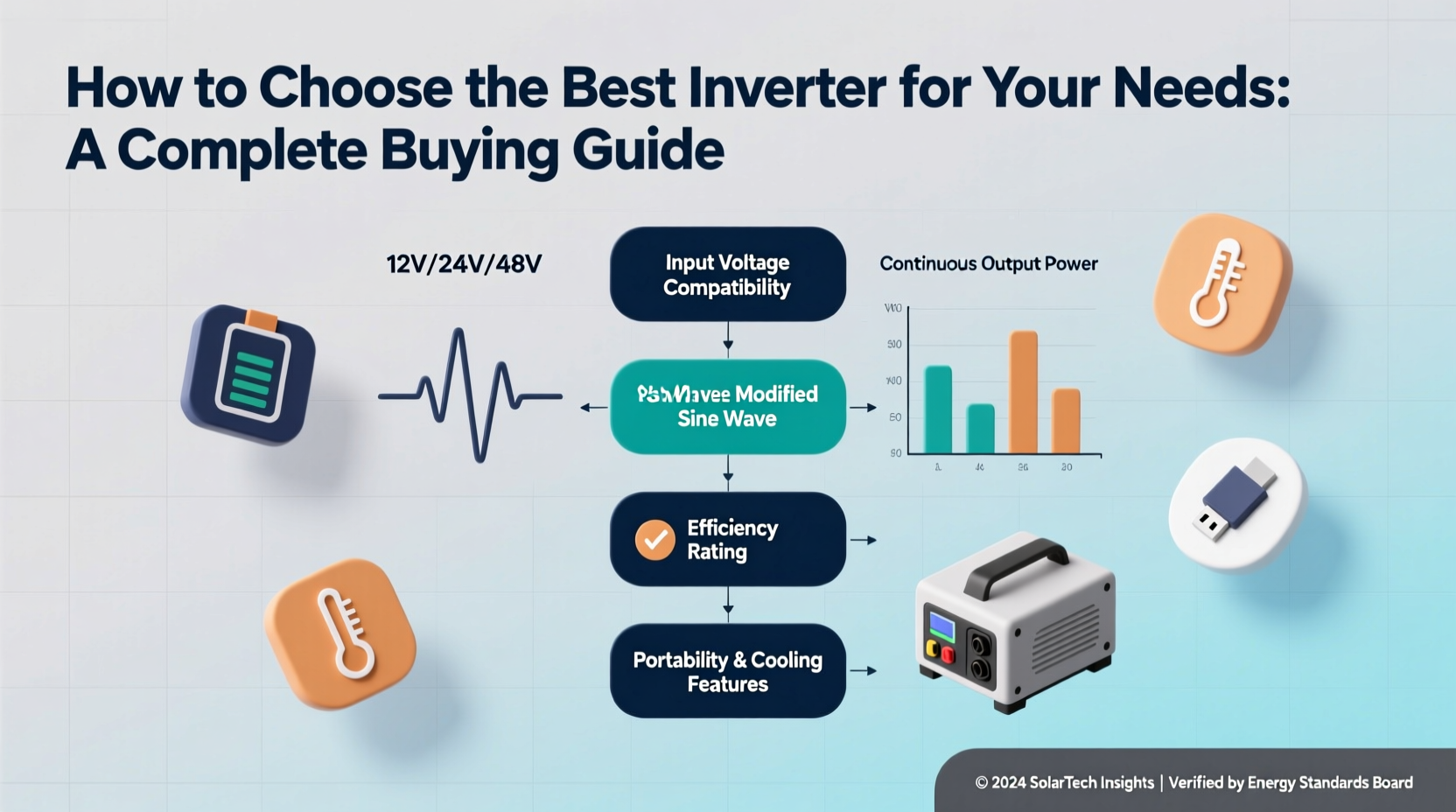
When choosing the best inverter for your needs, start by matching the continuous power rating to your highest-wattage device and adding a 20–30% safety margin. For off-grid solar setups, pure sine wave inverters are ideal due to their clean output and compatibility with sensitive electronics 1. If you're using it for backup power or RVs, consider modified sine wave models for cost efficiency. Always verify input voltage (12V, 24V, or 48V) matches your battery system, and prioritize surge capacity for motor-driven appliances like refrigerators or power tools. Understanding how to choose an inverter based on load type, environment, and scalability ensures long-term reliability and performance.
About Inverter
An inverter is an electronic device that converts direct current (DC) from sources such as batteries or solar panels into alternating current (AC), which powers most household appliances and office equipment 2. Unlike generators that produce electricity mechanically, inverters transform stored energy into usable form without moving parts, making them quieter and more efficient for small-scale applications.
Inverters are commonly used in off-grid solar systems, recreational vehicles (RVs), marine vessels, emergency backup systems, and remote telecommunications setups. They allow users to run standard AC-powered devices—like laptops, lights, microwaves, and medical equipment—where grid power isn't available or reliable.
Why Inverter Is Gaining Popularity
The demand for inverters has surged due to increased interest in renewable energy, energy independence, and mobile living solutions. With rising electricity costs and frequent grid outages in many regions, homeowners are investing in solar-plus-storage systems where inverters play a central role 3.
Additionally, the growth of van life, remote work, and off-grid cabins has driven adoption of portable and hybrid inverters. Technological improvements have also made modern units more compact, efficient, and affordable than ever before. Many now include built-in charge controllers, Wi-Fi monitoring, and app-based control, enhancing usability and integration with smart home ecosystems.
Types and Variants
Understanding the different types of inverters helps buyers match technology to application.
1. Pure Sine Wave Inverters
- Pros: Output mimics utility-grade electricity; safe for sensitive electronics like computers, medical devices, and variable-speed motors 4.
- Cons: More expensive than modified sine wave alternatives.
- Best for: Solar installations, home backup systems, and any setup powering delicate electronics.
2. Modified Sine Wave Inverters
- Pros: Lower cost; sufficient for basic resistive loads like incandescent bulbs, heaters, and simple tools.
- Cons: Can cause humming in audio devices, interference in electronics, and reduced efficiency in some motors.
- Best for: Temporary use, budget-conscious buyers, or non-sensitive equipment.
3. Grid-Tied vs. Off-Grid Inverters
- Grid-tied: Feed excess solar power back into the utility grid; require synchronization with line frequency and cannot operate during blackouts unless paired with a transfer switch or battery system.
- Off-grid: Designed for standalone operation; often include battery charging logic and deep-cycle protection.
4. Hybrid (Multi-mode) Inverters
- Combine functions of grid-tied and off-grid models; can switch between grid and battery power automatically.
- Ideal for homes seeking both energy savings and outage resilience.
Key Features and Specifications to Evaluate
To determine what to look for in an inverter, assess these technical parameters carefully.
Continuous Power Rating
This indicates the maximum wattage the inverter can supply continuously. Always calculate total appliance wattage and add 20–30% headroom. For example, if running a 1500W microwave and 300W refrigerator simultaneously, choose at least a 2000W unit.
Surge Capacity
Motors and compressors require higher startup power (surge). Look for inverters with surge ratings 2–3x the continuous output for short durations (typically 1–5 seconds).
Efficiency
Measured as percentage of DC input converted to usable AC output. High-efficiency models (>90%) waste less energy as heat, extending battery runtime 5.
Input Voltage Compatibility
Must match your battery bank: 12V (small systems), 24V (medium), or 48V (large residential/commercial). Mismatched voltages reduce efficiency or damage components.
Output Waveform
Pure sine wave preferred for electronics; modified sine acceptable for basic loads.
Protections & Safety Features
Look for over-temperature, low/high voltage cutoff, overload, and short-circuit protection. These prevent damage and extend lifespan.
Monitoring & Connectivity
Some inverters offer Bluetooth, Wi-Fi, or RS485 ports for real-time data tracking via apps or external displays.
Pros and Cons
Advantages of Using an Inverter
- Enables use of standard AC appliances off-grid.
- No fuel required (unlike generators); silent operation.
- Environmentally friendly when paired with solar.
- Scalable for growing energy needs.
Limits and Drawbacks
- Battery dependency limits runtime without recharging.
- Lower efficiency compared to direct AC supply (due to conversion losses).
- High-power systems require significant wiring and circuit protection.
- Cost increases rapidly with power capacity and waveform quality.
How to Choose Inverter
Follow this step-by-step process to make an informed decision:
- Assess Your Load Requirements: List all devices you plan to power, noting running and starting (surge) wattages. Use manufacturer specs or online calculators to estimate accurately.
- Determine Runtime Needs: Estimate how long you’ll run devices daily. This affects battery size and inverter efficiency requirements.
- Select Waveform Type: Opt for pure sine wave if using electronics, medical gear, or variable-speed tools. Choose modified sine only for basic resistive loads.
- Match Battery Voltage: Align inverter input voltage (12V/24V/48V) with your battery bank configuration.
- Evaluate Installation Environment: Consider temperature extremes, humidity, and ventilation. Some inverters are rated for outdoor use (IP65); others need climate-controlled spaces.
- Check Certifications: Ensure compliance with local electrical codes (e.g., UL 1741 in the U.S.) and EMI standards.
- Avoid Red Flags: Steer clear of no-name brands lacking safety certifications, unrealistic efficiency claims (>95%), or missing surge ratings.
Price & Market Insights
Inverter prices vary widely based on type, power, and features:
- Under 1kW (portable): $80–$200 — common for car/RV use.
- 1–3kW (home backup/small solar): $200–$600 — includes mid-tier pure sine models.
- 3–10kW (whole-house/residential solar): $600–$2,000+ — high-end hybrids with advanced controls.
Value isn’t solely about price per watt. Consider durability, warranty length (5+ years preferred), customer support, and upgradeability. Chinese OEM brands may offer lower prices but often lack robust after-sales service outside Asia. Established brands like Victron Energy, OutBack, and Schneider Electric command premiums but deliver proven reliability 6.
| Model | Type | Power (W) | Waveform | Price Range |
|---|---|---|---|---|
| Victron Phoenix 12V 1600W | Off-grid | 1600 | Pure Sine | $450 |
| AIMS Power 3000W 24V | Hybrid | 3000 | Pure Sine | $580 |
| Wagan ProLine 1000W | Modified Sine | 1000 | Modified | $120 |
Customer Feedback Synthesis
Analysis of user reviews across retail and forum platforms reveals consistent patterns:
Common Praises:
Users appreciate quiet operation, stable voltage output, and ease of installation—especially in premium pure sine models. Units with clear LED indicators and responsive cooling fans receive positive mentions. Long-term reliability is frequently cited for brands offering 3+ year warranties.
Frequent Complaints:
Budget inverters often fail under sustained load or in hot environments. Some modified sine wave units interfere with Wi-Fi or cause buzzing in speakers. A recurring issue involves inadequate surge capacity despite advertised specs—always verify real-world test data when possible.
Sourcing & Supplier Tips
For individual buyers, reputable online retailers (e.g., Renogy, Northern Tool, or specialized solar suppliers) provide better technical support than general marketplaces. Check return policies and whether technical documentation is available in your language.
For bulk purchases or resale, consider working directly with distributors rather than dropshippers. Request sample units for testing before large orders. Verify CE, FCC, or UL markings match regional regulatory expectations. Be cautious with "wholesale" listings claiming industrial specs but lacking traceable manufacturer details.
Maintenance, Safety & Legal Considerations
Regular maintenance includes cleaning dust from vents, checking terminal tightness, and inspecting cables for wear. Operate inverters in dry, well-ventilated areas to prevent overheating.
Safety practices: Disconnect power before servicing, use properly sized fuses near the battery, and avoid daisy-chaining multiple inverters unless explicitly supported. Ground the unit according to local code.
Legally, grid-tied systems usually require permits and professional certification (e.g., NEC Article 705 in the U.S.). Even off-grid setups should follow national wiring standards to ensure fire and shock protection.
Conclusion
Choosing the right inverter requires balancing power needs, waveform quality, system compatibility, and long-term value. For most home and mobile applications, a pure sine wave model with adequate surge capacity and proper voltage matching offers the best combination of performance and versatility. While initial cost matters, prioritize build quality, safety features, and manufacturer reputation. By understanding how to choose an inverter through careful load analysis and specification review, buyers can ensure reliable power wherever they are.
FAQs
Q: What size inverter do I need for my home?
A: Add up the wattage of essential appliances you want to run simultaneously, then select an inverter with at least 20% higher continuous rating and sufficient surge capacity.
Q: Can I connect an inverter directly to solar panels?
A: No—most inverters require a battery buffer. Use a charge controller between panels and battery to regulate charging.
Q: Do inverters waste a lot of power?
A: All inverters lose some energy in conversion (typically 5–15%). Higher efficiency models minimize this loss, especially important in off-grid systems.
Q: How long will a battery last with an inverter?
A: Runtime depends on battery capacity (Ah), inverter load (watts), and efficiency. Estimate using: (Battery Voltage × Ah × Efficiency) ÷ Load Wattage = Hours.
Q: Are pure sine wave inverters worth the extra cost?
A: Yes, if powering electronics, appliances with motors, or medical devices. The cleaner output prevents damage and noise issues common with modified sine wave units.




 浙公网安备
33010002000092号
 浙B2-20120091-4