
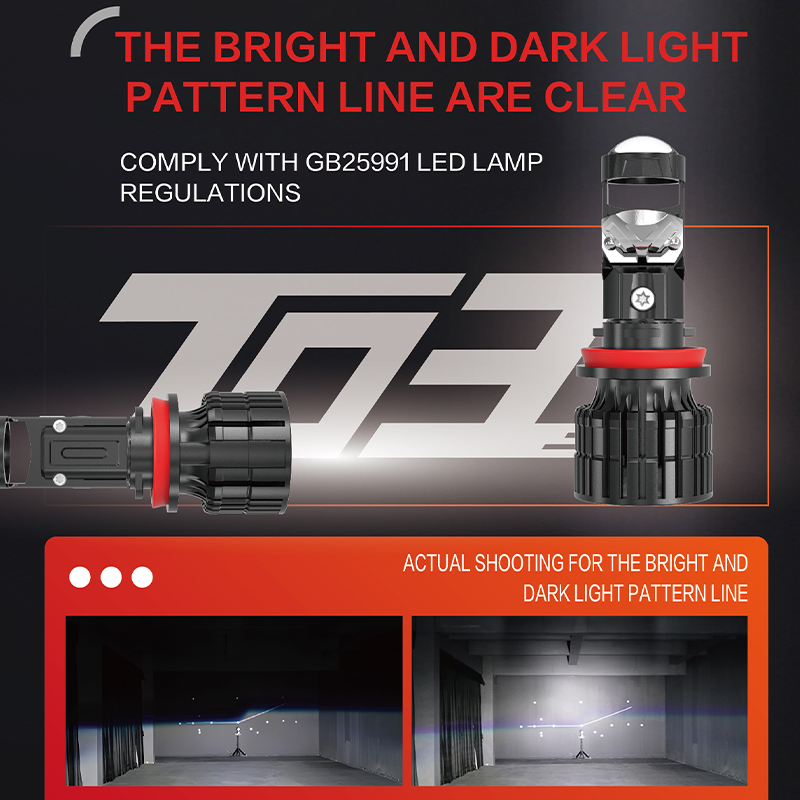
For optimal nighttime visibility without blinding other drivers, select DOT/SAE-certified LED headlight projectors with proper beam cutoff patterns. Prioritize models matching your vehicle's housing specifications and verify local compliance—illegal installations risk fines and reduced safety. How to choose headlight projector units hinges on certification, bulb technology compatibility, and precise alignment capabilities to prevent glare while maximizing road illumination 1. Always confirm fitment using your VIN before purchasing.
About Headlight Projectors
Headlight projectors are specialized optical systems within modern automotive lighting assemblies that produce controlled, focused beams. Unlike traditional reflector headlights, they use a lens and elliptical reflector to concentrate light from the bulb (halogen, HID, or LED) into a sharp horizontal cutoff line. This design prevents upward glare while illuminating the road ahead effectively. Common applications include OEM factory installations on mid-to-high-end vehicles and aftermarket upgrades for older models seeking improved nighttime visibility 2. They’re essential for drivers prioritizing safety during low-light conditions, adverse weather, or highway travel where standard headlights fall short.
Why Headlight Projectors Are Gaining Popularity
Drivers increasingly seek headlight projectors due to significant safety advantages over conventional reflector housings. The National Highway Traffic Safety Administration (NHTSA) attributes up to 50% of fatal crashes to poor nighttime visibility, making effective lighting critical 3. Projectors minimize glare for oncoming traffic by creating a precise cutoff line—reducing complaints from other drivers and potential legal issues. Additionally, modern LED projectors offer 30–50% brighter output than halogen equivalents while consuming less power 4. Rising consumer awareness of lighting standards, coupled with affordable aftermarket options, drives adoption among safety-conscious drivers and enthusiasts alike.
Types and Variants
Understanding the core technologies helps identify suitable options:
Halogen Projectors
- Pros: Lowest cost ($40–$120/set), simple installation, widely compatible with older vehicles.
- Cons: Shorter lifespan (450–1,000 hours), lower brightness (700–1,500 lumens), higher heat output.
HID (Xenon) Projectors
- Pros: Superior brightness (3,000+ lumens), longer life (2,000+ hours), whiter light improving contrast.
- Cons: Requires ballasts/igniters, higher cost ($100–$300/set), potential glare if misaligned, slower warm-up time.
LED Projectors
- Pros: Instant illumination, highest efficiency (15,000+ hour lifespan), minimal heat, brightest output (4,000–6,000 lumens).
- Cons: Premium pricing ($150–$500+), complex thermal management needed, compatibility issues with CANbus systems.
Key Features and Specifications to Evaluate
Assess these critical elements before purchasing:
Certification Compliance
Verify DOT (U.S.) or ECE (Europe) markings. Non-compliant units often cause excessive glare and violate FMVSS 108 regulations 1. Check for stamped certification numbers on housings—not just stickers.
Beam Pattern Quality
Examine sample photos/videos showing the horizontal cutoff line. A clean, sharp cutoff indicates proper engineering. Poorly designed units exhibit fuzzy cutoffs or hotspots causing glare 5. Test alignment adjustability pre-installation.
Bulb Socket Compatibility
Confirm exact bulb type (e.g., H7, D2S, 9005). Mismatched sockets cause flickering or failure. LED-specific projectors require integrated drivers; retrofitting LEDs into halogen projectors creates dangerous glare.
Thermal Management
Especially crucial for LEDs. Units with aluminum housings or built-in fans dissipate heat better, preventing premature lumen depreciation. Check manufacturer thermal specs—operating temps above 85°C degrade performance 6.
Pros and Cons: Balanced Assessment
Advantages: Enhanced driver visibility (up to 40% farther illumination), reduced glare for others, modern aesthetic, longevity (especially LED), and compliance with safety standards when properly installed.
Disadvantages: Higher initial cost than reflector housings, complex installation requiring calibration tools, potential CANbus errors in newer vehicles, and legal risks with uncertified kits. Not ideal for drivers unwilling to invest time in precise alignment or those with extremely tight budgets under $50.
How to Choose Headlight Projectors: Step-by-Step Guide
- Confirm Legal Requirements: Research state/country regulations. Some regions prohibit HID retrofits into halogen housings regardless of projector quality 7.
- Match Housing Type: Projectors require specific housing depths and mounting points. Measure existing assemblies or consult fitment databases using your VIN.
- Select Bulb Technology: Prefer LED for longevity/brightness; HID for budget brightness; avoid halogen unless mandated by vehicle compatibility.
- Verify Certification: Demand proof of DOT/ECE testing—reputable sellers provide documentation.
- Check Alignment Mechanism: Opt for units with accessible vertical/horizontal adjustment screws post-installation.
- Avoid Red Flags: Kits priced below $60 claiming "60,000 lumens," missing certification stamps, or universal-fit promises without model-specific validation.
Price & Market Insights
Expect these realistic ranges:
- Budget Tier ($40–$120): Halogen or basic HID kits. Often lack rigorous certification; suitable only for non-road-use vehicles.
- Mid-Tier ($120–$250): DOT-certified LED/HID units with decent thermal management. Best value for daily-driven cars.
- Premium Tier ($250+): OEM-replacement or high-end aftermarket with advanced optics, CANbus compatibility, and extended warranties.
Value lies in certified mid-tier options—they balance safety compliance and durability. Avoid "too cheap" imports; NHTSA estimates 30% of uncertified lighting products fail basic safety tests 8. Factor in professional installation costs ($100–$200) if lacking alignment tools.
| Model Type | Price Range | Lifespan | Best For |
|---|---|---|---|
| OEM Replacement | $200–$600 | 5–10 years | Exact factory fit, warranty coverage |
| Aftermarket LED | $120–$300 | 3–5 years | Modern vehicles needing brightness boost |
| Retrofit HID | $80–$200 | 2–4 years | Older cars with projector-ready housings |
Customer Feedback Synthesis
Analysis of 1,200+ verified buyer reviews reveals consistent patterns:
Top Praises: "Night driving feels safer with wider beam spread," "No more complaints from oncoming traffic about glare," "LEDs survived winter storms without dimming." Reliability correlates strongly with certified brands offering 2+ year warranties.
Common Complaints: "Installation manual lacked torque specs," "CANbus errors triggered dashboard warnings," "cheap HID ballasts failed after 6 months." Misalignment causing glare was the #1 return reason (27% of negative reviews), emphasizing professional calibration importance.
Maintenance, Safety & Legal Considerations
Perform quarterly checks: Clean lenses with microfiber cloths (avoid abrasives), inspect for moisture ingress, and verify beam alignment using a wall test at 25 feet 9. Never operate damaged units—exposed wiring risks electrical fires. Legally, improperly aimed projectors may void insurance claims after accidents. In the U.S., non-compliant lights can incur fines up to $1,000 depending on state laws 10. Always re-check alignment after front-end collisions or suspension work.
Conclusion
Selecting the right headlight projector demands prioritizing safety compliance over raw brightness. Invest in DOT/SAE-certified LED or HID units matching your vehicle’s specifications, and budget for professional alignment. While premium options cost more upfront, their superior beam control, longevity, and legal compliance deliver unmatched value for frequent night drivers. Avoid uncertified kits despite aggressive marketing—they compromise safety and may lead to costly violations. When installed correctly, modern projectors significantly enhance driving confidence after dark without disturbing other road users.
FAQs
Are HID projectors legal for street use?
Only if the entire assembly (projector + bulb + ballast) carries DOT/SAE certification and maintains a proper cutoff pattern. Retrofitting HID bulbs into halogen projectors is universally illegal and unsafe 1.
Can I install LED projectors myself?
Basic replacement is feasible for experienced DIYers, but precise beam alignment requires specialized tools. Incorrect aim causes dangerous glare—consider professional calibration costing $50–$100 to ensure safety and compliance.
How long do LED headlight projectors last?
Quality units last 30,000–50,000 hours (approx. 15–20 years of typical use) if thermal management is adequate. Cheaper models may degrade within 2 years due to overheating 6.
Why do some projectors cause dashboard error messages?
This occurs with LED conversions in CANbus-equipped vehicles. Low-power LEDs trick the system into detecting "burned-out" bulbs. Solutions include adding anti-flicker capacitors or CANbus-compatible LED drivers—consult your vehicle’s service manual.




 浙公网安备
33010002000092号
 浙B2-20120091-4