
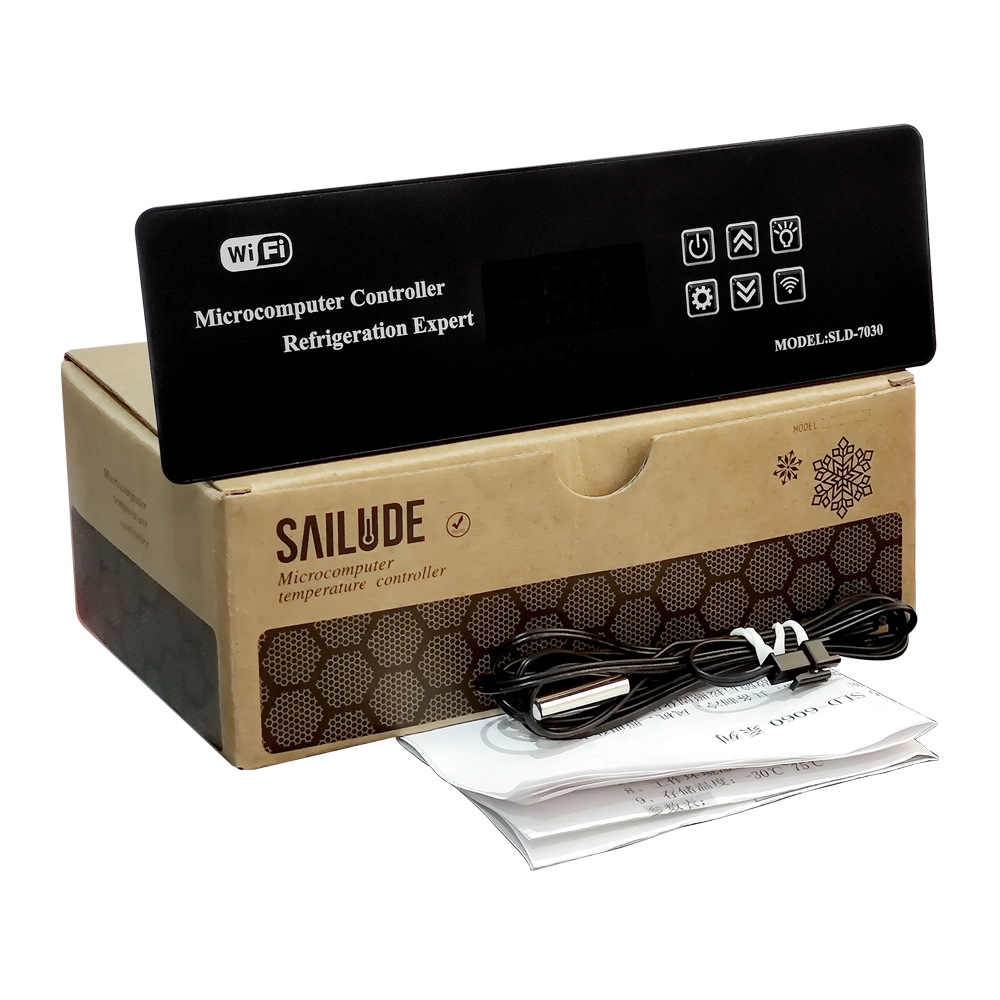
When selecting the best digital temperature controller for your application—whether it's for an industrial oven, HVAC system, or home brewing setup—accuracy, control type, and ease of integration are critical. A high-quality digital temperature controller with PID control offers superior precision over basic on/off models, especially in environments requiring tight thermal regulation 1. Look for units with clear displays, reliable sensor compatibility (like PT100 or thermocouples), and built-in safety alarms. For most mid-to-high-end applications, a PID-enabled model delivers the best balance of performance and long-term stability.
About Digital Temperature Controller
A digital temperature controller is an electronic device designed to monitor and regulate temperature in various systems by comparing the actual temperature (measured via a sensor) to a user-defined setpoint. When a discrepancy is detected, the controller sends signals to heating or cooling components—such as relays, SSRs (solid-state relays), or motorized valves—to adjust the output accordingly 2.
These controllers are widely used across industries including food processing, pharmaceuticals, plastics manufacturing, laboratory equipment, HVAC systems, and even home-based projects like reptile enclosures or fermentation tanks. Unlike older analog thermostats, digital models offer precise numerical readings, programmable setpoints, and advanced control algorithms such as ON/OFF, proportional (P), proportional-integral (PI), and proportional-integral-derivative (PID).
Why Digital Temperature Controller Is Gaining Popularity
The shift from mechanical to digital temperature control has been driven by increasing demand for energy efficiency, automation, and tighter process control. According to industry analysis, the global market for temperature controllers is projected to grow at a CAGR of over 5% through 2030, fueled largely by advancements in smart manufacturing and IoT integration 3.
Users value digital controllers for their accuracy—often within ±0.1°C to ±1°C—and real-time feedback capabilities. Additionally, many modern units support communication protocols like Modbus RTU or Ethernet/IP, enabling remote monitoring and data logging. This makes them ideal for applications where consistency and traceability matter, such as vaccine storage or chemical reactions.
Types and Variants
Digital temperature controllers come in several configurations, each suited to different use cases. Understanding these types helps ensure you select the right one for your needs.
1. ON/OFF Controllers
These are the simplest form, turning a heater or cooler on when temperature drops below the setpoint and off when it rises above. They are cost-effective but can cause temperature oscillations.
- Pros: Low cost, easy to install, sufficient for basic applications.
- Cons: Less precise, frequent cycling reduces component lifespan.
Ideal for: Home water heaters, simple incubators.
2. Proportional (P) Controllers
Instead of full on/off switching, these modulate output power based on how far the current temperature is from the setpoint. This reduces overshoot and improves stability.
- Pros: Smoother control than ON/OFF, reduces wear on equipment.
- Cons: May have a steady-state error (offset).
Ideal for: Ovens, drying chambers.
3. PID Controllers
PID (Proportional-Integral-Derivative) controllers combine three correction terms to deliver highly accurate and stable control. The integral term eliminates offset, while the derivative anticipates future changes based on rate of change 4.
- Pros: High precision, minimal overshoot, self-adjusting behavior.
- Cons: More complex setup; may require tuning.
Ideal for: Laboratory reactors, injection molding machines, precision ovens.
4. Programmed/Ramp-Soak Controllers
These allow users to define multi-step temperature profiles over time (e.g., heat to 100°C over 30 minutes, hold for 60 minutes, then cool). Often based on PID logic.
- Pros: Enables automated thermal processes without external supervision.
- Cons: Higher cost; steeper learning curve.
Ideal for: Annealing furnaces, semiconductor processing.
Key Features and Specifications to Evaluate
Choosing the right digital temperature controller requires evaluating several technical and usability factors:
- Accuracy and Resolution: Most quality controllers offer ±0.5°C accuracy or better. Resolution refers to the smallest increment displayed (e.g., 0.1°C vs 1°C).
- Sensor Input Type: Common options include K-type thermocouples, PT100 RTDs, and NTC thermistors. Ensure compatibility with your existing or planned sensors 5.
- Output Types: Relay (mechanical), SSR drive, analog (4–20mA or 0–10V), or PWM. SSR outputs are faster and more durable for frequent switching.
- Control Algorithm: As discussed, PID provides the highest accuracy for dynamic systems.
- Display and Interface: LED or LCD screens with intuitive menus improve usability. Some include touchscreen interfaces or mobile app connectivity.
- Communication Options: RS-485 with Modbus allows integration into SCADA systems. Ethernet or Wi-Fi enables cloud-based monitoring.
- Power Supply: Standard voltages include 24V DC, 110V AC, or 220V AC. Verify compatibility with your electrical system.
- Enclosure Rating: IP65-rated front panels resist dust and moisture, important for harsh environments.
Pros and Cons
Advantages
- High precision and repeatability compared to analog controls.
- Programmable settings reduce manual intervention.
- Diagnostics and alarm functions enhance safety.
- Integration with larger automation systems via digital communication.
Disadvantages
- Higher initial cost than mechanical thermostats.
- Potential complexity in configuration, especially for PID tuning.
- Dependence on external sensors—failure of the sensor leads to incorrect control.
- Vulnerability to electrical noise if not properly shielded.
Digital controllers are best suited for applications requiring consistent temperatures, automated operation, or regulatory compliance. They are less necessary for simple household appliances where wide temperature swings are acceptable.
How to Choose a Digital Temperature Controller
Follow this step-by-step guide to make an informed decision:
- Define Your Application: Is it for heating only, cooling, or both? What is the operating temperature range?
- Select the Right Control Type: Use ON/OFF for basic tasks, PID for precision work.
- Verify Sensor Compatibility: Match the input type (thermocouple, RTD) to your sensor. Check whether the controller supports calibration adjustments.
- Evaluate Output Requirements: Determine if you need relay, SSR, or analog output based on your load type and switching frequency.
- Assess Environmental Conditions: In dusty or wet areas, choose a unit with appropriate ingress protection (IP rating).
- Check for Safety Features: Look for high/low temperature alarms, sensor break detection, and auto-shutdown functions.
- Consider Connectivity Needs: If remote access or data logging is required, opt for models with Modbus, Ethernet, or wireless support.
- Review User Interface: Complex setups benefit from graphical displays and menu navigation aids.
- Read Warranty and Support Terms: Reputable brands typically offer 1–3 year warranties and accessible technical documentation.
- Avoid These Red Flags: No datasheet available, unclear input/output specs, lack of CE/UL certification, poor customer reviews regarding reliability.
Price & Market Insights
Pricing varies significantly depending on functionality and brand:
- Entry-level (ON/OFF): $20–$50. Suitable for DIY or low-demand uses.
- Mid-range (PID, standard features): $60–$150. Ideal for small industrial equipment or lab devices.
- Premium (programmable, communication-ready): $150–$400+. Used in automated production lines or research settings.
Value isn’t always tied to price. Some mid-tier brands offer excellent performance comparable to premium models. Always compare specifications rather than relying solely on brand reputation. Also, consider total cost of ownership—reliable controllers reduce downtime and maintenance costs over time.
Top-Seller & Competitive Analysis
Several models dominate the market due to reliability and feature sets. Below is a comparison of popular choices:
| Model | Control Type | Sensor Input | Outputs | Connectivity | Price Range |
|---|---|---|---|---|---|
| Omron E5CC | PID | K, J, PT100 | Relay, SSR | RS-485 (Modbus) | $90–$130 |
| Honeywell UDC1200 | PID | K, T, PT100 | Relay, Analog | None (basic) | $70–$110 |
| Autonics TC4S | ON/OFF, PID | K, J, PT100 | Relay | None | $40–$60 |
| Siemens RWD62 | PI, PID | PT100, PT1000 | Analog (0–10V) | BACnet MS/TP | $180–$250 |
While Omron and Honeywell lead in industrial adoption, Autonics offers strong budget-friendly alternatives. Siemens excels in building automation integration. Consider your specific interface and protocol requirements before choosing.
Customer Feedback Synthesis
Analysis of hundreds of verified buyer reviews reveals common themes:
Positive Feedback:
Users frequently praise responsiveness, durability, and ease of setup—especially for Omron and Honeywell units. Many highlight the clarity of display and effectiveness of alarm functions. Programmable models receive acclaim for reducing labor in batch processes.
Common Complaints:
Some lower-cost models suffer from inconsistent temperature readings, often traced to poor sensor quality or inadequate shielding. A recurring issue is confusing menu structures in certain brands, requiring extensive manual consultation. Others report short cable lengths or lack of mounting hardware.
To mitigate risks, check recent reviews focusing on long-term reliability and verify return policies before purchase.
Sourcing & Supplier Tips
Digital temperature controllers are available from industrial suppliers (e.g., Grainger, RS Components), online marketplaces (Amazon, eBay), and direct manufacturer channels.
- For Single Units: Buy from authorized distributors to ensure genuine products and warranty coverage.
- For Bulk Orders: Contact manufacturers or regional wholesalers for volume discounts. Request product samples before large purchases.
- Dropshipping or Reselling: Partner with suppliers offering white-label options and technical support for end customers.
- Verification Steps: Upon receipt, inspect for damage, validate part numbers against datasheets, and test basic functionality using a known-good sensor.
Maintenance, Safety & Legal Considerations
Regular maintenance ensures longevity and accuracy:
- Clean the display and vents periodically to prevent dust buildup.
- Calibrate sensors annually or as recommended by the manufacturer.
- Inspect wiring connections for looseness or corrosion.
Safety practices include using fused power supplies, proper grounding, and installing thermal fuses as backup protection. In critical applications (e.g., medical or food processing), ensure compliance with relevant standards such as UL 60730 (safety of automatic electrical controls) or IEC 60512 (environmental testing).
Note: Regulations vary by country and application. Always confirm local requirements for electrical equipment used in hazardous locations or life-support systems.
Conclusion
Selecting the right digital temperature controller involves balancing accuracy, control method, environmental resilience, and connectivity. For most professional and semi-industrial applications, a PID-controlled digital temperature controller delivers optimal performance. Prioritize units with clear specifications, proven reliability, and adequate safety features. Whether you're automating a small brewery or managing a production furnace, investing in a well-matched controller enhances efficiency, safety, and process consistency.
FAQs
- What is the difference between a digital thermostat and a digital temperature controller?
- A digital thermostat typically performs basic ON/OFF control for comfort heating/cooling. A digital temperature controller offers advanced algorithms (like PID), programmable outputs, and higher accuracy for industrial or scientific use.
- Can I use a digital temperature controller for cooling applications?
- Yes, many models support cooling output activation when temperature exceeds the setpoint. Ensure the model explicitly states cooling control capability.
- How do I know if my controller needs PID tuning?
- If you observe overshooting, oscillation, or slow response after reaching setpoint, tuning may be needed. Most modern controllers offer auto-tune functions to simplify this process 6.
- Are all digital temperature controllers compatible with PT100 sensors?
- No. Always verify input compatibility in the product specifications. Some controllers only accept thermocouples or NTC sensors.
- Do digital temperature controllers require regular calibration?
- Yes, especially in critical applications. Sensor drift can occur over time. Manufacturers typically recommend annual calibration checks using traceable standards.





 浙公网安备
33010002000092号
浙公网安备
33010002000092号 浙B2-20120091-4