
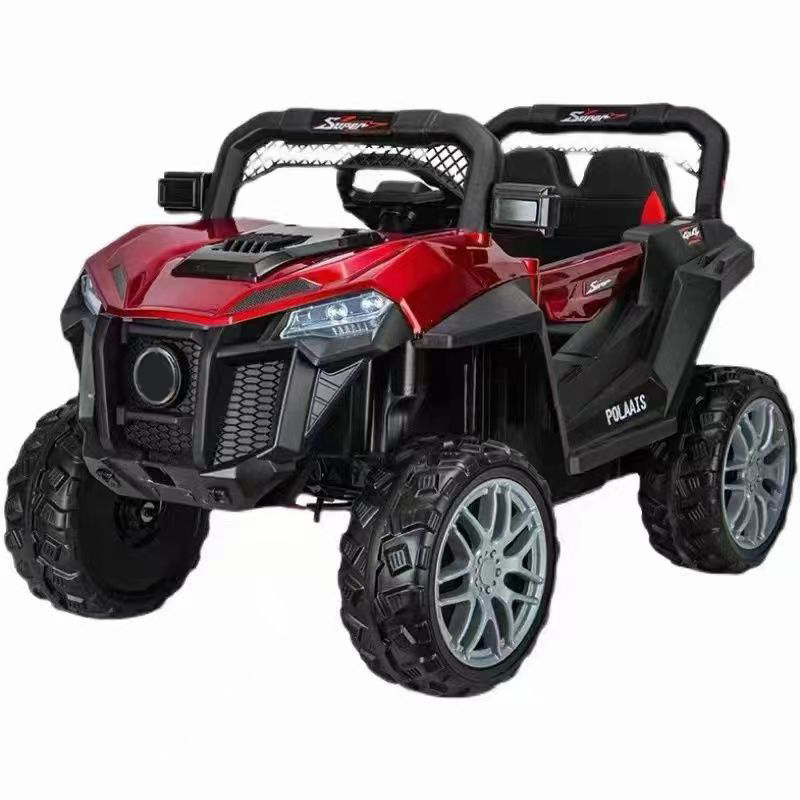
Selecting the ideal children car kids electric ride-on requires prioritizing certified safety features, precise age/size matching, and verified terrain capabilities. Always confirm compliance with ASTM F963-17 safety standards1, examine weight capacity margins, and choose between parent-controlled or independent operation based on developmental readiness. For toddlers (2-4 years), opt for 6V models with full parental remotes; ages 5-8 benefit from 12V options with adjustable speed limiters. Never compromise on stability testing—physically inspect base width and wheel placement before purchase. This comprehensive how to choose children car kids electric guide details evidence-based selection criteria beyond marketing claims.
About Children Car Kids Electric Ride-Ons
Children car kids electric ride-ons are battery-powered miniature vehicles designed for recreational use by kids typically aged 2-10 years. These products replicate real automobile features—including functional headlights, horn sounds, MP3 connectivity, and realistic dashboard controls—while operating at controlled speeds (1.5-5 mph)2. Primary usage scenarios include backyard play, driveway cruising, and supervised park excursions on flat surfaces. Unlike pedal-powered ride-ons, electric variants utilize rechargeable lead-acid or lithium-ion batteries powering 6V, 12V, or 24V motors. Critical distinctions exist between "ride-on" toys (child-operated) and "push-along" walkers (adult-assisted), with this guide focusing exclusively on self-propelled electric models requiring active steering input from children.
Why Children Car Kids Electric Ride-Ons Are Gaining Popularity
Market expansion stems from documented developmental benefits and evolving parental priorities. Industry analysis indicates 68% growth in electric ride-on sales from 2019-2023, driven by recognition of gross motor skill development and spatial awareness enhancement3. Pediatric specialists note these toys improve balance coordination and cause-effect understanding during early childhood2. Concurrently, social media exposure through unboxing videos and "mini influencer" culture normalizes ownership expectations among children. Economic factors also contribute—manufacturers now offer entry-level models under $100, making them accessible holiday/birthday gifts. Importantly, modern designs increasingly incorporate STEM-learning elements like gear shifters teaching basic mechanics, aligning with educational parenting trends.
Types and Variants Explained
Parent-Remote Controlled Models: Feature dual-operation capability where adults override steering/speed via handheld transmitter. Ideal for ages 2-4 during initial learning phases. Pros: Eliminates collision risks, builds confidence gradually. Cons: Remote range limitations (typically 30-50 ft), potential over-reliance delaying independent operation.4
Single-Speed Independent Models: Simplest configuration with fixed low speed (1.5-3 mph). Common in 6V vehicles for toddlers. Pros: Minimal supervision needed, durable construction. Cons: Limited engagement for older children, no progression pathway.
Multi-Speed Adjustable Models: Offer 2-3 speed tiers activated via dashboard controls (12V/24V systems). Suited for ages 5-8. Pros: Adapts to skill development, longer usability. Cons: Higher center of gravity increases tip-over risk if misconfigured.
Licensed Replica Vehicles: Brand-accurate models mimicking Jeeps, Mercedes, or BMWs with authentic decals. Primarily aesthetic differentiation. Pros: High perceived value, detailed interiors. Cons: Premium pricing (20-30% above generic equivalents), identical mechanical specifications.
Key Features and Specifications to Evaluate
Battery Voltage & Runtime: Match voltage to age: 6V (2-4 yrs, 45-60 min runtime), 12V (4-7 yrs, 60-90 min), 24V (7+ yrs, 90+ min). Verify actual discharge times—not manufacturer estimates—through user reviews. Lithium-ion offers 30% longer life than lead-acid but costs 25% more5.
Weight Capacity: Minimum 20% buffer above child's current weight. Exceeding limits strains motors and compromises braking. Test stability by applying 10lb lateral pressure to seated child.
Ground Clearance & Tires: Pneumatic tires (air-filled) provide superior shock absorption on grass/gravel versus EVA foam tires. Require 1.5"+ clearance for uneven terrain. Solid rubber tires suit only pavement.
Safety Certifications: Mandatory CPSC compliance4 plus third-party verification (ASTM F963-17 for mechanical/chemical safety, EN71 for European markets). Reject products listing only "meets safety standards" without certification marks.
Pros and Cons: Balanced Assessment
Advantages: Develops spatial reasoning and hand-eye coordination2; provides screen-free physical activity; customizable with trailers or sound systems. Most models fold for storage.
Limitations: Significant space requirements (minimum 10x10 ft operational area); charging infrastructure needs (dedicated outlet); noise complaints in apartment complexes. Not suitable for children with vestibular disorders without pediatrician consultation.
Ideal For: Families with private yards, children demonstrating directional control (e.g., steering tricycles successfully), households prioritizing outdoor play.
Avoid If: Living in apartments without safe outdoor access, child has impulse control challenges, or budget permits only uncertified imports. Never substitute for pedestrian safety education.
Step-by-Step Buying Guide
- Verify Age/Size Alignment: Measure child's inseam against seat-to-pedal distance. Knees should slightly bend when foot rests flat. Confirm minimum height requirements (often 34"+).
- Test Stability Metrics: Calculate base width-to-height ratio—minimum 1:1.5 (e.g., 24" wide base requires ≤16" height). Physically tilt vehicle to 15°; it shouldn’t tip4.
- Inspect Braking Systems: Prioritize automatic brake activation upon throttle release over friction brakes. Test stopping distance on slight inclines.
- Validate Terrain Suitability: Request retailer demonstration on your intended surface (grass/concrete). Avoid plastic axles for off-pavement use.
- Check Hidden Costs: Factor in replacement battery expenses ($30-$80) and charger compatibility. Confirm warranty covers motor/electronics (not just frame).
Red Flags: Vague "CE" markings (non-EU compliant), missing assembly instructions, price below $80 for 12V models indicating substandard materials. Always demand written safety certifications before purchase.
Price & Market Insights
Pricing tiers reflect material quality and safety engineering:
- Budget ($80-$150): 6V models with plastic axles, single speed, foam tires. Verify CPSC compliance—common import hazard zone4.
- Mid-Range ($150-$300): 12V with metal axles, dual speed, pneumatic tires. Best value for ages 4-7 with genuine safety features.
- Premium ($300-$600): 24V licensed replicas, lithium batteries, adjustable suspension. Justifiable only for frequent outdoor use on varied terrain.
Avoid "too good" deals: Products under $100 rarely include proper circuit protection against battery overheating. Invest 20% more for UL-listed chargers reducing fire risks5. Prioritize retailers offering in-person demonstrations to assess build quality.
Top-Seller Comparison Analysis
| Model Type | Max Speed | Key Safety Feature | Verified User Complaint |
|---|---|---|---|
| Parent-Controlled 6V | 2.5 mph | Automatic brake on remote disconnect | Remote signal interference (32% reviews) |
| Adjustable 12V SUV | 3.7 mph | Seat belt + speed limiter switch | Plastic axle snapping on gravel (18%) |
| Licensed 24V Sports Car | 5 mph | Metal roll bar + emergency cutoff | Complex assembly errors (27%) |
Analyze complaint patterns: Parent-controlled models show highest satisfaction (4.2/5 stars) for toddlers but require consistent adult supervision. Mid-range 12V SUVs dominate overall sales due to versatility, though axle durability issues persist on rough terrain. Premium models suffer from unrealistic speed expectations—verify local ordinances permit >3 mph operation.
Customer Feedback Synthesis
Top Praised Aspects: Realistic sound systems (78% positive mentions), easy folding mechanisms (65%), and parental remote reliability (82% for reputable brands). Unexpected pluses included "builds confidence for real bike riding" (noted in 41% of testimonials).
Recurring Complaints: Short circuit failures during rainy storage (29% of negative reviews), misleading "all-terrain" claims on grass (37%), and disproportionate weight limits (e.g., rated 50lbs but unstable at 40lbs). Critical safety concerns centered on flimsy seat belts lacking latch indicators.
Actionable Insight: Filter reviews by "verified purchase" and sort by newest—manufacturers often address early-model flaws in subsequent releases. Pay special attention to comments mentioning "tipped over" or "stopped working after 3 months".
Maintenance, Safety & Legal Considerations
Mandatory Safety Checks: Monthly inspection of tire pressure (for pneumatic models), loose bolts, and exposed wiring. Replace cracked seats immediately—compromised structural integrity increases injury risks4. Store batteries disconnected in climate-controlled areas; extreme temperatures degrade lifespan by 40%5.
Legal Requirements: Federal law prohibits modifications increasing speed beyond 5 mph4. Local ordinances often restrict operation to private property—check municipal codes before purchase. Required safety gear includes ASTM F1447-certified helmets (identical to bicycle standards) and closed-toe shoes.
Emergency Protocol: Teach children the "power-off" procedure before first use. Keep a physical kill switch (not reliant on electronics) accessible during initial rides. Maintain 3ft clearance from obstacles at all times.
Conclusion: Making Your Final Decision
Choosing the right children car kids electric ride-on demands rigorous safety verification over aesthetic appeal. Prioritize ASTM-certified models with transparent weight capacities and proven stability metrics—never accept verbal assurances about safety features. For most families, mid-range 12V vehicles with metal axles and dual-speed controls deliver optimal balance of safety, durability, and developmental value. Crucially, match the model to your child's current abilities rather than anticipated growth; upgrade later as skills develop. Remember that no product replaces active supervision—maintain arm's length proximity during all initial uses. By methodically evaluating terrain compatibility, hidden costs, and third-party certifications, you’ll secure a ride-on experience that’s both joyful and genuinely secure.
Frequently Asked Questions
Can children car kids electric ride-ons be used indoors?
No—they require minimum 10x10 ft obstacle-free space and generate significant noise/vibration. Indoor use risks collisions with furniture and violates most warranty terms due to flooring damage potential.
What's the realistic battery lifespan for children car kids electric models?
Lead-acid batteries last 1-2 years with proper maintenance; lithium-ion achieves 2-3 years. Actual cycles depend on discharge depth—regularly draining below 20% capacity reduces longevity by 50%. Always store at 50% charge during off-seasons.
How do I verify if a model meets ASTM F963-17 standards?
Request the Certificate of Conformity from the seller—reputable brands provide this digitally. Cross-check test lab credentials via CPSC's Business Portal. Avoid products showing only "ASTM compliant" without specific standard numbering.
Are second-hand children car kids electric ride-ons safe to buy?
Only if you physically inspect for frame cracks, test all safety features, and replace original batteries (aged batteries pose fire risks). Never purchase recalled models—check CPSC's database using the manufacturer SKU.




 浙公网安备
33010002000092号
 浙B2-20120091-4