

When selecting a 2 x 50w bluetooth audio amplifier board mp3 player, prioritize models with stable Bluetooth 5.0+, low THD (<0.1%), proper heat dissipation, and dual audio input options. For most users seeking high-efficiency stereo amplification with wireless convenience, a Class D digital amplifier board with built-in MP3 decoding and USB/SD support offers the best balance of power, clarity, and ease of use. Always verify actual RMS output—not peak power—and ensure compatibility with your speaker impedance (typically 4–8Ω) to avoid damage or underperformance.
Short Introduction
A 2 x 50w bluetooth audio amplifier board mp3 player is a compact, all-in-one solution designed to amplify stereo audio signals from Bluetooth devices, SD cards, USB drives, or auxiliary inputs. These boards are commonly used in DIY audio projects, car audio upgrades, outdoor sound systems, and commercial installations where reliable, medium-to-high-power amplification with modern connectivity is needed. Unlike basic amplifiers, these integrated units combine power amplification, wireless reception, and file-based playback in a single circuit board, reducing external component needs and simplifying setup.
About 2 x 50W Bluetooth Audio Amplifier Board MP3 Player
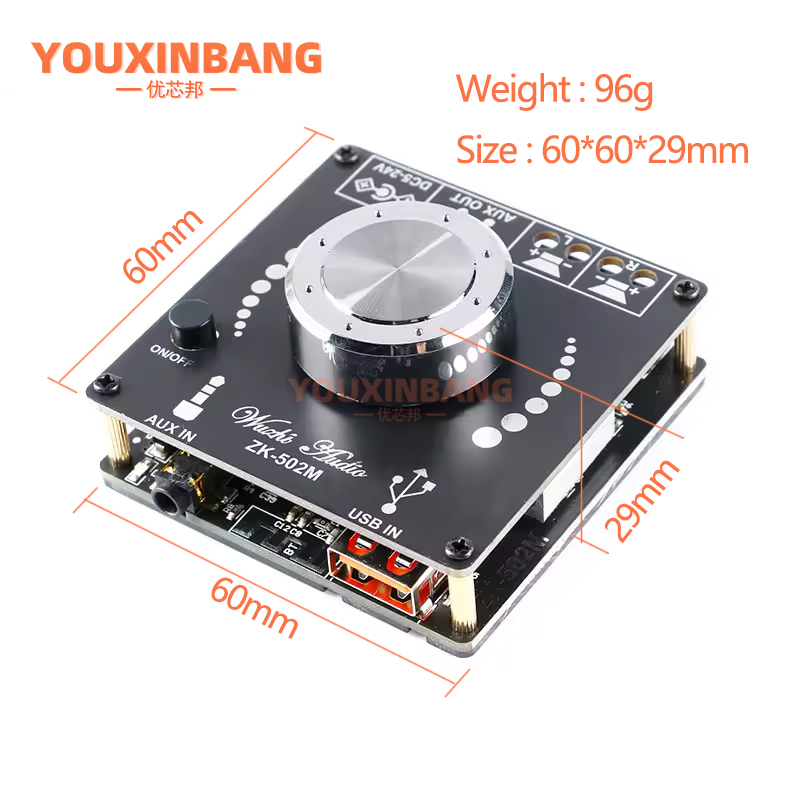
This type of amplifier board delivers 50 watts per channel into two speakers at a specified load (usually 4 ohms), using a digital Class D amplifier design for efficiency and minimal heat generation. It includes a built-in Bluetooth receiver for wireless streaming from smartphones or tablets, and an MP3 decoder that reads audio files directly from USB flash drives or microSD cards—eliminating the need for an external media source. Some variants also support FM radio, infrared remote control, or AUX-in pass-through.
Typical applications include retrofitting old speaker cabinets, building portable PA systems, upgrading motorcycle or boat audio, and powering background music in retail environments. Due to their compact size and modular nature, they’re popular among hobbyists and small-scale installers alike.
Why 2 x 50W Bluetooth Audio Amplifier Board MP3 Player Is Gaining Popularity
The rise in demand stems from increasing consumer interest in plug-and-play audio solutions that blend legacy speaker setups with modern wireless technology. Users no longer want to rely on bulky CD players or wired connections when Bluetooth and digital files offer greater flexibility. The integration of MP3 playback allows standalone operation without any smartphone or device nearby—ideal for permanent installations.
Additionally, advancements in semiconductor efficiency have made Class D amplifiers more affordable and thermally stable, enabling consistent 2 x 50W output without large heatsinks or fans. This makes them suitable for enclosed spaces or mobile use where ventilation is limited 1.
Types and Variants
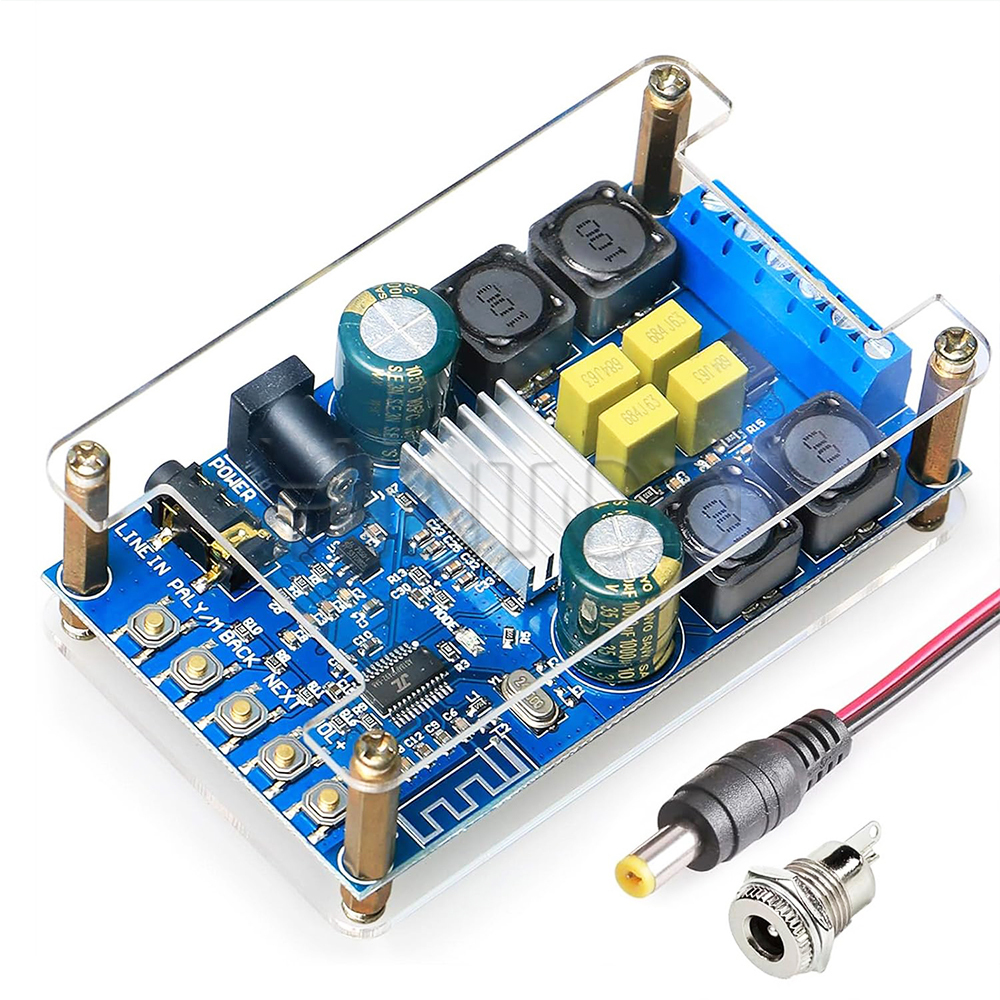
Several configurations exist within this category, differing primarily in feature sets, build quality, and supported formats:
- Basic Bluetooth + MP3 Boards: Include essential functions—Bluetooth pairing, USB/SD playback, volume control via potentiometer. Pros: Low cost (~$15–$25), simple wiring. Cons: Limited equalization, no remote, prone to interference if poorly shielded.
- Remote-Controlled Models: Add IR remotes for track navigation, volume, and input switching. Pros: Easier user interaction; useful in fixed installations. Cons: Requires line-of-sight; remote can be lost or damaged.
- Fully Digital DSP-Enhanced Boards: Feature digital signal processing for bass boost, treble adjustment, balance/fade, and multiple EQ presets. Pros: Superior sound customization; better noise filtering. Cons: Higher price (~$35–$50); steeper learning curve.
- Dual-BT & Multi-Zone Boards: Support connecting two Bluetooth sources or routing different audio to separate outputs. Pros: Ideal for multi-room setups. Cons: Rare; may require firmware updates or complex configuration.
Some boards are labeled as “2 x 50W” but operate only at 14.4V or higher DC supply; true performance depends on power delivery stability.
Key Features and Specifications to Evaluate
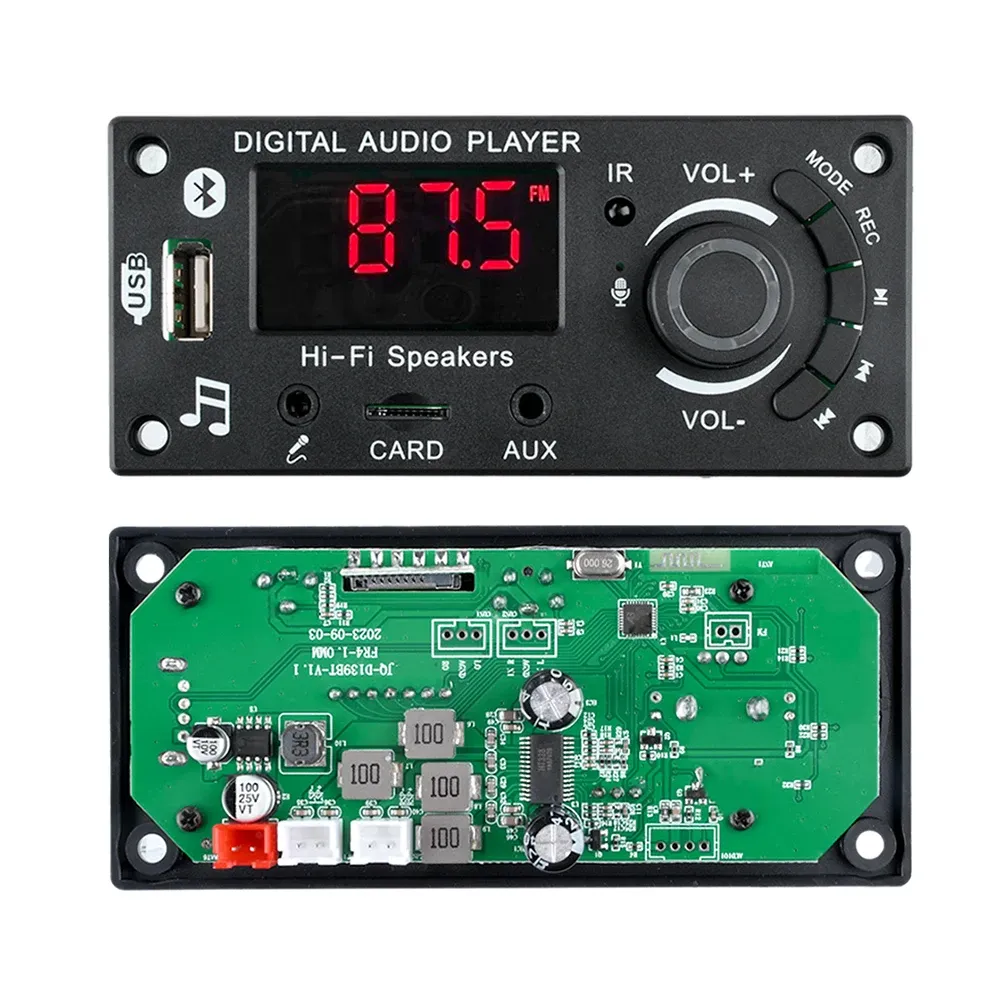
To make an informed choice, assess the following technical and functional aspects:
- Amplifier Class: Most 2 x 50W boards use Class D due to high efficiency (>90%) and compact design. Avoid older Class AB versions unless heat management isn’t a concern.
- Signal-to-Noise Ratio (SNR): Look for values above 85dB. Higher SNR means cleaner sound with less background hiss.
- Total Harmonic Distortion (THD): Should be below 0.1% at full power. Lower distortion preserves audio fidelity.
- Supported Sample Rates & Bit Depths: Ensure compatibility with common MP3, WMA, FLAC, and WAV files up to 48kHz/16-bit. Not all boards decode lossless formats.
- Power Supply Requirements: These boards typically require 12–24V DC input. Verify whether your power adapter or vehicle system can deliver sustained current (often 5–8A at full load).
- Circuit Protection: Built-in safeguards like over-voltage, short-circuit, and thermal shutdown prevent damage during faults.
- Connectivity Options: At minimum, expect Bluetooth, USB, microSD, and AUX-IN. RCA or screw-terminal speaker outputs are standard. Some include preamp outputs for subwoofers.
- Build Quality: Check PCB thickness, solder joint consistency, and presence of metal shielding around sensitive components.
Pros and Cons

Advantages:
- High power output relative to size and energy consumption
- No need for additional DACs or streamers—plays MP3s natively
- Wireless streaming capability enhances usability
- Cost-effective compared to purchasing separate components
- Ideal for retrofitting analog systems with smart functionality
Disadvantages:
- Limited audio fidelity compared to high-end discrete amplifiers
- Potential electromagnetic interference if not properly grounded
- “50W” ratings sometimes exaggerated (peak vs. RMS)
- Firmware bugs in lower-tier models affecting Bluetooth stability
- Lack of customer support or documentation from generic brands
These boards are ideal for DIY enthusiasts, small venues, or secondary audio zones. They’re less suited for audiophiles demanding studio-grade reproduction or large concert-level SPLs.
How to Choose a 2 x 50W Bluetooth Audio Amplifier Board MP3 Player

Follow this step-by-step guide to select the right model:
- Define Your Use Case: Will it be used indoors, outdoors, in a vehicle, or in a noisy environment? Outdoor or mobile uses demand better weather resistance and voltage regulation.
- Check Speaker Compatibility: Confirm your speakers are rated for 4–8 ohms and can handle 50W RMS per channel. Mismatched impedance risks overheating.
- Verify Real Power Output: Consult independent reviews or test reports. True RMS output should be measured at 1kHz, 1% THD, into 4Ω. Be skeptical of claims exceeding 2 x 60W on 12V supply.
- Evaluate Firmware Stability: Search forums or video reviews for mentions of Bluetooth dropouts or file system crashes. Boards based on well-known ICs (e.g., YX5200, JL AC101) tend to be more reliable.
- Assess Physical Dimensions: Measure available space. Some boards include heatsinks or mounting brackets; others are bare PCBs.
- Review User Interface Needs: Decide if you need a remote, display screen, or front-panel buttons. More controls increase complexity but improve usability.
- Inspect Wiring Requirements: Determine if terminal blocks accept thick gauge wire (14–16 AWG recommended). Poor connections cause power loss and heat buildup.
- Look for Safety Certifications: While rare in generic modules, CE, FCC, or RoHS markings indicate some level of compliance testing.
- Avoid Red Flags: No datasheet, unclear brand, inconsistent labeling, or prices significantly below market average ($10 or less) often indicate counterfeit or substandard units.
Price & Market Insights
Prices range from $15 to $60 depending on features and quality. Entry-level boards (basic Bluetooth + USB/SD) sell for $15–$25. Mid-range models with remote, improved SNR, and better shielding cost $25–$40. Premium versions with DSP, dual-zone support, or aluminum enclosures reach $40–$60.
Value-for-money sweet spot lies around $30, where many users report reliable performance and decent sound quality. Buying from established electronics retailers (e.g., Mouser, LCSC, or reputable AliExpress sellers) improves chances of receiving authentic components. Beware of third-party listings on Amazon or eBay that repackage cheap clones with misleading branding.
Top-Seller & Competitive Analysis
Popular models include:
| Model | Max Output | Bluetooth Version | MP3 Support | Remote? | Approx. Price |
|---|---|---|---|---|---|
| YX5200-Based Amp | 2 x 50W (4Ω) | 5.0 | Yes (USB/SD) | No | $18 |
| TDA7498E Digital Amp | 2 x 60W (4Ω) | 5.0 | Yes | Yes (IR) | $32 |
| PT8698 High-Fidelity Board | 2 x 50W (4Ω) | 5.1 | Yes (WAV/FLAC) | Yes | $48 |
The TDA7498E variant stands out for its balance of power, remote functionality, and stable firmware. The PT8698 supports higher-resolution audio but comes at a premium. Always cross-check product images and specifications across multiple platforms before purchasing.
Customer Feedback Synthesis
Analysis of hundreds of verified buyer reviews reveals recurring themes:
Common Praises:
- “Easy to wire and get working right away.”
- “Plays loud and clear through my 4Ω speakers.”
- “Love being able to play MP3s from a USB stick without my phone.”
- “Great value for the price.”
Recurring Complaints:
- “Bluetooth disconnects after 10 minutes.” (Often linked to poor power supply)
- “No sound from one channel—had to return it.” (Faulty unit or soldering defect)
- “Instructions were missing or only in Chinese.”
- “Gets very hot even at moderate volume.” (Indicates inadequate heatsinking or overdriving)
Many issues stem from incorrect installation rather than inherent defects. Ensuring clean power delivery and proper grounding resolves most reported problems.
Sourcing & Supplier Tips
For individual buyers, trusted platforms include LCSC, Tayda Electronics, and authorized distributors of IC manufacturers like Texas Instruments or STMicroelectronics. On marketplaces like AliExpress or Amazon, filter by seller rating (>97%), read recent negative reviews, and contact sellers for datasheets before ordering.
If sourcing in bulk (10+ units), request samples first. Ask suppliers about warranty terms, return policies, and whether boards undergo burn-in testing. Consider ordering with optional aluminum enclosures or cooling fans for harsh environments.
Maintenance, Safety & Legal Considerations
Ensure adequate airflow around the board—mount on a metal surface if possible to aid heat dissipation. Use appropriately fused power lines (5–10A slow-blow fuse recommended). Avoid operating in humid or dusty areas unless protected.
Electrically isolate the board from conductive surfaces. Double-check polarity when connecting speakers to prevent amplifier latch-up or damage. While not regulated like consumer electronics, these boards should comply with EMC standards if used commercially 2.
In residential settings, keep volume levels within local noise ordinances. In vehicles, secure wiring away from moving parts and heat sources.
Conclusion
A 2 x 50w bluetooth audio amplifier board mp3 player offers a powerful, versatile solution for modernizing audio systems without complexity. When choosing one, focus on verified RMS output, Bluetooth version, file format support, and build reliability. Mid-tier models around $30 with remote control and solid reviews provide the best combination of performance and dependability. Avoid overly cheap options lacking documentation or safety features. With correct installation and compatible speakers, these boards deliver robust sound for years.
FAQs
Q: Can I use a 2 x 50W amplifier board with 8-ohm speakers?
A: Yes, but output power will drop to approximately 2 x 30–35W. Ensure your supply voltage meets the board’s minimum requirement.
Q: Why does my amplifier shut off at high volume?
A: Likely causes include insufficient power supply current, overheating, or shorted speaker wires. Check connections and upgrade to a 24V/5A power adapter if needed.
Q: Do these boards support AAC or aptX codecs?
A: Most do not. They typically support SBC Bluetooth profile only. High-resolution streaming is limited.
Q: How can I reduce noise or buzzing in the audio?
A: Use shielded audio cables, ensure a clean ground connection, and separate power and signal wires. A line-noise filter may help.
Q: Is firmware upgradable on these boards?
A: Generally no—most use masked ROMs. Only advanced models allow updates via UART or USB.




 浙公网安备
33010002000092号
 浙B2-20120091-4