
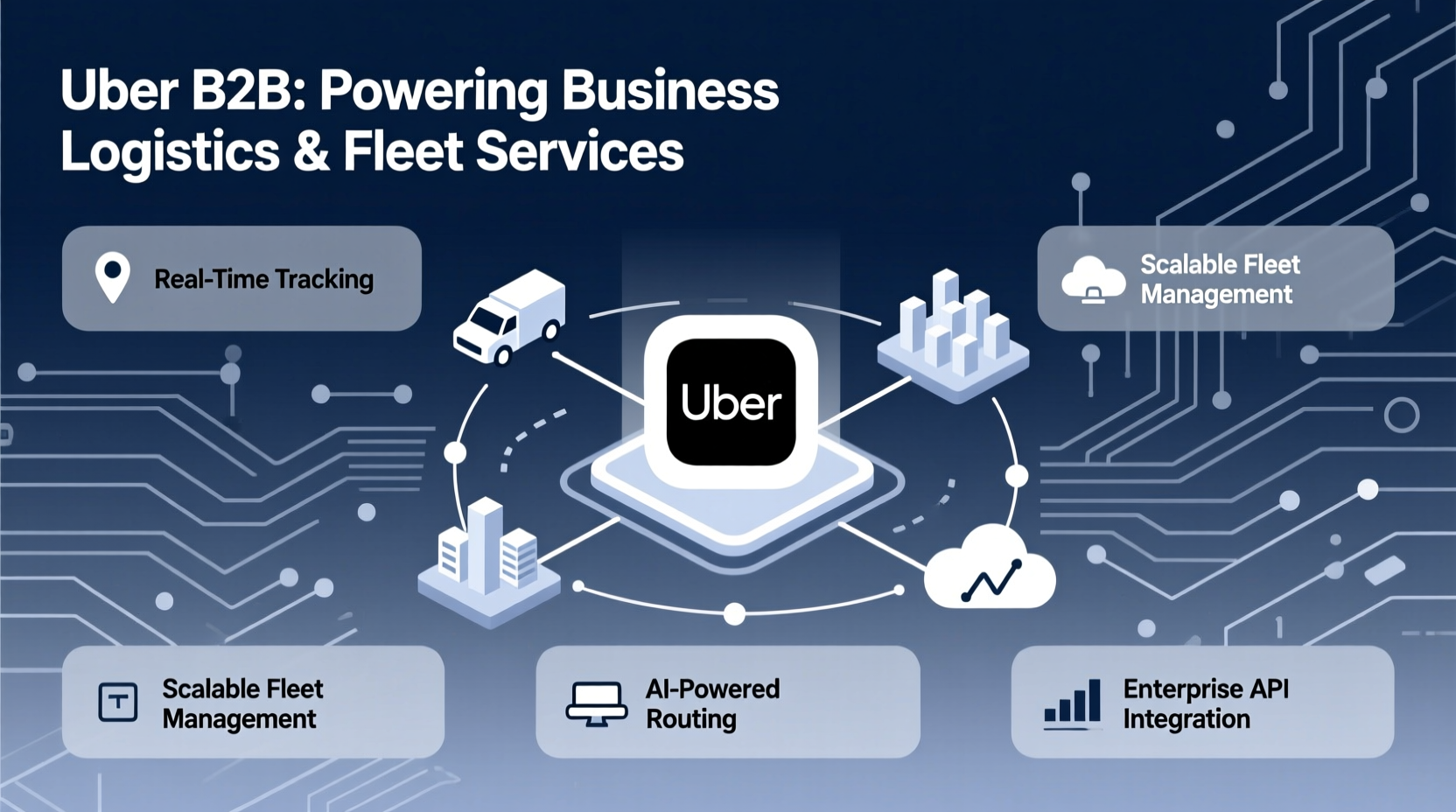
If you're asking, is Uber B2B, the answer is yes — but not in the traditional product-supply sense. Uber does operate with B2B capabilities through Uber for Business, a dedicated platform enabling companies to manage employee transportation, integrate with expense systems, and gain spending insights. This makes Uber for Business a relevant solution for enterprises seeking scalable, on-demand mobility without vehicle ownership 1. While Uber’s core app serves consumers (B2C), its enterprise arm offers structured tools for procurement teams, travel managers, and finance departments looking to streamline ground transportation logistics. In this guide, we explore how Uber functions in the B2B space, evaluate its features, compare alternatives, and help organizations decide if it fits their operational needs.
About Is Uber B2B
The question “is Uber B2B?” stems from confusion between Uber’s public-facing ride-hailing service and its enterprise offerings. Technically, Uber began as a B2C (business-to-consumer) company, connecting individual riders with drivers via a mobile app. However, over time, it evolved to serve businesses through Uber for Business, which provides administrative controls, billing consolidation, API integrations, and reporting dashboards tailored for organizational use.
In this context, is Uber B2B becomes a matter of service segmentation. Uber for Business allows companies to set up profiles for employees, assign trip purposes (e.g., client meetings, airport transfers), and sync data with accounting software like SAP Concur or Oracle NetSuite 2. It doesn’t sell physical goods or raw materials; instead, it delivers a digital transportation management service that supports business operations — a model increasingly common in SaaS-based B2B platforms.
Typical use cases include:
- Corporate travel for sales teams visiting clients
- Executive transport during conferences or offsites
- Onboarding new hires who need temporary commuting solutions
- Healthcare providers arranging patient or staff rides
- Logistics coordination where last-mile delivery personnel require mobility
Why Is Uber B2B Gaining Popularity?
The growing interest in understanding how Uber functions as a B2B service reflects shifting workplace dynamics. Remote work, hybrid schedules, and decentralized offices have reduced reliance on company-owned vehicles while increasing demand for flexible transportation options. Businesses are prioritizing cost-efficiency, scalability, and employee convenience — all areas where Uber for Business excels.
One key driver is the elimination of reimbursement paperwork. Instead of employees paying out-of-pocket and submitting receipts, administrators can issue virtual ride passes or enable direct billing to departmental accounts. This reduces friction in finance workflows and improves compliance tracking.
Additionally, real-time analytics allow managers to monitor transportation spend by team, region, or project. For multinational firms, this visibility supports budget forecasting and policy enforcement. Integration with calendar and scheduling tools also enables automated trip booking, further streamlining operations.
Another reason behind the rise of Uber as a B2B tool is safety and accountability. With features like trip sharing, automatic incident detection, and driver background checks, companies can ensure duty of care for traveling employees — especially important in high-risk regions or after-hours travel.
Types and Variants of Uber for Business Solutions
Uber for Business isn't a one-size-fits-all offering. It includes several service tiers designed for different organizational needs:
1. Uber Central
A dispatch-style tool allowing businesses to book rides for others — ideal for hotels, hospitals, or event organizers arranging transportation for guests or staff.
- Pros: No app required for recipients; scheduled rides possible; centralized payment
- Cons: Limited customization; less control over vehicle type unless premium plan used
2. Ride Passes
Purchased credits applied to specific trips or users. Useful for one-time events, contractor transport, or controlled budgets.
- Pros: Budget predictability; no credit card needed per user; easy distribution
- Cons: Expires if unused; not suitable for ongoing daily commutes
3. Managed Programs
Customized plans with negotiated rates, preferred vehicle types, and enhanced support. Best for large enterprises with consistent volume.
- Pros: Cost savings through contracts; dedicated account management; SLA-backed service levels
- Cons: Requires minimum usage commitments; longer setup process
4. API Integrations
Allows embedding Uber ride functionality into internal apps, such as HR portals or field service platforms.
- Pros: Seamless user experience; automation potential; brand consistency
- Cons: Development resources needed; ongoing maintenance required
Key Features and Specifications to Evaluate
When assessing whether Uber qualifies as a viable B2B transportation provider, consider these critical evaluation criteria:
- Billing & Invoicing: Can your finance team receive consolidated invoices by department or cost center?
- Data Privacy: Does Uber comply with GDPR, CCPA, or other regional regulations relevant to your operations?
- Integration Capabilities: Does it connect with your existing ERP, TMS, or travel management system?
- Geographic Coverage: Are services available in all regions where your employees operate?
- Support & SLAs: What response times and resolution guarantees come with enterprise plans?
- Custom Policies: Can you restrict ride types (e.g., only UberX), time windows, or destination zones?
Organizations should also verify whether Uber supports multi-factor authentication, single sign-on (SSO), and audit logging — essential for IT governance in regulated industries.
Pros and Cons of Using Uber as a B2B Service
When Uber Makes Sense (Pros):
- Reduces administrative burden associated with reimbursements
- Offers predictable pricing in supported cities via upfront quotes
- Provides real-time tracking and emergency assistance features
- Enables rapid deployment across global locations without local infrastructure
- Integrates with major expense management platforms
When It Might Not Be Ideal (Cons):
- Limited availability in rural or underdeveloped markets
- Variability in driver quality and vehicle condition
- No ownership or long-term asset value
- Dependence on third-party platform uptime and policies
- Potential markup compared to local taxi fleets or shuttle services
For example, a tech startup with frequent client visits in urban centers may benefit greatly from Uber for Business. Conversely, a manufacturing plant in a remote area might find limited utility due to sparse driver coverage.
How to Choose Uber as a B2B Solution
Deciding whether Uber is right for your business requires a structured approach. Follow this step-by-step checklist:
- Assess Transportation Needs: How many employee trips occur monthly? Are they urban or rural? Time-sensitive?
- Review Current Costs: Compare current taxi, rental, or mileage reimbursement expenses against projected Uber spend using rate estimators.
- Evaluate Integration Requirements: Check compatibility with your financial or HRIS systems. Request API documentation if building custom workflows.
- Test with a Pilot Group: Roll out to a small team first to gather feedback on usability and reliability.
- Negotiate Terms: Contact Uber sales for volume discounts or managed program benefits if expecting significant usage.
- Establish Usage Policies: Define acceptable ride types, hours, and approval workflows to prevent misuse.
- Monitor and Optimize: Use dashboard reports to identify overspending, underutilization, or service gaps.
Red flags to watch for include unexpected fare surges during peak times, lack of wheelchair-accessible vehicles in certain areas, and poor customer support responsiveness at the enterprise level.
Price & Market Insights
Uber for Business does not charge a subscription fee for basic access. Instead, companies pay per ride at standard consumer rates, though managed programs may offer discounted fares based on volume. There are no hidden fees for administration or reporting.
Typical cost variables include:
- Base fare + distance + time + booking fee
- Surge pricing during high-demand periods
- Premium vehicle upgrades (e.g., UberXL, Black)
From a value perspective, Uber competes with traditional corporate car services, taxis, and employee-owned vehicle reimbursements. While per-trip costs may exceed personal car use in some regions, the savings in administrative labor and risk mitigation often justify the expense.
Alternative providers like Lyft Business, Didi Enterprise, or local fleet operators may offer lower prices in specific geographies. Always conduct a localized cost-benefit analysis before committing.
| Provider | B2B Features | Global Reach | Integration Options | Best For |
|---|---|---|---|---|
| Uber for Business | Yes – Central, Ride Passes, API | 70+ countries | SAP, Oracle, Workday, Slack | Global teams needing flexibility |
| Lyft Business | Yes – Concierge, API, Credits | USA & Canada only | Concur, Egencia, Zenefits | North American-focused firms |
| Didi Chuxing (Enterprise) | Limited B2B portal | China, Latin America | Local partners only | Operations in Asia/LATAM |
Top-Seller & Competitive Analysis
Among B2B mobility platforms, Uber Central remains the most widely adopted due to its ease of use and broad accessibility. Its ability to schedule rides without requiring recipients to have the Uber app makes it particularly valuable in hospitality and healthcare settings.
However, competitors are gaining ground. Lyft Business offers similar functionality with stronger privacy protections and fewer international data concerns for U.S.-based organizations. Meanwhile, regional players like Bolt (Europe/Africa) and Ola Corporate (India) provide competitive pricing in their home markets.
When comparing top sellers, focus on:
- Service reliability and average wait times
- Availability of accessible vehicles
- Transparency in pricing algorithms
- Quality of enterprise support
Customer Feedback Synthesis
Based on aggregated reviews from Gartner Peer Insights, Trustpilot, and Capterra, users commonly praise Uber for Business for its intuitive interface, fast deployment, and seamless integration with expense tools. Many highlight the reduction in manual reimbursement claims as a major win.
Common complaints include:
- Inconsistent driver availability outside major cities
- Lack of proactive communication during cancellations
- Difficulty resolving billing disputes at scale
- Perceived higher costs compared to municipal taxi networks
Sourcing & Supplier Tips
While Uber for Business is a digital service rather than a physical product, sourcing considerations still apply. Since there’s no inventory or supply chain, procurement focuses on contract terms, data handling agreements, and service-level expectations.
Tips for effective sourcing:
- Negotiate volume-based pricing if your organization expects over 500 monthly trips
- Request a Data Processing Agreement (DPA) to ensure compliance with privacy laws
- Verify uptime guarantees and disaster recovery protocols
- Consider dual-sourcing with a regional alternative to mitigate disruption risks
- Train administrators on dashboard controls to maximize utilization
Maintenance, Safety & Legal Considerations
Unlike physical equipment, Uber for Business requires no maintenance. However, companies must address legal and safety responsibilities related to employee travel.
Key points:
- Ensure your insurance policy covers employees using third-party rideshare services
- Implement clear guidelines on acceptable usage (e.g., no alcohol consumption during work rides)
- Use trip-sharing features to maintain situational awareness during late-night travel
- Confirm that Uber conducts regular background checks and vehicle inspections in your operating regions
- Stay informed about local labor laws regarding commute allowances and taxable benefits
Conclusion
To directly answer is Uber B2B: Yes, through Uber for Business, the platform serves as a legitimate B2B transportation management solution for organizations worldwide. It offers scalable, integrated mobility services that reduce administrative overhead and improve employee safety. However, success depends on aligning its capabilities with your geographic footprint, usage patterns, and compliance requirements. For businesses operating primarily in urban centers with dynamic travel needs, Uber presents strong value. Those in remote areas or with specialized transport demands may need to supplement with alternative providers. As always, pilot testing and stakeholder feedback are crucial before full rollout.
FAQs
Q: Can small businesses use Uber for Business?
A: Yes, Uber for Business has no minimum size requirement and is free to set up, making it accessible for startups and SMEs.
Q: Is there a way to limit which Uber ride types employees can book?
A: Yes, administrators can restrict bookings to specific tiers like UberX or disable premium options entirely.
Q: Does Uber for Business work internationally?
A: Yes, it operates in over 70 countries, though availability varies by city and local regulations.
Q: How do I get started with Uber for Business?
A: Visit uber.com/business, create an account, invite team members, and configure billing and policies.
Q: Are Uber rides tax-deductible for business use?
A: Generally yes, when used for legitimate business purposes; consult a tax professional for jurisdiction-specific advice.





 浙公网安备
33010002000092号
浙公网安备
33010002000092号 浙B2-20120091-4